5 facts you need to know about crypto whales
Crypto whales keep grabbing attention with transactions worth millions.

Crypto whales keep grabbing attention with transactions worth millions. They manipulate smaller investors and often disappear again for years. Here are five facts you need to know. Imagine swimming side by side with the largest mammal on Earth—a blue whale. Your feelings: fear and awe. Investors behave the same when they encounter whales swimming in the crypto sea: they dive or surface.
1. What are crypto whales?
In the crypto space, a whale is a person, entities, or a blockchain wallet that owns an extremely large amount of crypto assets. Usually these participants are large institutions like hedge funds and Bitcoin investment funds. However, it’s also common for unknown users to be labeled as whales. The ocean serves as a metaphor and represents the market. A wave is considered a market movement. To be designated as a crypto whale, one generally needs an equivalent of about $20 million in cryptocurrency. Besides whales, there are other designations.
2. How to spot crypto whales?
Because every transaction on the blockchain can be viewed, there are now countless so-called blockchain explorers. They, for example, rank wallet addresses by the amount of cryptocurrency held. Well-known, popular tools for tracking whales are Whale Alert and Whale Stats. On Twitter you can instantly see when a large transaction is completed.
Often other useful information is shown, such as the latest transaction or the date of the last activity.
3. various whale transactions
When one of the whales transfers money, there are three categories to distinguish.
Whale Transactions
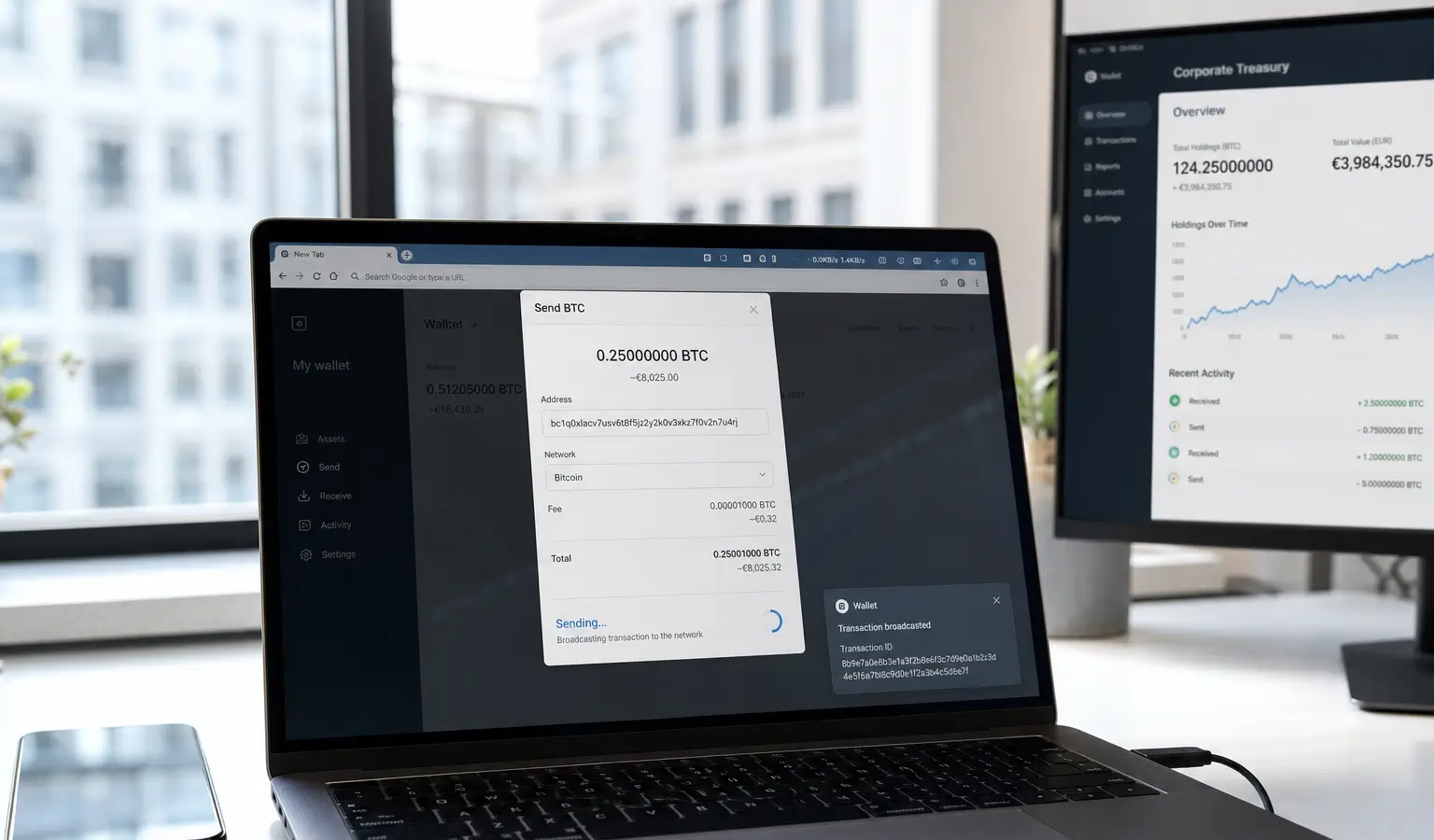
The most uneventful are transfers between two wallets. Often large institutions or companies decide to buy their crypto over the counter (OTC). The advantage of OTC trading is that there is no market move when the assets are bought. Yet the price afterward can move in either direction in the case of a big transaction. When Tesla bought $1.5 billion in Bitcoin in 2021, that was an OTC deal. But the BTC price still surged after the Tesla purchase was announced.
Wallet transfer transactions
When a whale moves its holdings from its own wallet to an exchange, many investors react fearfully. The fear that the participant could swap their cryptocurrency for fiat money and thus push the price down sharply is real. "If a significant amount of a cryptocurrency supply sits on exchanges, those holding it probably don’t want to keep it there long," explains Coin Bureau’s Guy.
Many believe whales manipulate the market this way. By scaring small investors, they dump their coins and push the price down at the same time. The whales then buy more at discounted prices and basically accumulate the capital shunned by smaller market participants. Recently one of these whales drew attention by sending $3.75 billion to an exchange.
Exchange wallet transactions
"If you see hundreds of millions of US dollars of a cryptocurrency moving from an exchange to a wallet, the person behind that wallet isn’t planning to sell quickly," Guy notes. Transfers from an exchange to someone’s wallet, on the other hand, make the crypto space bullish. By withdrawing their cryptocurrencies, the whale dives back and vanishes into the depths of the crypto sea.
4. notable Bitcoin whales
While many of the anonymous whales are known only by addresses, others are almost famous. There are even communities that tag along as small fish. The most famous crypto whale is probably Satoshi Nakamoto himself.
- Satoshi Nakamoto (about 1.1 million BTC worth over $21 billion)
- MicroStrategy (129,699 BTC worth over $2.5 billion)
- El Salvador (2,300 BTC worth over $45 million)
- Binance cold wallet (252,597 BTC worth over $5 billion)
5. What to do if a crypto whale swims on your blockchain?
Just like in real life, whales are impressive phenomena. The sheer size is mind-blowing. Even in the crypto cosmos, they repeatedly make an impression with their hefty wallets or moves. Still, be cautious when dealing with them. If you’re not careful, you can get dragged in quickly.
Handling whales is a personal decision. Those with a lot of capital in a given cryptocurrency should be mindful of a whale’s implications. At the same time, remember that a whale’s assets could be sold off at some point. Sometimes it’s like rats leaving a sinking ship.