AI Agents Are Changing the Rules for Crypto Wallets With Controlled Autonomy
Stablecoins, wallets, and trading platforms are getting a new layer of automation, but only with strict limits and human approval. Controlled AI autonomy is playing a bigger role, especially for payments and portfolio management.
Key Takeaways
- AI agents are increasingly getting access to crypto wallets, exchanges, and payment apps to prepare transactions and handle repetitive tasks.
- Payments, invoice processing, and portfolio management are seen as the first practical use cases, especially with stablecoins for cross-border payments.
- Experts warn about mandate drift, fast exploits, and market volatility, and stress strict limits, human approval, and reauthorization.
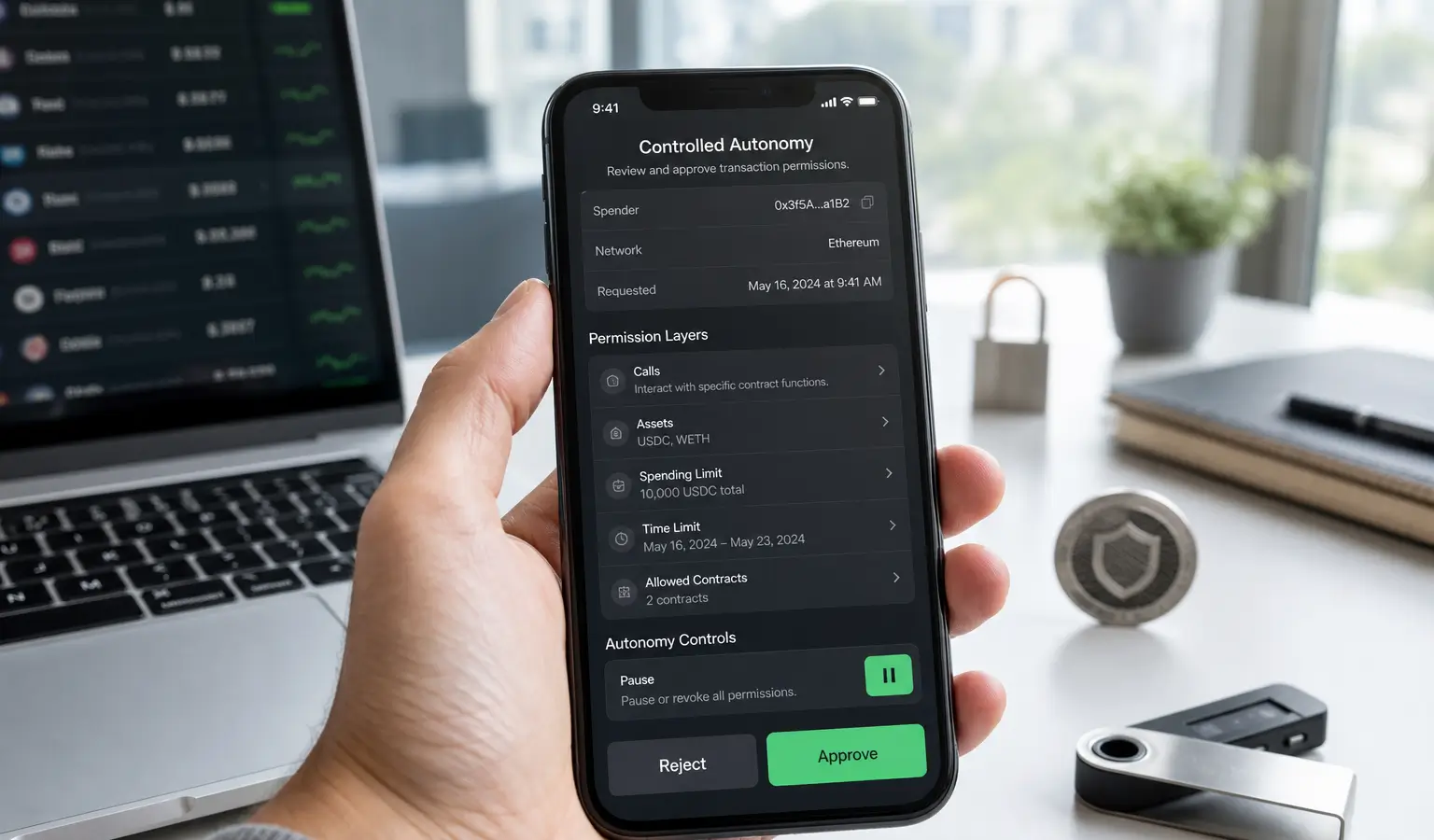
AI agents are making their way deeper into the crypto market through wallets, exchanges, payment apps, trading platforms, and portfolio tools. Once an agent gets permission to sign on a user's behalf, it can prepare transactions, rebalance assets, pay invoices, use smart contracts, and move fast inside on-chain apps. That is creating a new product category around controlled autonomy, where the user still owns the funds and the software handles repetitive tasks within preset rules.
Payments and Portfolio Management as the First Use Cases
According to experts, paying invoices and making payments is the most obvious early use for AI agents. These tasks are well defined by parameters like amount, recipient, and timing, which makes them a good fit for automation. Stablecoins are especially useful for cross-border payments, especially in markets where traditional bank transfers are slow and expensive. Trading and portfolio management are also technically ready for AI support, although the biggest challenge is setting up governance and authorization models that keep agents from acting outside their intended mandates. Coinbase recently introduced special accounts for bots that can trade and pay on behalf of users, with spending and withdrawal limits as extra security.
Strict Controls and Phased Access to Funds
Wallets were originally built for human approval of every transaction, but AI agents can prepare and carry out multiple actions at once. That is why a layered authorization model is needed, where routine tasks can run automatically, but large transactions, new contracts, or leveraged positions always require human approval. Experts recommend a gradual rollout of access: first observe and advise, then allow limited execution, and only expand the mandate once reliability has been proven. Limits on maximum allocation, daily losses, positions, and withdrawals are crucial, along with time-based reauthorization. Users also need ways to step in with pause buttons, alerts, and rollback options.
New Security Risks and On-Chain Impact
The speed at which AI agents act also brings new risks. Mandate drift, where agents act outside their instructions, can quickly lead to major losses. Exploits can spread across multiple wallets and contracts in a fraction of a second before users can react. In addition, bad actors may try to manipulate agents with fake data or harmful contract information, which can trigger unwanted actions. On top of that, when a lot of agents react to the same market information at once, it can cause sudden price moves and volatility.
When it comes to on-chain activity, AI agents can combine different strategies thanks to the flexibility of blockchain apps, such as spot trading, futures, lending, and borrowing. Sustainable volume is most likely to come from agents creating economic value, for example through payments, treasury management, and settlement, rather than just trading with each other. The expectation is that agent-driven trading and arbitrage will first happen in controlled environments, and later expand to public blockchains where they can access a wide range of counterparties and protocols.
Why This Matters for European Crypto Users
For European crypto users, the rise of AI agents in wallets could open up new ways to manage crypto assets and payments more efficiently. At the same time, this trend highlights the need for strict security and authorization rules to prevent misuse and financial damage. As regulation around digital assets keeps evolving, the legal and compliance side of AI use in crypto will also become more important. That is why it matters for European users and providers to keep a close eye on these trends and put the right safeguards in place.