U.S. Wallets Trade $571 Million on Polymarket
Allium says U.S. wallets have stayed active on Polymarket despite the ban, especially in geopolitical contracts. The numbers touch on oversight of prediction markets and the CFTC settlement from 2022.
Key Takeaways
- U.S. wallets traded $571 million on Polymarket over the past year, despite the official ban on U.S. users.
- Allium says IP-based blocks do little, since trading can still happen through crypto wallets and VPNs.
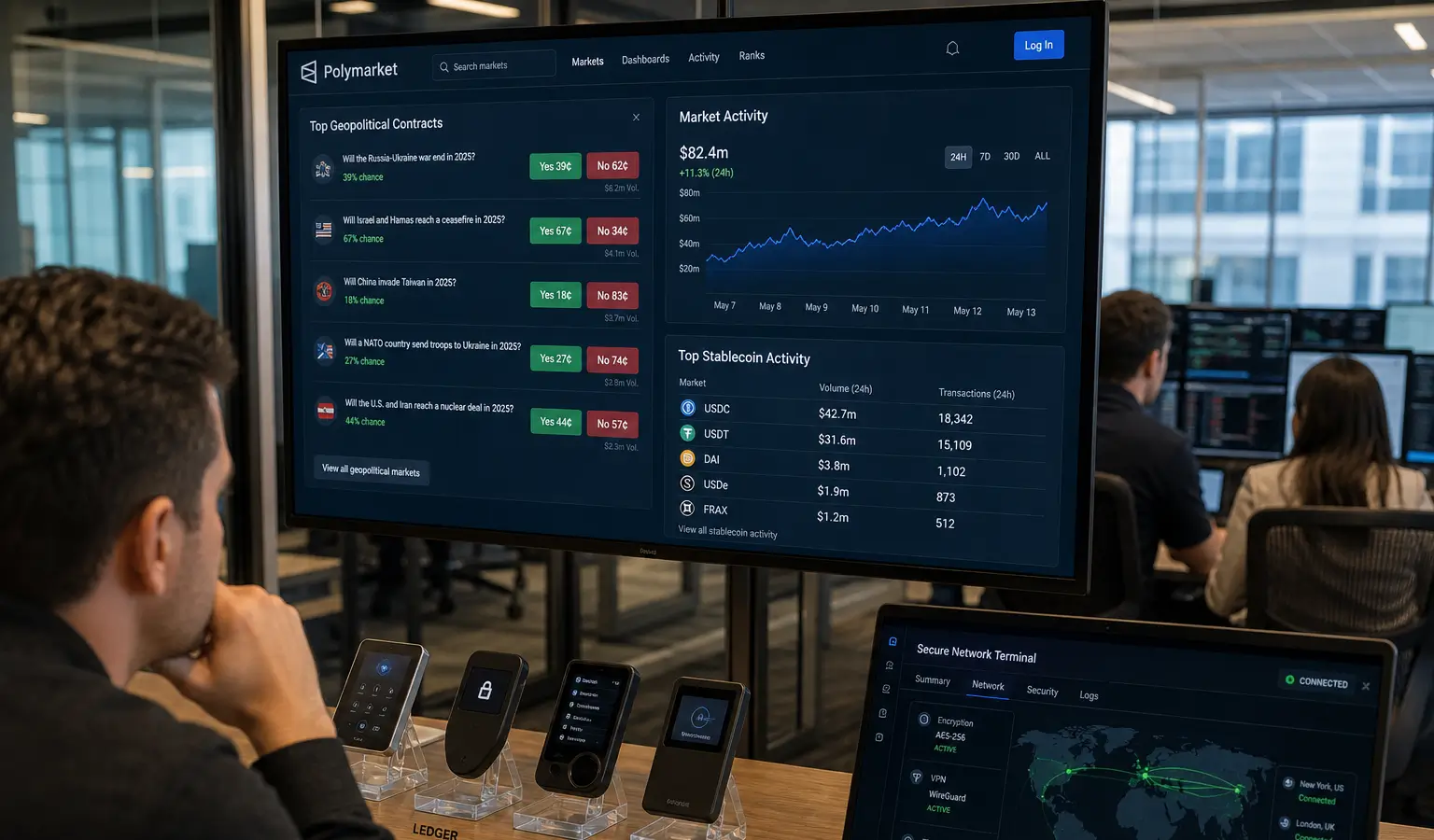
- U.S. traders were relatively more likely to bet on geopolitical markets, with five of their twelve biggest markets tied to the war in Iran.
U.S. wallets were the most active political group on Polymarket over the past year, even though the platform is not officially supposed to serve U.S. users. In a new report, onchain analytics firm Allium said wallets tied to the U.S. accounted for $571 million (€499 million) in notional trading volume over the last twelve months, more than any other country.
The Ban Hasn't Stopped Trading
Polymarket uses IP-based blocks to keep out U.S. users, but Allium argues that approach has limited impact when trading happens on crypto rails. There is no bank transfer to freeze and no traditional account system for regulators to shut down, so a VPN and an existing crypto wallet may be enough to get around the restriction.
The data also comes with an important caveat. Allium says it can connect only about 6 percent of wallets on the political markets to a country, since those labels are based on onchain activity rather than IP addresses. That means the figures should be read as a rough indicator, not a precise count.
What Americans Are Betting On
The clearest pattern is what U.S. traders are choosing to bet on. Geopolitical markets made up 46 percent of U.S. notional value, compared with 36 percent across the platform as a whole. Elections, by contrast, represented 16 percent of U.S. wallet activity, while they accounted for 32 percent platform-wide.
In other words, U.S. traders were more inclined to back foreign conflicts than the election markets that draw more attention elsewhere on the platform. Five of the twelve largest markets among U.S. wallets were tied to the war in Iran. The biggest single market was a novelty contract worth $20.8 million (€18.2 million) on whether Ukrainian President Volodymyr Zelenskyy would wear a suit.
Why This Matters for European Readers
For European crypto readers, the bigger takeaway is how difficult enforcement becomes once trading moves through blockchain and stablecoins. Polymarket reached a settlement with the CFTC in January 2022 and was barred from serving U.S. users, but the data suggests those limits do not automatically stop people from using the platform. That is part of the wider debate around oversight of prediction markets, especially now that Polymarket later launched a U.S., CFTC-supervised version with full identity checks and restricted access.
The report also suggests that demand for political contracts is moving toward markets that regulated U.S. venues do not offer, such as regime change and ceasefires. That keeps the activity visible onchain, but largely outside the reach of traditional oversight.