

Animoca Bets on DeFi Yield for Bank Accounts and AI
Animoca sees stablecoins and onchain credit as an alternative to savings accounts, while AI agents could handle blockchain-controlled payments and loans.
Key Takeaways
- Animoca Brands calls checking accounts outdated, because according to Yat Siu, banks keep most of the interest on savings for themselves.
- DeFi and onchain credit are mentioned as alternatives, while savings rates in the U.S. are often much higher than the national average.
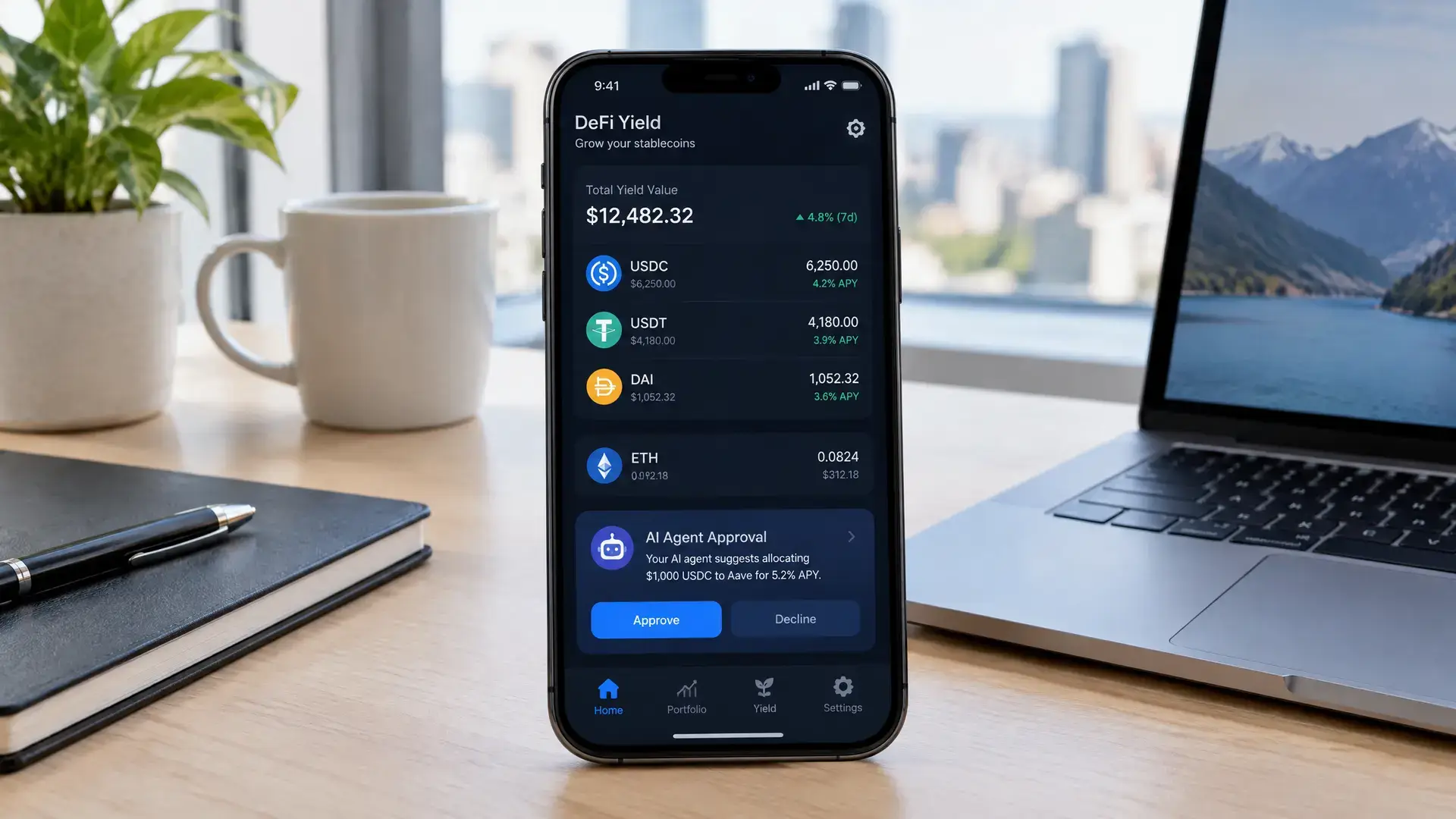
- Animoca expects AI agents to use payments and credit soon, with approval and limits handled through blockchain and crypto wallets.
Animoca Brands sees regular checking accounts as an outdated model now that DeFi and AI agents are gaining more ground. According to co-founder Yat Siu, banks keep most of the interest on savings for themselves, while crypto-native companies are looking for ways to pass that yield back to the user.
Bank Interest Under Fire
In an interview, Siu called checking accounts “almost scammy” because customers get barely any interest while banks still earn returns on that money. He tied that to a broader shift in the crypto market, where stablecoins and onchain credit are increasingly seen as an alternative to traditional banking products.
That debate is not just happening among crypto-native companies. In the U.S., some high-yield savings accounts still offer rates of about 3.10% to 3.75%, while the national average is around 0.38%. According to DeFi supporters, the gap between what savers get and what capital can earn elsewhere is fueling demand for new products. The rapid growth of crypto lending vaults also shows that this search for yield has become a serious market, even as the risks are becoming more visible too.
AI Agents on the Chain
Animoca and other companies expect AI agents to eventually use payments and credit on their own. Siu said banks probably will not give that access anytime soon, while blockchain offers an environment where those permissions can be tightly defined.
Morpho, which focuses on onchain credit, says every transaction an agent proposes is first simulated. After that, the user or their own crypto wallet has to approve the action, with extra limits like a daily cap or a list of approved smart contracts. According to Morpho, that lets institutions work with AI agents, but within hard limits.
Why This Matters
For European crypto readers, this shows how DeFi is moving closer to traditional financial products. The mix of stablecoins, regulated onchain dollar flows, and tokenized products from major financial institutions is making the line between banking and crypto less clear. At the same time, the risk gap remains large, because DeFi does not offer bank insurance and technical errors or liquidity problems can still play a role.