

AntPool Nears Bitcoin Record With Nearly 11,300 Transactions
The block was almost full, but fee revenue stayed low: most of the income came from Bitcoin's fixed subsidy. That highlights how uneven miner revenue can be.
Key Takeaways
- AntPool mined block 974,961 with 11,255 transactions, nearly matching the Bitcoin record of 12,239 transactions from 2015.
- Fee revenue was low: all the transactions together generated 240,533 satoshis, while AntPool mainly received the 3.125 BTC block subsidy.
- The article points out that miners will become more dependent on fees over time, especially heading into the April 2028 halving.
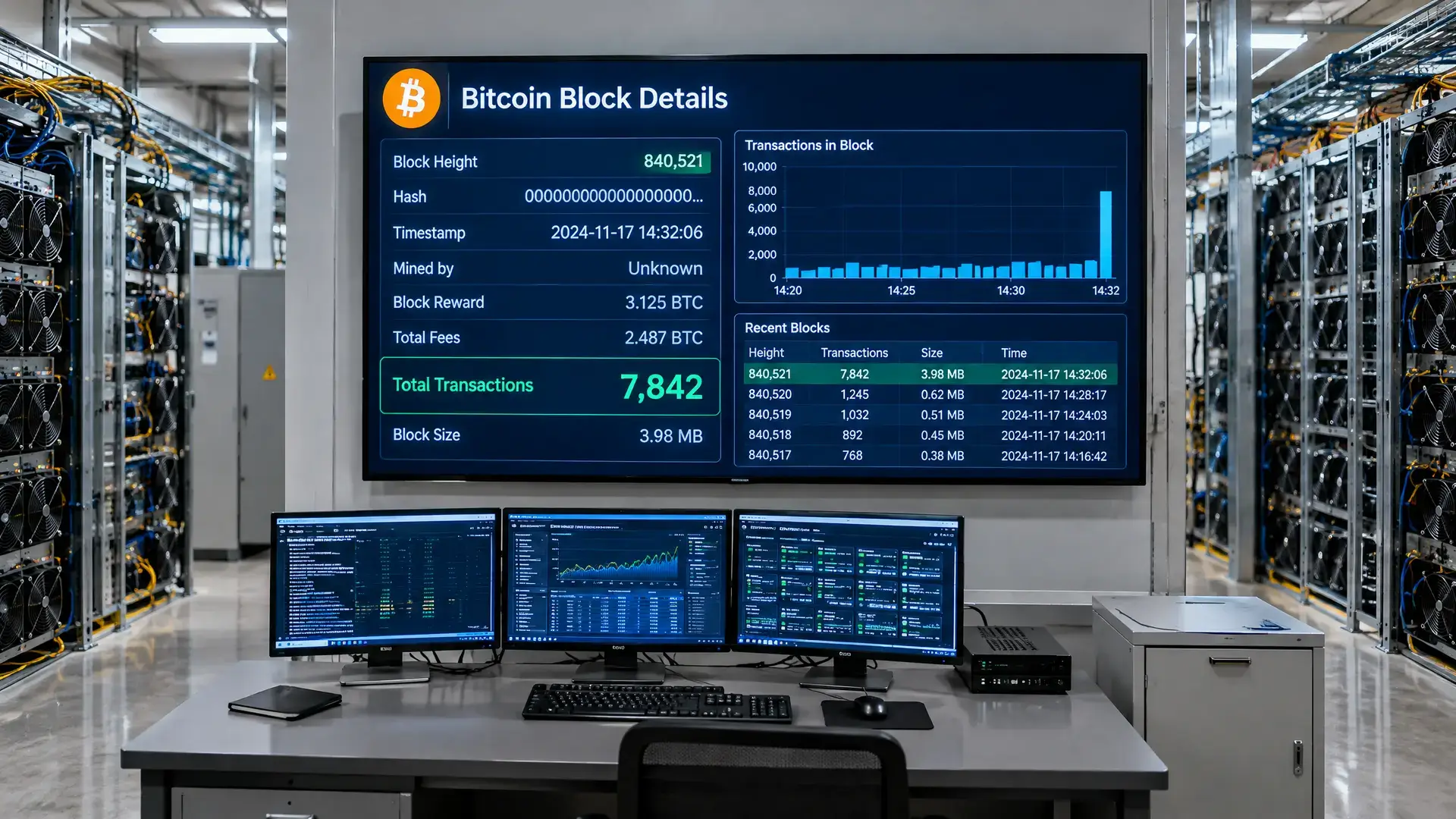
AntPool mined block 974,961 on Saturday with 11,255 transactions. That put it close to a record for Bitcoin. The block fell 984 transactions short of the 12,239 transactions that F2Pool processed in block 367,853 on August 1, 2015, still the highest number in the network's history.
Fee revenue was notably low. The transactions in the block generated a total of 240,533 satoshis, about $180 (€161) at the Bitcoin price of around $75,800 (€67,700) on Sunday. AntPool was paid about $237,000 (€211,700) in total, almost entirely from the fixed block subsidy of 3.125 BTC that the network pays to the miner who finds a block.
Low Fees Despite a Busy Block
It was already AntPool's second block in a week with an unusually high number of transactions. On November 4, block 974,557 already contained 10,573 transactions and generated about $110 (€98) in fees. In both cases, the fee per transaction was therefore very low, despite the large amount of data that fit into the block.
According to mempool.space, the median fee rate in the block was zero. A sample of transactions from the middle of the block mostly showed small 80-byte transactions, each paying just one satoshi and carrying a small data output. That fits a market where users pay little for block space as long as demand for space stays limited.
What This Says About Miners
For Bitcoin miners, revenue mainly comes from two sources: the block subsidy and transaction fees. That subsidy is now 3.125 BTC per block and halves about every four years. Fees, on the other hand, move with demand for space on the main chain and can rise sharply when the network is busy, such as during the Ordinals and Runes period in 2023 and 2024.
That makes the comparison with earlier peaks relevant. On April 20, 2024, fees temporarily made up more than 75% of miner revenue, but later that year that share fell back to 1.6% of daily income. The current situation shows that a near-record number of transactions does not automatically mean miners are earning much more.
Why This Matters for Bitcoin Investors
For Bitcoin investors, this matters mainly because miners' fee income becomes more important over time as the subsidy keeps shrinking. The next halving, to 1.5625 BTC per block, is scheduled for around April 2028. If fees stay low then, that could put more pressure on miners' revenue mix, although one block by itself still says very little about the broader market trend.