Armstrong Dismisses Chamath Palihapitiya's Bitcoin Mining Warning
Armstrong says Bitcoin’s block production stays steady thanks to difficulty adjustments, even if miners shift capacity toward AI.
Key Takeaways
- Brian Armstrong is dismissing Chamath Palihapitiya’s warning about Bitcoin mining and AI.
- Armstrong says Bitcoin keeps producing blocks roughly every ten minutes because of its built-in difficulty adjustment, even if some miners leave the network.
- Palihapitiya argues miners could earn far more by using their energy for AI workloads instead of Bitcoin mining.
Coinbase CEO Brian Armstrong has pushed back on investor Chamath Palihapitiya’s warning about Bitcoin mining and AI. Armstrong said Bitcoin’s price is not directly linked to hash power, since the network automatically adjusts its difficulty and continues to generate blocks about every ten minutes, even if miners go offline.
Chamath Sees Structural Pressure
Palihapitiya, who founded Social Capital, said on X that crypto is facing two separate pressures right now. In his view, new liquidity is more likely to flow into prediction markets and stocks than into Bitcoin. He also argued that miners could put the same energy to far better use on AI workloads, where he says returns could be 10 to 20 times higher.
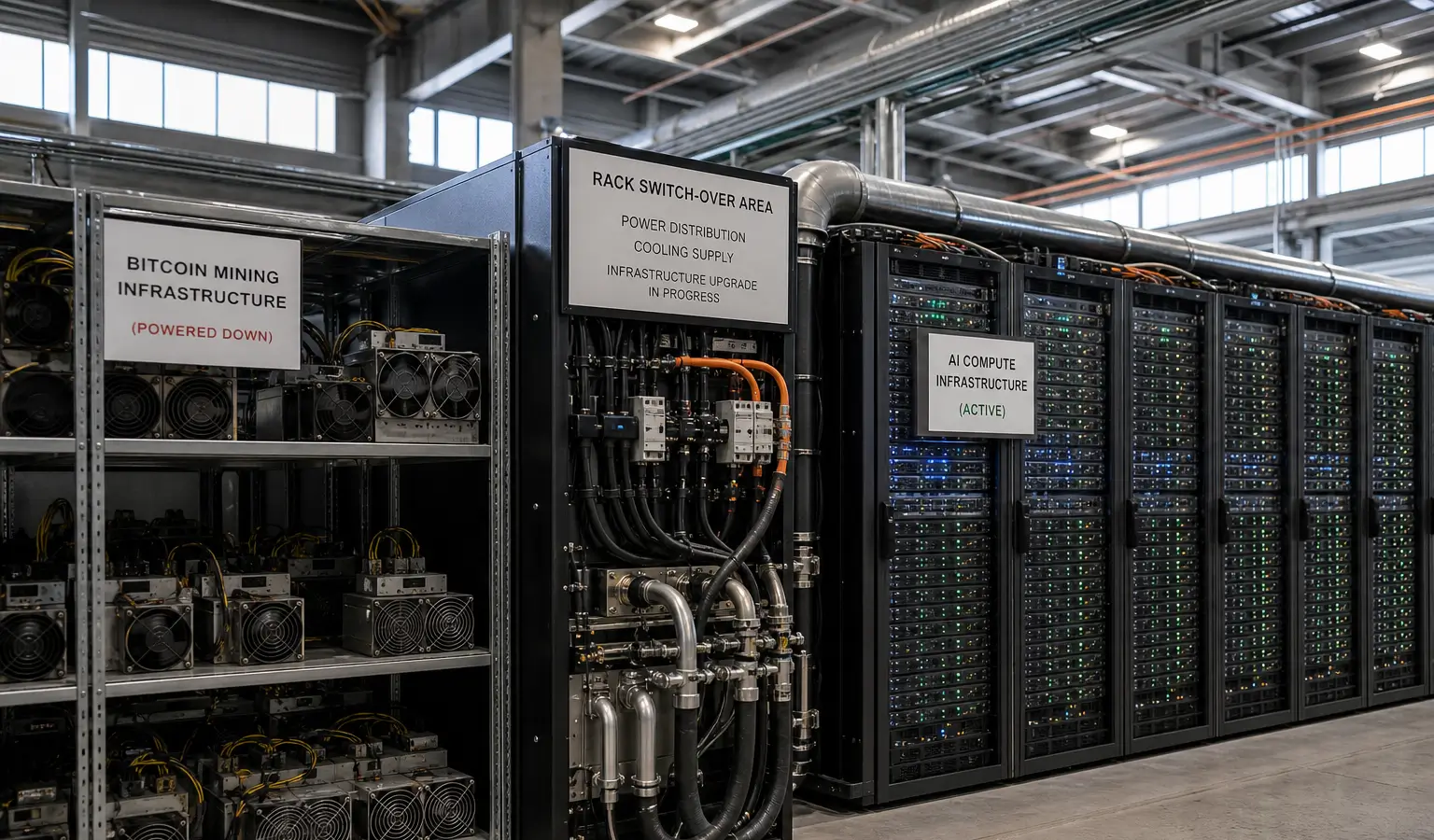
That view feeds into a wider debate around Bitcoin mining as an energy-heavy business. Over the past few months, several mining firms have started using their infrastructure for AI data centers or hosting agreements, largely because demand for AI computing keeps rising. Even so, mining economics still come down to hash price and how much electricity miners can afford.
Armstrong Focuses on the Protocol
Armstrong replied that miners leaving the network do not set Bitcoin’s value. In his view, the price is driven mainly by concerns about inflation and budget deficits, not by how much computing power is active on the network. That matches the long-standing idea that Bitcoin should be treated more like digital gold than like a day-to-day payments network.
The discussion comes as Bitcoin was trading around $64,397 (€56,300), roughly 45 percent below its October 2025 peak. Even so, with a market cap of about $1.29 trillion (€1.1 trillion), it remains by far the largest crypto asset. At the same time, capital in 2026 is also rotating toward Ethereum, XRP, and Solana, which shows investors are looking well beyond Bitcoin alone.
Bitcoin has also mostly traded sideways near this level over the past few days, while the market has reacted to broader AI and risk sentiment. That fits the picture that Bitcoin stayed near $64,000 while oil and AI stocks swung.
Why This Still Matters
For European crypto investors, this debate matters because it goes beyond price and gets into Bitcoin’s core infrastructure. If more miners shift capacity toward AI, it could reshape the economics of mining companies and the energy contracts they rely on. For the market, though, the key point is that Armstrong says the protocol keeps block production stable even when computing power moves around temporarily.