Arthur Hayes Warns of AI Debt in U.S. Insurance
Hayes points to captive reinsurance and AI data center debt as weak spots in U.S. insurance. He then links possible liquidity support to Bitcoin.

Key Takeaways
- Arthur Hayes says the U.S. insurance sector is insolvent if AI-related debt is valued at market prices.
- He points to captive reinsurance structures and cites research that says 29 of the 30 biggest insurers are technically insolvent.
- Hayes links possible problems in AI data center debt to extra dollar liquidity and sees a possible positive role for Bitcoin in that.
Arthur Hayes says the U.S. insurance sector is already insolvent once AI-related debt is valued at market prices. According to him, the problem sits in captive reinsurance structures that put weak promises on the balance sheet as if they were real capital. That means the debate is not just about insurers, but also about the growing financing of AI data centers and the broader crypto market, because Hayes sees a possible role for Bitcoin there.
Claims About Reinsurance
Hayes' claim leans on research by forensic accountant Thomas Gober, which was published through analyst Nick Nemeth. It says there is $1.54 trillion (€1.3 trillion) in affiliated reinsurance against $657 billion (€572 billion) in surplus. If that reinsurance is stripped out, 29 of the 30 biggest U.S. insurers would be technically insolvent.
Gober also looked at three captive insurers in Vermont. Together, they would have only 3.7% of the assets needed to cover their combined liabilities. Hayes uses that picture to argue that the sector is vulnerable as long as the underlying contracts are not tested.
AI Debt and Oversight
According to Hayes, the real trigger would be a wave of downgrades on AI data center debt. Insurers already hold a growing share of that market, which means their position is increasingly tied to whether AI labs keep investing in computing power. Meanwhile, the National Association of Insurance Commissioners is taking a closer look at complex private credit and infrastructure paper in U.S. insurers' portfolios, precisely because those assets are hard to value.
That broader AI financing is now big enough to draw attention outside the insurance sector too. The AI debt wave has become a major part of the U.S. investment-grade market, while cybersecurity and AI risks are showing up more often in insurance terms. That makes the debate over valuation and coverage relevant beyond just a small group of specialized investors.
Why Bitcoin Comes Up Here
Hayes sees two outcomes: regulators let insurers fail, or the government steps in to stop that. In either case, he says, more money could enter the system. He ties that to his earlier argument that more dollar liquidity can be good for Bitcoin.
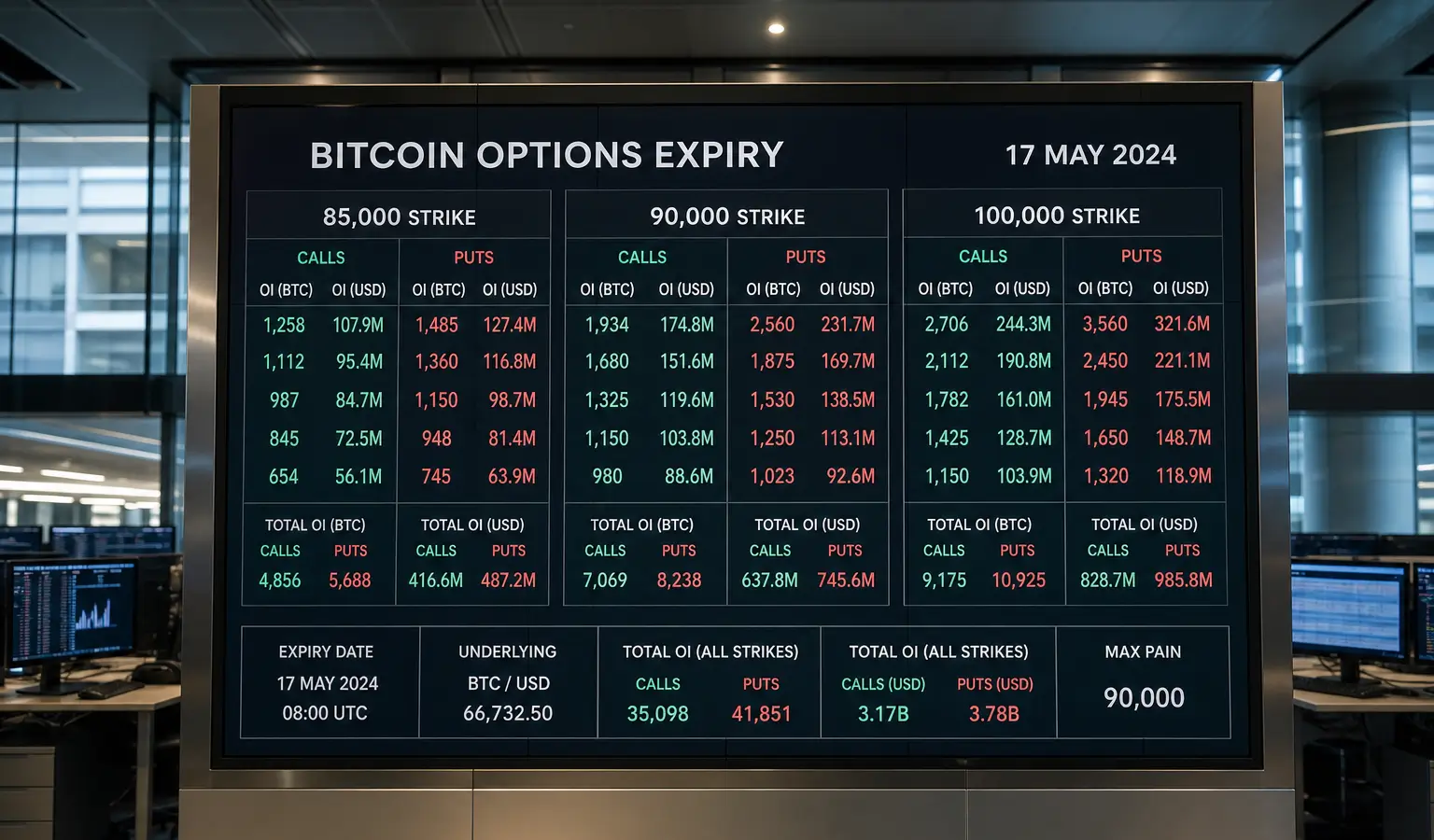
For European crypto followers, the key point is that stories like this connect Bitcoin once again to credit stress outside the crypto market itself. Hayes also points to private credit funds that already paused redemptions earlier this year, which he says shows that the tension in this part of the financing market is not isolated. The broader market is also watching to see whether that liquidity expectation is already priced in; Bitcoin options show that traders are still heavily betting on more upside.