Arya.ag Brings $2 Billion in Grain Loans Onchain With Avalanche
Arya.ag uses its own Avalanche layer-1 to connect grain inventories, warehouse receipts, and loan status. The setup is meant to make e-NWR collateral more transparent for banks in India.
Key Takeaways
- Arya.ag is putting grain inventories, warehouse receipts, and loan status onchain with Avalanche technology.
- The company is building its own layer-1 blockchain and says it has about $2 billion worth of crops in storage.
- Arya wants to help lenders check collateral and loans more reliably through one shared digital ledger.
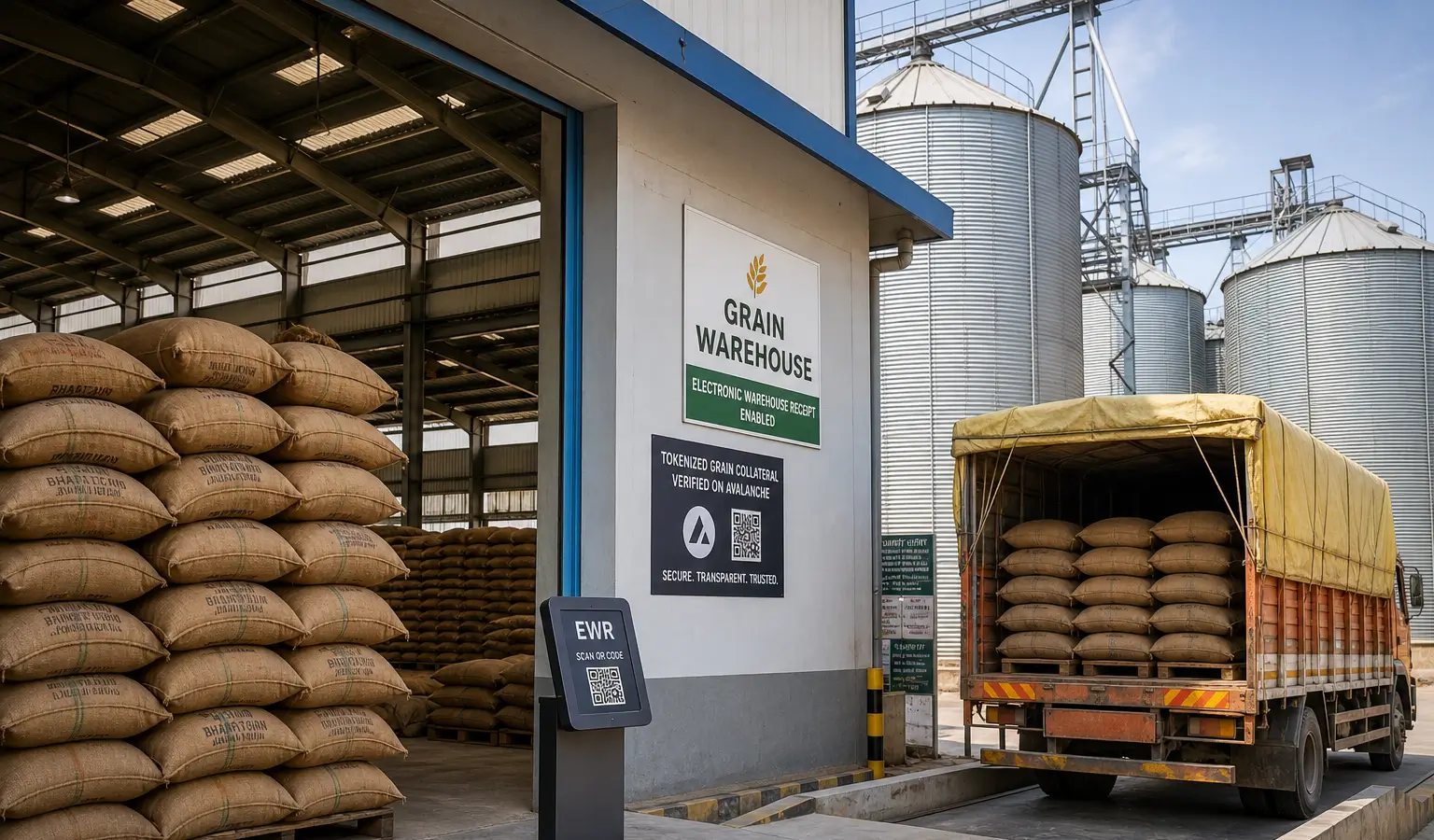
Arya.ag, India's largest agricultural storage company, is putting grain inventories, warehouse receipts, and loan status onchain with Avalanche technology. With this move, the company wants to give lenders a more reliable way to check which crops are serving as collateral for agricultural loans.
New Infrastructure
The announcement came on Thursday during the Global Fintech Festival in Mumbai, where Nandan Nilekani explained the initiative. Nilekani is a co-founder of Infosys and previously played a leading role in Aadhaar, India's identity program.
Arya is building its own layer-1 blockchain based on Avalanche technology. Arya will manage the mainchain itself, and it is supposed to eventually open up to other storage companies too. According to Ava Labs, three major banks are already joining the L1, while the first setup is mainly focused on the infrastructure behind warehouse-backed lending.
The core idea is that data about stored grain, pledges, and outstanding debt will no longer be spread across separate systems. Instead, the storage company, bank, and other parties can check the same data on one shared digital ledger. That should help reduce errors and fraud in warehouse receipt financing, without Arya making any hard claims yet about lending becoming directly faster.
Market Size
Arya's scale is significant. The company says it has about $2 billion (€1.7 billion) worth of crops sitting in its warehouses. In its existing non-blockchain business, Arya facilitates about $1.3 billion (€1.1 billion) in loans each year, while Arya Dhan provides another roughly $230 million (€197 million) directly.
The documents at the center of this are called electronic negotiable warehouse receipts, or e-NWRs. In India, these are already legally recognized as collateral for bank loans against stored crops. Even so, the system remains fragmented in practice, because storage data and loan status are often kept in separate records.
Relevance for India
For European crypto readers, this is mainly relevant because tokenization here is not about speculation, but about a practical financial process. India faces major post-harvest losses because of poor storage, while formal lending to farmers is still limited. A more transparent system for storage and collateral could therefore be an interesting example of how blockchain is being used outside the crypto market itself.
The companies have not said how much has actually been put on the blockchain so far. It is also still unclear when the system will be scaled further. The financial terms of the partnership with Ava Labs have not been disclosed.