Aztec Labs Brings Back zk.money for Private Payments on Ethereum
The wallet on Aztec Network hides amounts and recipients, but deposits from Ethereum remain visible. Users pay with DAI; limits and an audit that is still unfinished highlight the experimental nature.
Key Takeaways
- Aztec Labs is bringing back zk.money as a wallet for private payments on Ethereum through Aztec Network.
- The wallet hides amounts and recipients, but deposits from Ethereum remain visible, and DAI is the only internal currency.
- Use is limited to amounts under $2,500 per transaction, while Aztec Labs warns that the software has not been fully audited yet.
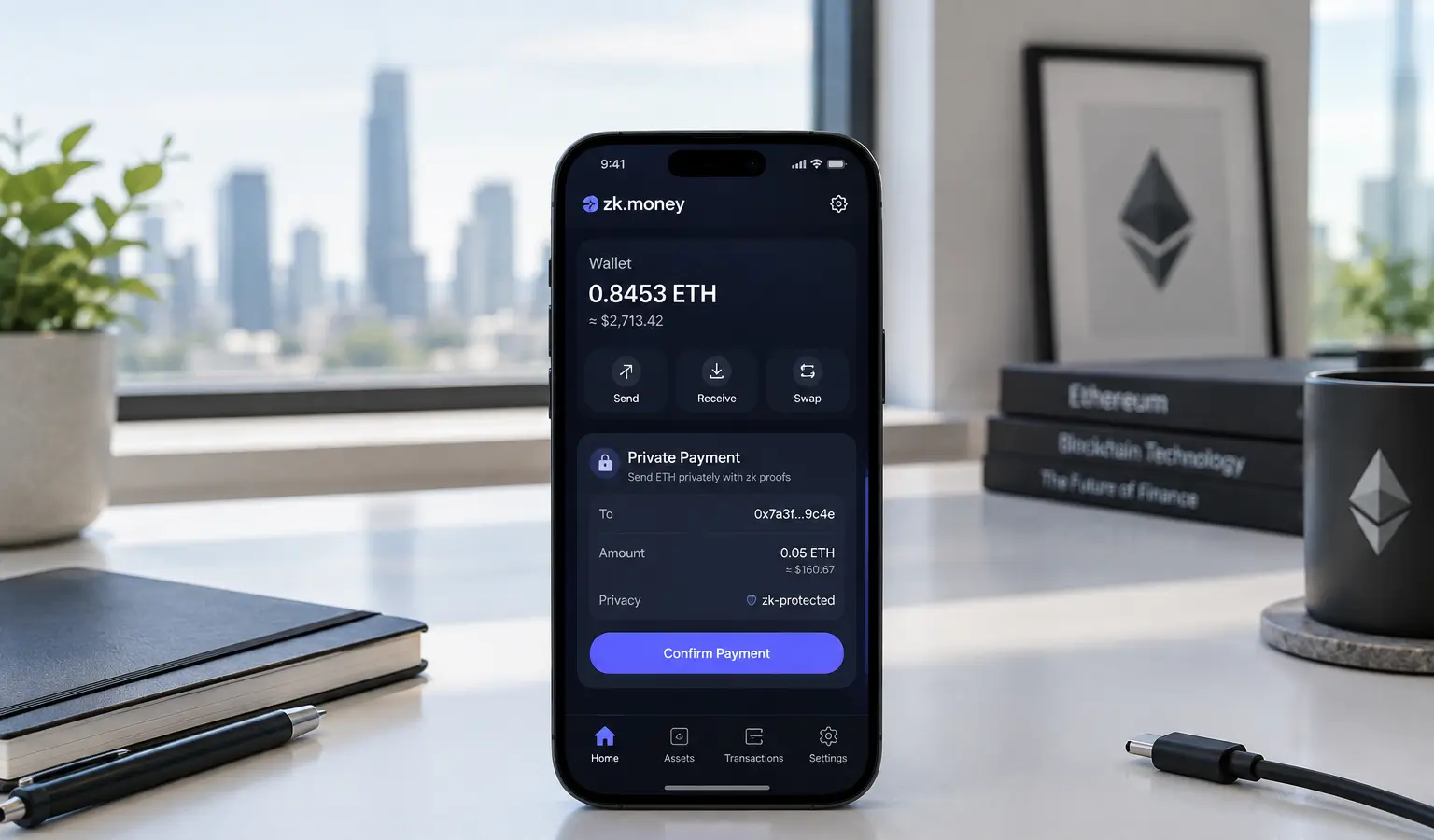
Aztec Labs is bringing back zk.money, a wallet for Ethereum users that shields payments on the Aztec Network. The service hides amounts and recipients, but deposits from Ethereum remain visible. That gives the crypto market another option for anyone who wants more privacy in onchain payments.
How zk.money Works
According to Aztec Labs, users can deposit from Ethereum DAI, USDC, and USDT. USDC and USDT are converted into DAI when they arrive, making DAI the only currency used inside zk.money. Payments can be sent to a name or through a payment link instead of a long wallet address.
The wallet moves payments to the Aztec Network, which is connected to Ethereum but shields balances, amounts, and the parties involved. Aztec Labs says zk.money is self-custodial, which means the operators cannot spend or freeze the funds. The company calls DAI the most decentralized of the mass-market stablecoins currently used on Ethereum.
What Remains Visible
The wallet does not offer full anonymity. Aztec’s documentation says a deposit from Ethereum still shows the sender and the amount, even if the recipient can stay private on Aztec. The relaunch also comes with limits: every deposit, payment, and withdrawal must stay under $2,500 (€2,200), while users get a daily deposit limit of $50,000 (€44,000) that replenishes over time.
Aztec Labs says those limits are part of a new and experimental system. A deposit costs 35 cents plus Ethereum fees, and a withdrawal costs 20 cents. Users get 100 sponsored transactions per day inside zk.money, although payments can wait if the contract does not have enough balance for network fees.
Privacy Remains an Ethereum Theme
The return of zk.money fits into a broader debate about privacy on Ethereum. The blockchain already has apps that shield payments, but regular wallet transactions remain public. At the same time, developers are working on proposals for the planned Hegotá upgrade in 2027, with ideas like FOCIL, shielded pools, and private transactions. The Ethereum Foundation has also reorganized its privacy team into the Ethereum Privacy Guardians, showing that privacy is moving higher on the agenda.
For European crypto users, this matters because privacy tools are increasingly appearing alongside standard Ethereum wallets. At the same time, it remains a tradeoff between ease of use, visibility on the chain, and the limits of young privacy infrastructure. Aztec Labs itself warns that the software has not been fully audited yet and that critical bugs are possible.