Binance Founder CZ Blames 2026 Crypto Drop on AI, Geopolitics, and the Cycle
CZ says capital is shifting into AI, geopolitical tensions are weighing on markets, and the four-year Bitcoin cycle is adding pressure. He also says U.S. crypto legislation remains an important factor.
Key Takeaways
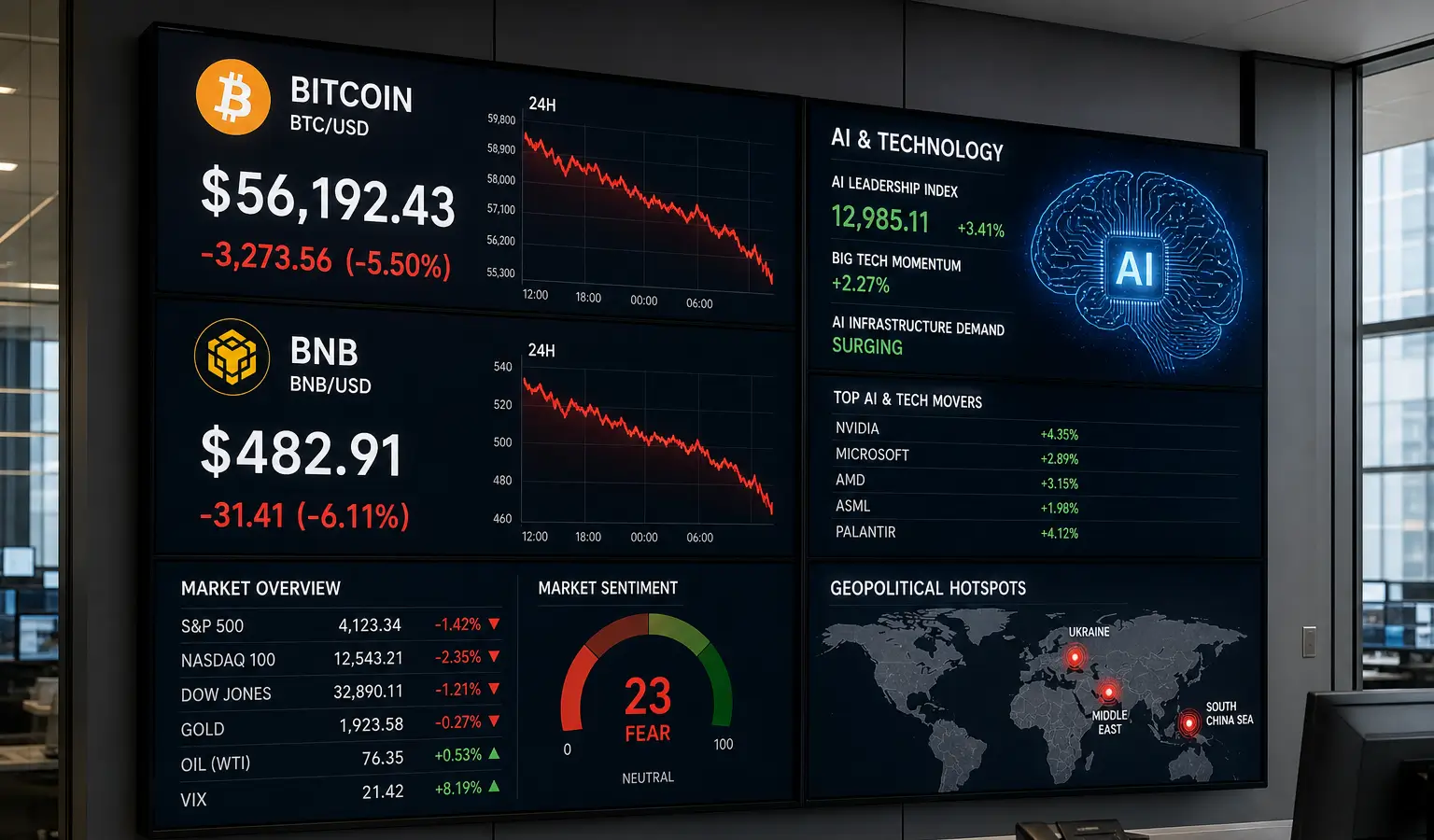
- Bitcoin fell about 50 percent in the first half of 2026 from last year’s high.
- CZ says AI, geopolitical tensions, and the four-year crypto cycle are the main reasons behind the crypto drop.
- CZ expects the crypto sector to keep growing over the long term, despite uncertainty around U.S. regulation and oversight.
The crypto market took a steep hit in the first half of 2026, with Bitcoin losing about 50 percent from last year’s peak. Changpeng "CZ" Zhou, the founder of Binance, says the sell-off came from a combination of forces, including geopolitical tensions, the rise of artificial intelligence (AI), and crypto’s familiar four-year cycle.
Impact of AI and Geopolitical Tensions
CZ said money is flowing out of crypto and into newer technologies such as AI, which he sees as a healthy long-term development for the broader tech industry. At the same time, geopolitical flashpoints, including tensions around the Strait of Hormuz and the resulting jump in oil prices, are adding stress to financial markets. That has made investors more cautious and less willing to hold riskier crypto positions. The trend also fits with the wider move into AI stocks, which has weighed on major coins like crypto majors.
Four-Year Cycle and Outlook
Bitcoin’s well-known four-year rhythm, where strong rallies are often followed by corrections, is also part of the current downturn. CZ said that even with the short-term swings, he still expects crypto to keep expanding over the long run as demand for financial tools and digital transactions continues to grow. He added that the market matters to him personally as well, since much of his wealth is tied up in the BNB token.
Regulation and Political Developments in the U.S.
On regulation, CZ said the United States is likely to remain a key force in shaping crypto rules, even though questions remain around laws such as the Digital Asset Market Clarity Act. He described the bill as important, but said he views it as a tactical move that should not change the sector’s long-term trajectory. He also said political shifts after the U.S. midterm elections could bring more oversight, though he is open to transparency and cooperation with regulators.
For European crypto investors, it is worth remembering that U.S. policy and global geopolitical developments can spill over into the European crypto market as well. In the end, crypto is still being shaped by the same mix of innovation, politics, and market cycles, and that combination continues to drive both volatility and opportunity.