Bitcoin ETF Outflows Extend Longer Trend, but a Major Market Crash Still Looks Unlikely
Bitcoin ETF outflows have now lasted six weeks, but market signals suggest a major crash is not likely for now.
Key Takeaways
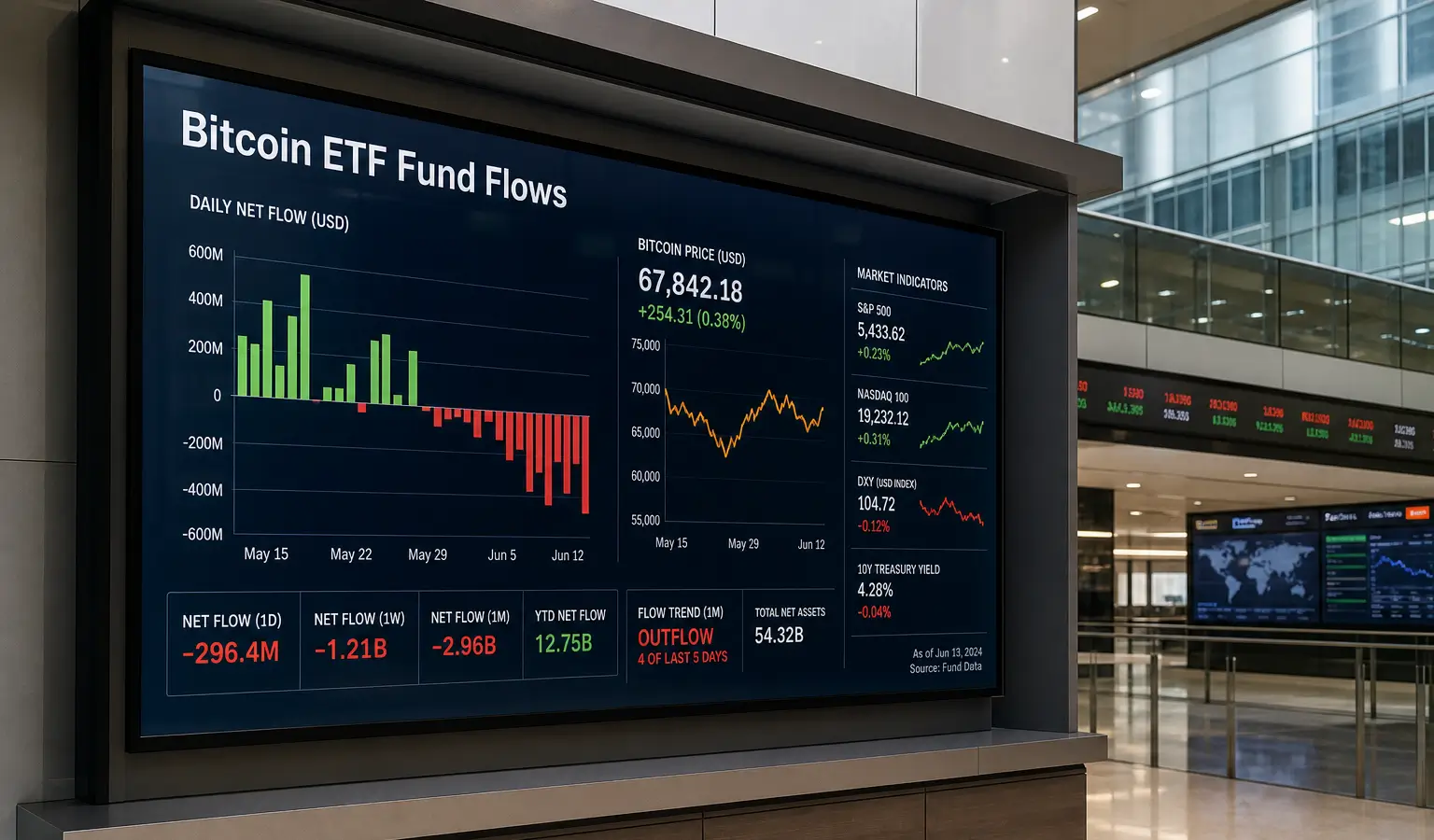
- Bitcoin ETFs have seen outflows for six straight weeks, the longest stretch since they launched in January 2024.
- Weekly outflows have dropped from $1.72 billion to about $227 million, which points to less selling pressure.
- A stock market crash of more than 50% looks unlikely based on recent analysis, thanks to Bitcoin's moderate correlation with the S&P 500 and positive earnings expectations.
The outflows from Bitcoin ETFs have now continued for six straight weeks, the longest stretch since these investment products were created. This trend is raising concerns about a possible major market crash, partly because of Bitcoin's moderately positive correlation with the S&P 500. Still, recent developments and analysis suggest that a market drop of more than 50% is unlikely right now.
Longest Stretch of Bitcoin ETF Outflows
Since mid-May, institutional investors have been pulling money out of Bitcoin ETFs for the first time for this long in a row. This six-week outflow streak tops earlier spikes in 2025 and early 2026, which could be a sign that big players are getting cautious. But total weekly outflows fell sharply from $1.72 billion in early June to about $227 million in mid-June, suggesting selling pressure is easing. Since launching in January 2024, Bitcoin ETFs have become major institutional investment vehicles, with funds like the iShares Bitcoin Trust managing billions.
Limited Chance of a Major Market Crash
The call for a stock market crash of more than 50% depends on how closely Bitcoin and stocks move together. The correlation between Bitcoin and the S&P 500 is about 0.468 over six months, which points to a moderate positive relationship. While a sharp drop in the stock market can usually affect Bitcoin too, analysts like Benjamin Cowen are looking more at a bottom around October 2026 than an immediate steep sell-off. On top of that, S&P 500 earnings expectations are still positive this year, which makes a recession or a big earnings drop that could trigger a crash less likely.
The market setup also supports a more balanced view: the short position on Binance is larger than the long position, which could lead to a short squeeze if Bitcoin's price rises. In addition, data on long-term holders shows they are buying more Bitcoin during the recent weakness, which points to confidence in the underlying value.
Why This Matters for European Investors
For European investors, this development could point to a period of higher volatility and caution among institutional players. The long stretch of Bitcoin ETF outflows may signal portfolio repositioning, but the lack of a clear trigger for a major market crash means a panic reaction may not happen. The behavior of long-term holders and the market signals suggest there is room for stabilization, which matters for investors in Europe who follow the crypto market and are thinking about how macro trends could affect their positions.
The recent outflows fit into a broader cooling in institutional demand, as also seen in the earlier sharp drop in digital asset treasury inflows. That makes the current ETF trend especially relevant for investors trying to figure out whether the selling pressure is mostly temporary or part of a broader shift in capital flows.