Bitcoin Futures Lose Steam as Shorts Dominate
Open interest in Bitcoin futures is falling to a yearly low, while negative funding rates point to continued demand for short positions. Higher U.S. rates and a stronger dollar are putting extra pressure on the market.
Key Takeaways
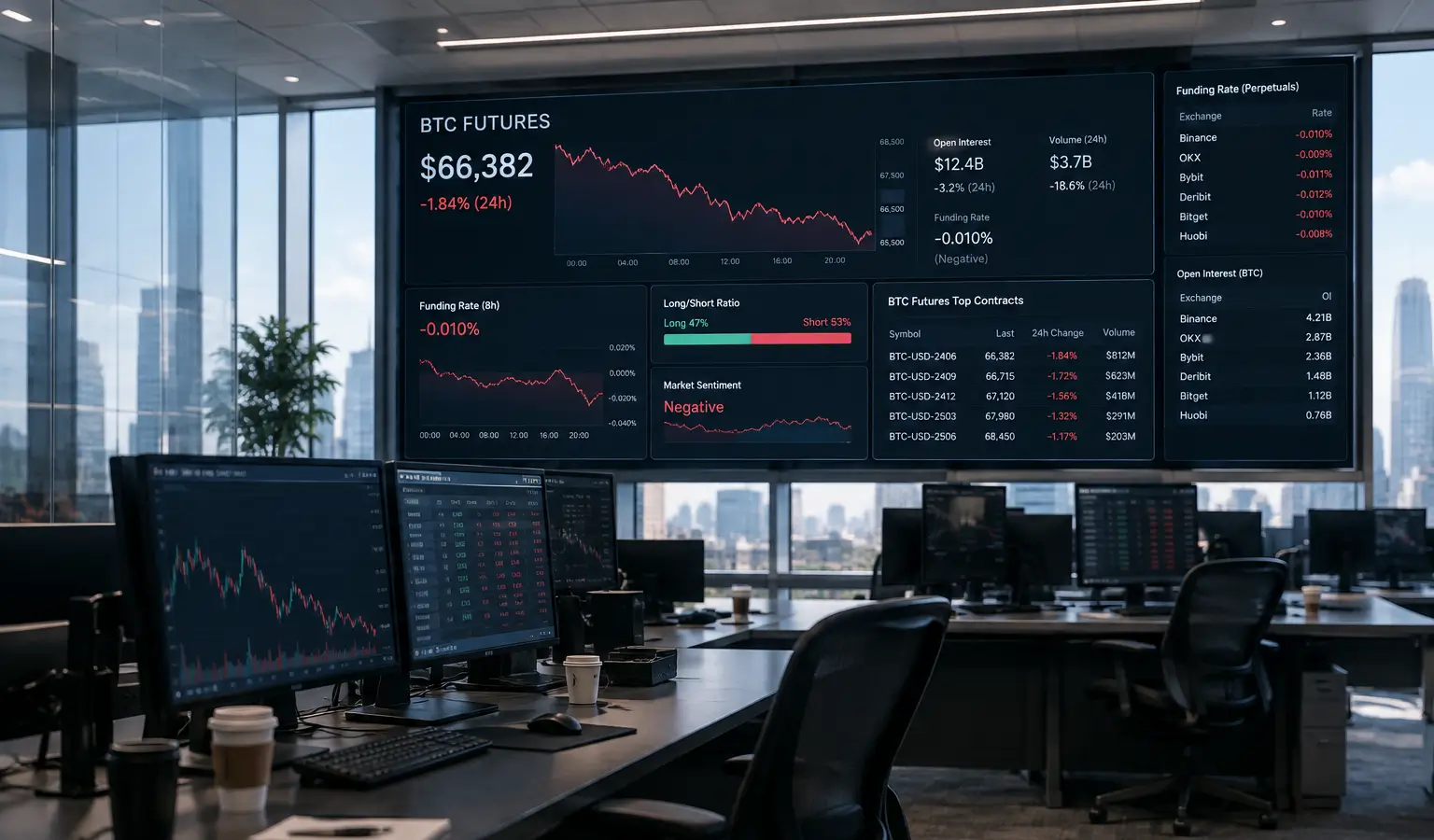
- Open interest in Bitcoin futures fell to 652,000 BTC, one of the lowest levels this year.
- Perpetual funding rates are negative again, pointing to strong demand for short positions.
- Higher rates, a stronger dollar, and broader market stress are weighing on demand for Bitcoin.
Capital is flowing out of the Bitcoin futures market, while traders who are still active seem willing to pay to stay short. That’s clear from the combination of falling open interest and negative perpetual funding rates again.
Less Leverage in the Market
Open interest, the number of open futures positions, stood at 652,000 BTC, one of the lowest levels this year. Earlier this year, it was still around 800,000 BTC. The drop shows that traders are using less leverage, even though Bitcoin rose about 40% in the third quarter.
Funding rates have also turned negative again and are averaging around minus 0.3% on major exchanges. That means short sellers are more aggressive about holding their positions and are willing to pay longs to keep that bearish bet open. In practice, that points to a market where confidence in further gains remains weak for now.
Bitcoin Reacts to Broader Market Stress
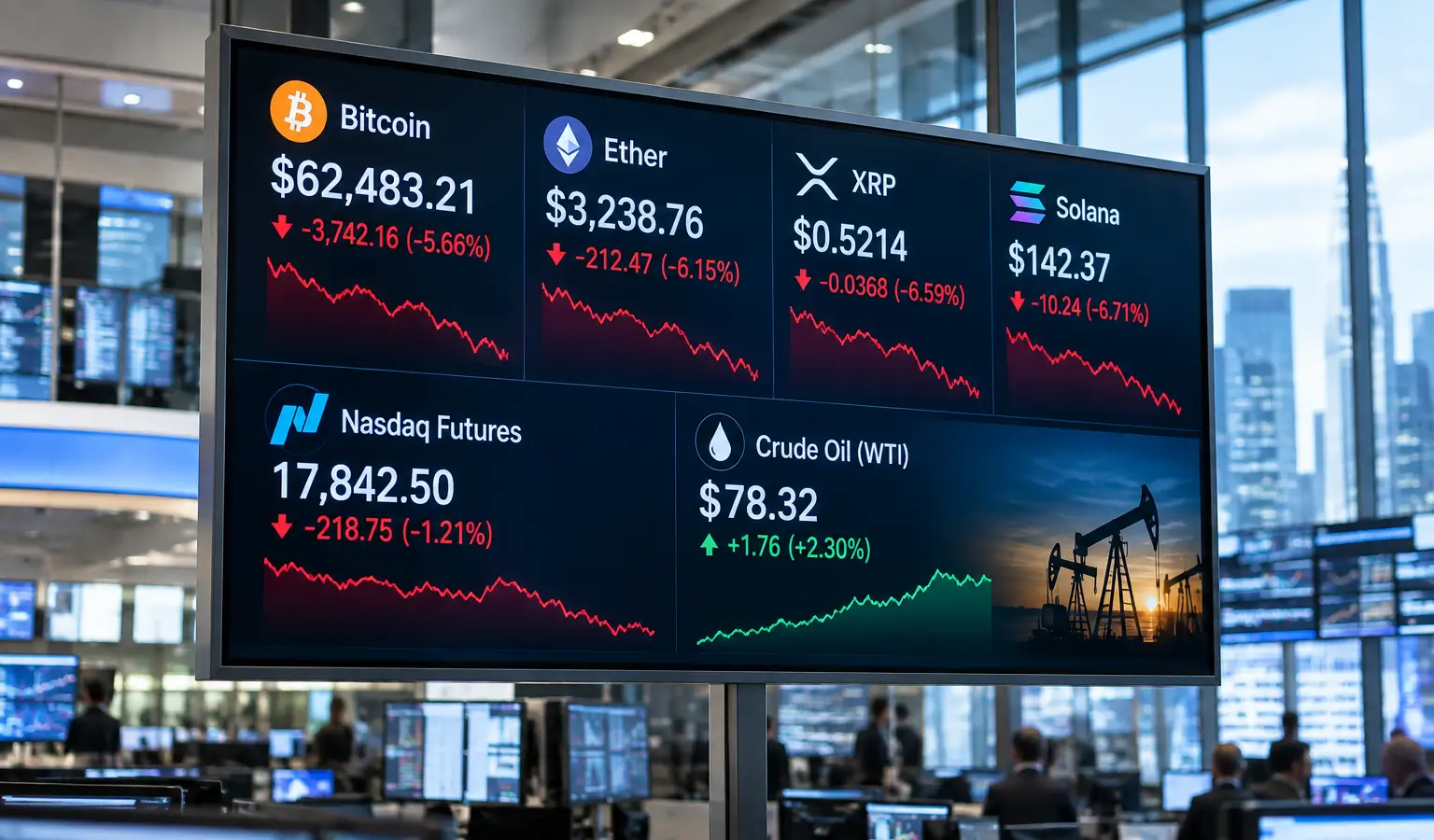
The shift came after Bitcoin fell 2% in 24 hours to $82,800 (€72,600), after President Donald Trump refused to rule out further attacks on Iran before the U.S. midterm elections. That geopolitical tension had already weighed on Bitcoin and Nasdaq futures earlier. Still, Bitcoin remains more than $20,000 (€17,500) above the summer cycle low and is still the best-performing asset of the third quarter.
Bitcoin is not the only asset under pressure. Gold fell 3% over the same period to about $4,150 (€3,640) per ounce. The Bitcoin-to-gold ratio is nearing 20, which suggests Bitcoin is almost back in positive territory versus gold this year.
Higher Rates Weigh on Demand
At the same time, the dollar is moving higher. The DXY index climbed above 101, while U.S. Treasury yields kept rising. The 10-year yield is above 5.2% and the 30-year yield is above 5.51%. That matters for crypto investors because higher rates make interest-bearing investments more attractive than Bitcoin and gold, which do not generate income themselves.
The trend in 2026 also shows that the futures market has been cooling for a while. Open interest in Bitcoin futures also dropped sharply earlier this year, with a 13.5% decline between September 3 and 11. In the CME market, open interest fell below $8 billion (€7 billion) in March and then to $7.2 billion (€6.3 billion) in early April, the lowest level since February 2024.