Bitcoin Mining Difficulty Drops 14% as Returns Weaken
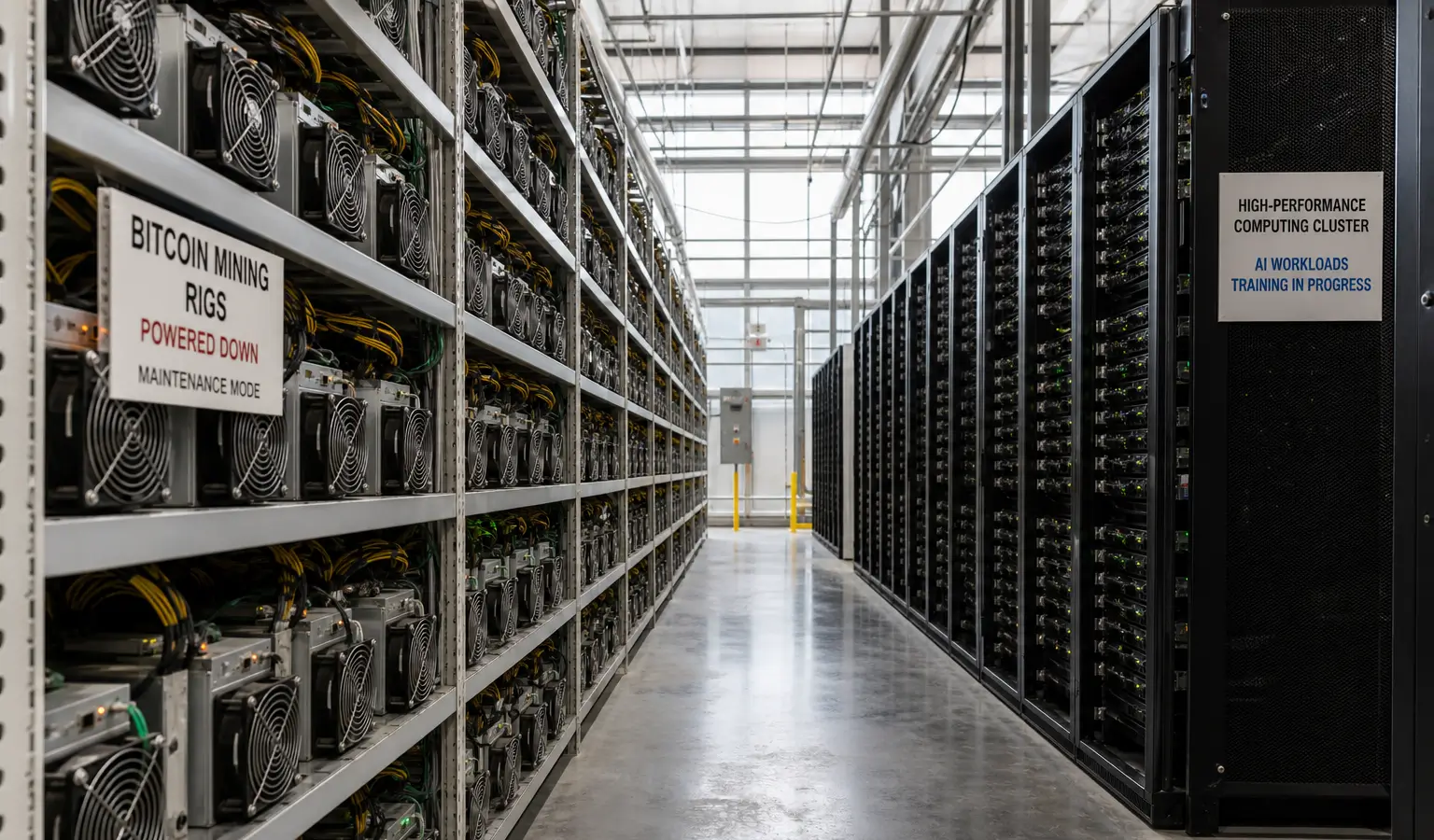
The decline points to softer mining returns and more capital moving into AI and high-performance computing. Curtailments in Texas are also weighing on Bitcoin hashrate.
Key Takeaways
- Bitcoin mining difficulty fell to 126.23 trillion, putting it about 1.1% below where it was a year ago.
- The drop follows weaker mining returns, a shift in capital toward AI, and disruptions like curtailments in Texas.
- Hashprice recovered slightly to $31.7, but the forward market points to only limited revenue recovery.
Bitcoin’s mining difficulty has slipped below its level from a year ago for the first time in years, as weak mining economics and a growing flow of capital into AI continue to slow capacity growth. The metric now sits at 126.23 trillion after a 0.74% decline, leaving it about 1.1% lower than a year ago and 19.1% below the all-time high of 155.97 trillion set in November 2025.
Difficulty Falls Again
Bitcoin mining difficulty changes roughly every 2,016 blocks, or about once every two weeks, to keep average block times near 10 minutes. When difficulty falls, it usually means less computing power was online during the previous adjustment period, which gives the miners still operating a bit less competition.
This latest move extends a decline that started after January’s peak. Following a 10% drop in June and another 5% decline earlier in July, the metric is now about 14% below this year’s high. It is only the second time in Bitcoin’s history that difficulty has fallen below its year-ago level. The previous instance came after China’s 2021 mining ban, when roughly half of the network’s hashrate briefly went offline.
Pressure on Mining Economics
According to Luxor’s Hashrate Index, the current decline is being driven mostly by weaker mining returns and by capital, power, and operators shifting toward AI and high-performance computing infrastructure. Curtailments in Texas, along with disruptions in other mining regions, also reduced capacity.
Miners are still seeing only limited relief. Hashprice, which measures the expected return per unit of computing power, dropped to $27.66 (€24) per petahash per day at the end of June, near February’s low. It has since bounced back to $31.7 (€28), but Luxor’s forward market is pricing an average of $31.85 (€28) per petahash per day through December. That is only a little above current spot levels and suggests miners are not expecting a strong revenue rebound for the rest of 2026.
Why This Matters
For European crypto readers, the takeaway is that Bitcoin mining is more than a technical function of the network. It also reflects the economic strain building across the industry. When miner margins shrink, hardware and capital can get redirected toward AI or other compute-intensive uses. That makes this trend important to watch for anyone tracking the infrastructure behind Bitcoin.