Bitcoin Nears $65,000 as U.S. Inflation Cools
Cooling core inflation is reducing the odds of a Fed hike and helping Bitcoin and Ether move higher. Bitcoin ETFs and the September FOMC meeting are back in focus.
Key Takeaways
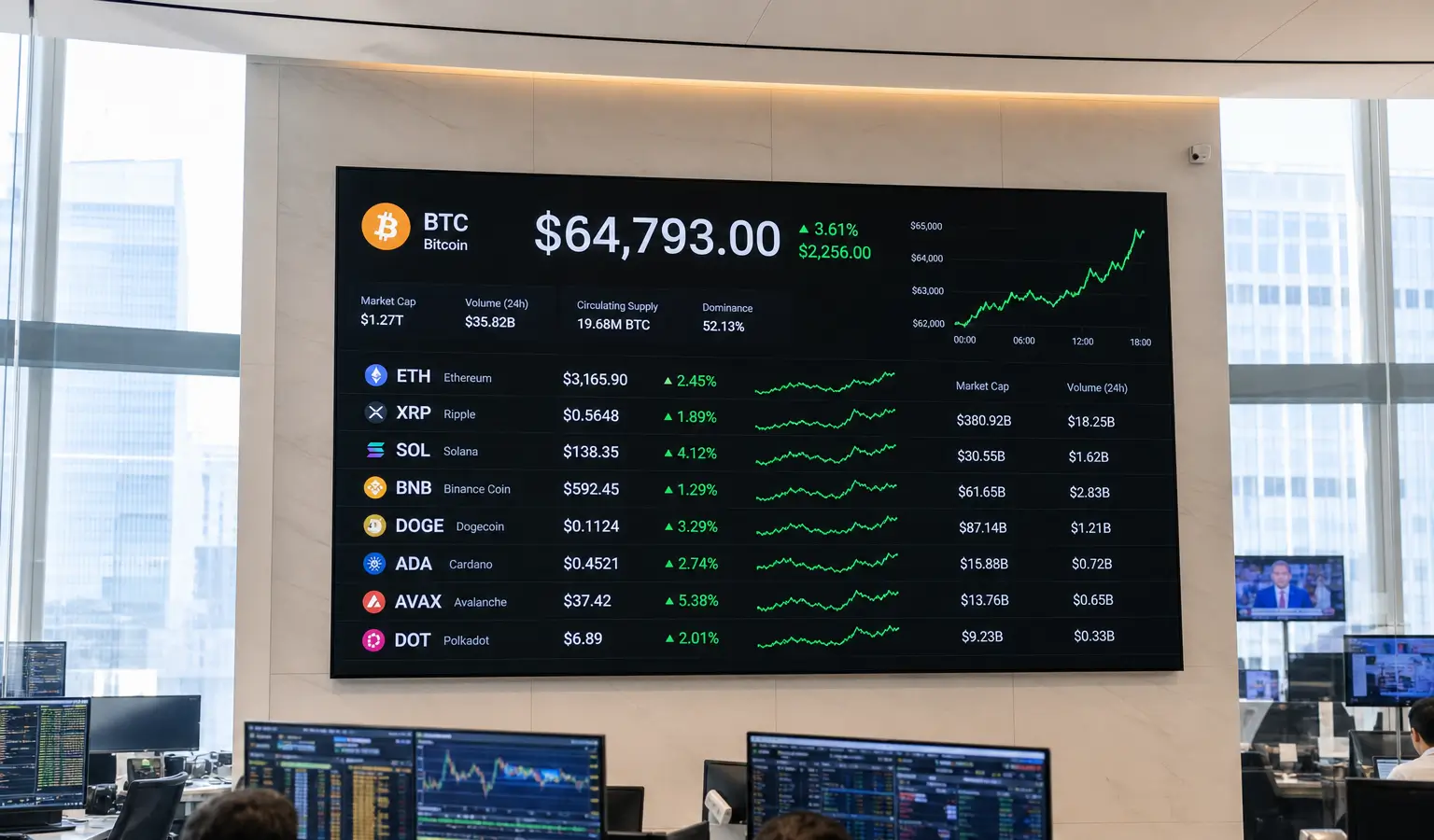
- Bitcoin climbed to nearly $64,800 on Wednesday after U.S. inflation data came in softer than expected.
- The odds of a Federal Reserve rate hike this month fell from 43% to 13%.
- Ether and other major altcoins moved higher too, while the market is now mostly watching the FOMC's September meeting.
Bitcoin pushed to nearly $64,800 (€56,800) on Wednesday, its strongest showing in weeks, after U.S. inflation came in cooler than economists had expected. Traders quickly scaled back bets on a Federal Reserve rate hike this month, and crypto prices followed higher.
Inflation Pushes Down Rate Expectations
U.S. headline inflation rose 3.5% in June, down from 4.2% in the prior month. Core inflation, which excludes food and energy, eased to 2.6% from 2.9%. That detail matters because it suggests the slowdown is broader than just lower energy prices. A recent Fed study also found that Bitcoin and Ethereum have been reacting more sharply to macro data such as inflation reports and rate decisions since 2021, which makes releases like this especially relevant for crypto.
After the data, the implied odds of a rate hike fell from 43% to 13%, while the two-year Treasury yield dropped by six basis points. It is the usual setup: higher rates tend to weigh on risk assets, while softer inflation gives policymakers more room to ease off.
Bitcoin and Altcoins Move Higher Together
Bitcoin gained 3.6% over the past 24 hours and is up 3.3% on the week, with about $31 billion (€27.2 billion) in trading volume. Ether led the move, trading near $1,880 (€1,650), up 5.3% on the day and 7.1% over the past seven sessions. Hyperliquid's HYPE also rose 6.4% to $67 (€59), XRP added 3.7% to $1.10 (€0.96), Solana climbed 3.6% to $78 (€68), Dogecoin gained 2.9%, and BNB ended 1.9% higher at $579 (€508).
The price action suggests Bitcoin is still trading more like a rate-sensitive risk asset than a traditional macro hedge. That matches research from 2026 showing that Bitcoin's correlation with rate expectations has strengthened significantly in this cycle. Its recent consolidation around $64,000 (€56,100) fits that same pattern, with traders focused more on macro signals than on a separate crypto-specific rally.
September Is Still the Next Test
For European crypto readers, the bigger point is that the market is now paying less attention to a single inflation print and more attention to the broader direction of Fed policy. Core inflation is still running at 2.6%, above the 2% target, so a quick move toward rate cuts still looks unlikely. The FOMC's September meeting, along with the dollar and any continued inflows into Bitcoin ETFs, could be the next major signal for sentiment around Bitcoin and the big altcoins.