

Bitcoin Stuck Around $63,500 on ETF Flows
ETF inflows are keeping demand supported, but miners and Strategy are selling some too. On Wednesday, U.S. CPI could break Bitcoin's narrow trading range.
Key Takeaways
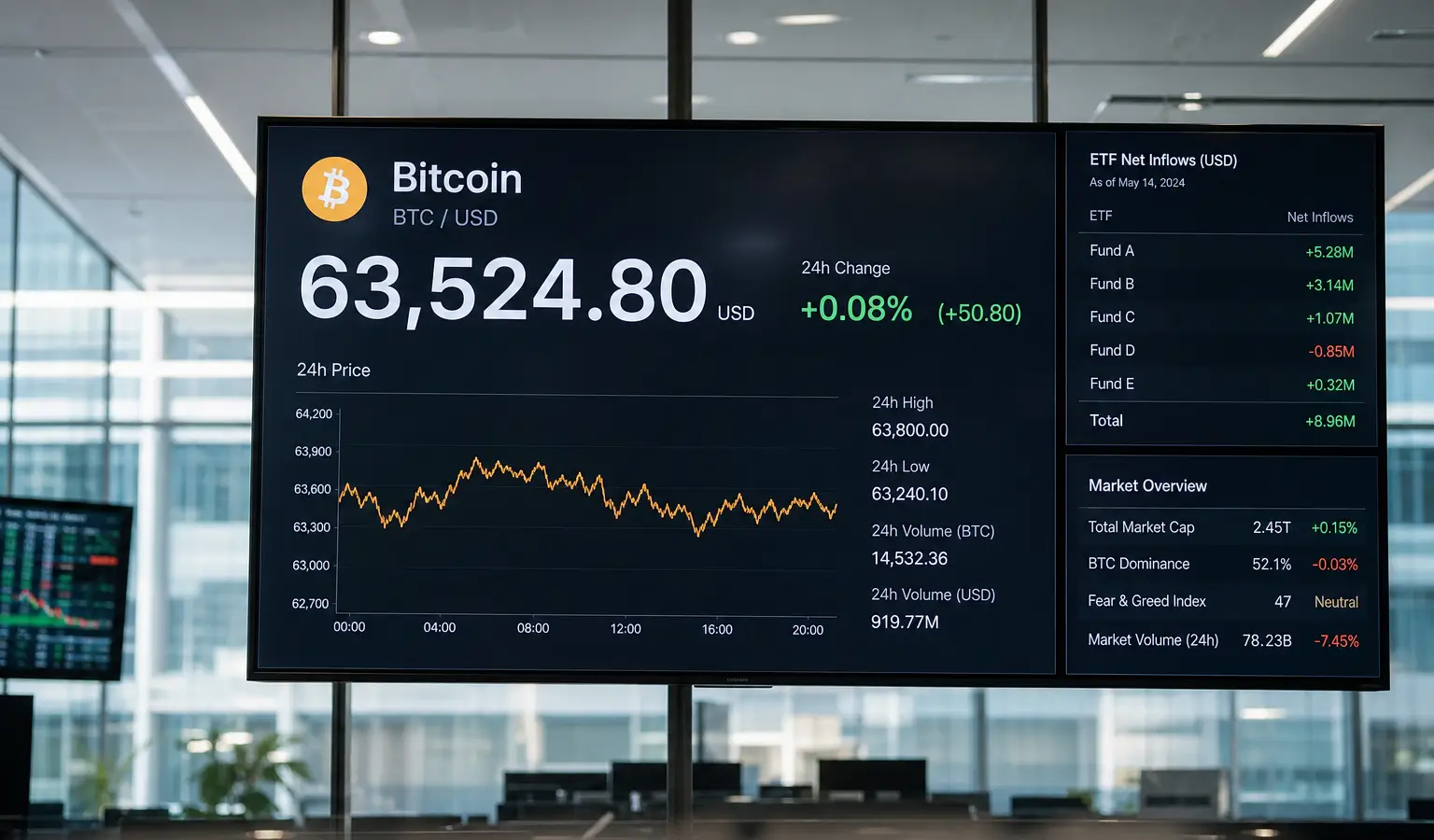
- Bitcoin stayed stuck around $63,500 on Tuesday, inside the weeks-long range of about $62,000 to $66,000.
- According to analysts, ETF inflows are being largely offset by selling from miners and corporate holders, while trading volumes are at their lowest level in three years.
- U.S. inflation data and possible regulation could break the range, while September is historically Bitcoin's weakest month.
Bitcoin barely moved on Tuesday, leaving it stuck in the narrow range of about $62,000 (€53,700) to $66,000 (€57,200) that has had the crypto market in its grip for weeks. The price slipped to around $63,500 (€55,000), down 0.6 percent in 24 hours, while ETF inflows and selling pressure from miners and corporate holders mostly canceled each other out.
ETF Demand Runs Into Selling Pressure
According to Paul Howard, senior director at trading firm Wincent, the recent price action is mainly being driven by steady ETF inflows that are being offset by OTC selling from miners and Strategy, Michael Saylor's publicly traded company. Bitfinex analysts point to the same pattern: spot Bitcoin ETFs and bitcoin treasury companies remain major sources of price-insensitive demand, but that demand has recently been facing headwinds from selling out of corporate reserves.
That helps explain why Bitcoin rose only about 2 percent last week, despite strong ETF inflows and a broader rebound in risk assets. Crypto trading volumes have meanwhile fallen to their lowest level in three years, leaving less fuel to push BTC convincingly out of the current range. Recent selling by Strategy also fits that picture of a market where treasury moves are still influencing the price in the short term.
CPI Could Break the Range
Wednesday's U.S. inflation data could change that. Jeff Anderson, managing partner at STS Digital, says conviction on both sides is thin now that summer liquidity remains low and traders are waiting for clarity on monetary policy and the Digital Asset Market Clarity Act.
That legislation matters for the broader market because clearer rules around digital investment products could affect sentiment toward Bitcoin and other crypto. Howard expects the consolidation could continue until mid-September if no fundamental catalyst shows up, while derivatives positions suggest investors are still well hedged.
Weak September in Focus
For European crypto readers, the main thing to watch is that the current stagnation comes during a period when the market remains sensitive to U.S. macro data. If Bitcoin breaks out of the range, that could quickly spill over into sentiment around spot ETFs and broader crypto trading, especially since liquidity stays thin through the summer.
Anderson also pointed out that September is historically Bitcoin's weakest month. Since 2013, BTC has fallen by an average of about 4 percent in that month, according to CoinGlass data, which makes the market extra alert to a possible breakout or, instead, a new phase of sideways trading.