BlackRock Lowers the Bar for Bitcoin Whales to Move Into IBIT
IBIT is making in-kind swaps for large BTC positions more accessible, while Bitwise also lowered the bar. The move taps into tax benefits and concerns about self-custody and security.
Key Takeaways
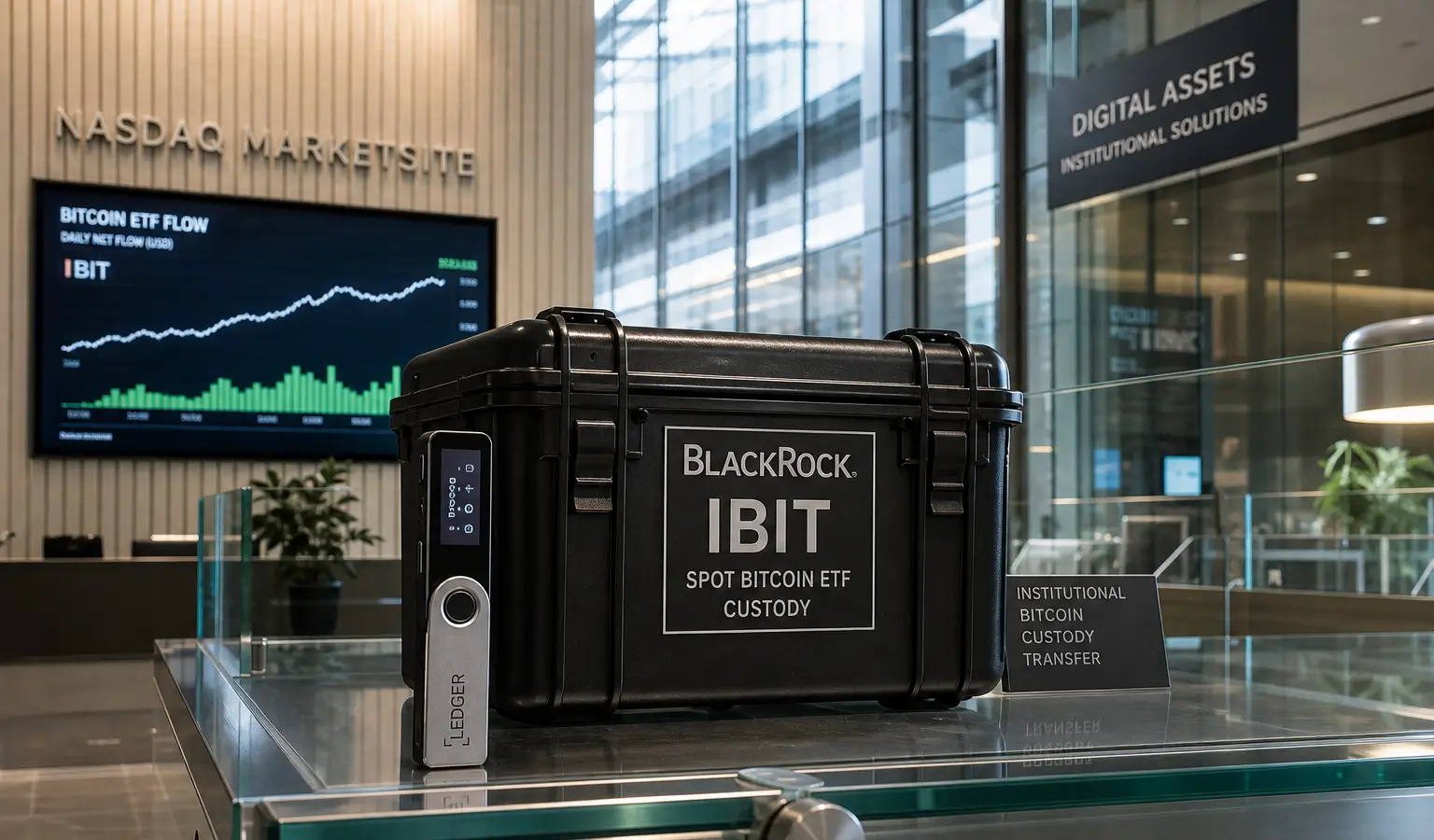
- BlackRock lowered the minimum Bitcoin value for a direct swap into IBIT from $25 million to $1 million.
- With in-kind creation, investors hand over BTC for ETF shares without first selling and buying back in.
- IBIT has already processed more than $5 billion in these swaps; BlackRock says security concerns also play a role.
BlackRock has made it much cheaper for large Bitcoin holders to turn self-custody into shares of its Nasdaq-listed spot Bitcoin ETF, IBIT. According to Bloomberg, the minimum Bitcoin value for that kind of direct swap fell to $1 million (€0.9 million) in July, after previously standing at $25 million (€21.4 million). Bitwise also lowered the threshold, from $100 million (€85.7 million) to $3 million (€2.6 million).
Direct Swaps Are Gaining Ground
The setup is called in-kind creation. In it, investors hand over their BTC to the fund and get ETF shares back. That means they do not have to sell their Bitcoin first and then buy it back, which can help them avoid a capital gains tax bill.
According to Robbie Mitchnick, head of digital assets at BlackRock, this type of transaction has already grown sharply. IBIT has now processed more than $5 billion (€4.3 billion) in these swaps, compared with $3 billion (€2.6 billion) in October. That shows the path from self-custody to a spot ETF is becoming more accessible for part of the market.
Security Also Plays a Role
Mitchnick told Bloomberg that crypto kidnappings, hacks, and custody failures are part of the reason behind that choice. People, he said, see what is happening outside the market and decide to move all or part of their holdings into an ETF. The shift is not limited to Bitcoin either: firms like Grayscale and VanEck now offer this for ether as well.
Why This Matters
For European crypto readers, this shows how quickly Bitcoin and other crypto are being woven into the financial system through traditional investment products. The SEC's approval of spot Bitcoin ETFs in January 2024 already made that route much more normal for large investors. At the same time, the debate gets at a core crypto question: how much control investors want to keep over their BTC or ETH, and how much they hand over to a fund or custodian. Inflows into U.S. spot funds remain an important gauge here; recent Bitcoin ETF inflows showed that demand can still be strong.