Bond Market Prices In Fed Hike, Bitcoin Under Pressure
Bond traders are once again pricing in a Fed hike, which could tighten liquidity. Spot Bitcoin ETF flows also remain an important market gauge.
Key Takeaways
- Bond traders are once again pricing in a Federal Reserve rate hike, possibly as soon as September or October.
- Bitcoin is under pressure because higher rates and lower liquidity have historically been bad for riskier investments.
- Spot Bitcoin ETF flows remain important; in July, there was notable inflow despite rate fears.
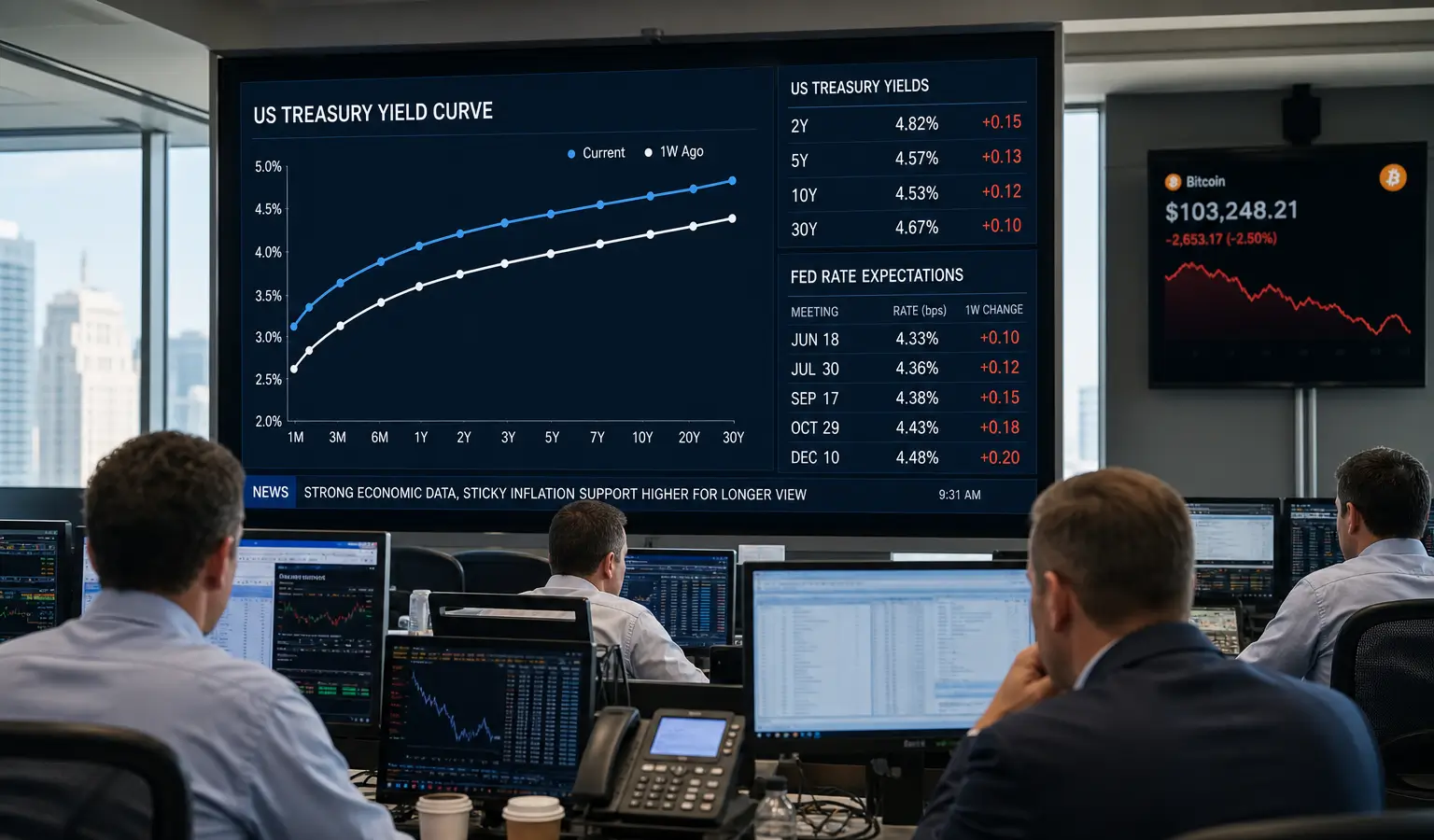
Bond traders are once again betting on a rate hike from the Federal Reserve, and that is adding fresh pressure to Bitcoin. It is a signal the crypto market has not had to deal with since 2023: traders are now pricing in a quarter-point hike by December, with September or October already in play as earlier possibilities. That matters for Bitcoin because the asset has long been sensitive to tighter Fed policy.
The Market Is Shifting Toward Tighter Policy
This move did not happen in a vacuum. Inflation has stayed above the 2% target for five years, oil is rising again after the collapse of the Iran ceasefire, and heavy AI spending is still helping keep the economy supported. Softer June inflation data briefly gave markets some relief, but that faded fast as rate expectations climbed again.
From the market’s point of view, the inflation fight is still not finished. Bloomberg reported that Treasury traders, along with Fed Chair Kevin Warsh, are now pricing in another round of tightening. That group gets a lot of attention because it is putting real money behind its view on where rates are headed.
Why Bitcoin Reacts to This
A rate hike would be the first since 2023. During the last tightening cycle, Bitcoin fell from around $45,000 (€39,400) to a cycle low near $15,500 (€13,600) on November 22, 2022, a drop of almost 65%. Even so, that same period eventually ended up marking the bottom of the previous cycle.
The broader backdrop matters here. When the Fed raises rates, borrowing gets more expensive and liquidity usually tightens, which tends to hurt risk assets like Bitcoin. A stronger dollar can add another layer of pressure. The relationship between Bitcoin and Fed policy has also become more pronounced; in 2026, that correlation was 0.74, according to market data.
What This Means for European Readers
For European crypto investors, the main point is that U.S. rate decisions can spill into the wider crypto market very quickly. Spot Bitcoin ETFs are also still a key signal to watch, since inflows and outflows can show how institutional investors are positioning themselves before the Fed even makes a move. That makes the next Fed meetings not just a macro event, but also a test of how much risk appetite is still left in crypto.
Bitcoin is currently trading around $63,800 (€55,800), about 1% lower on the day. Traders are watching not only FedWatch odds, but also the money moving in and out of spot Bitcoin ETFs, since those flows often turn before price does. In July, there has been notable inflow despite rising rate fears, which suggests the market is not fully bearish yet.