
Bond Volatility Surges While Bitcoin Stays Calm
The MOVE index jumps to its highest level since March, while Bitcoin and S&P 500 volatility stay low. For now, the tension is mostly in U.S. Treasuries.
Key Takeaways
- The MOVE index rose from about 80 to 104, reaching its highest level since March.
- Bitcoin and U.S. stocks stayed calm, with low BVIV and a VIX around 14.
- The unrest is mostly in bonds, while that tension has not yet spread broadly to crypto or stocks.
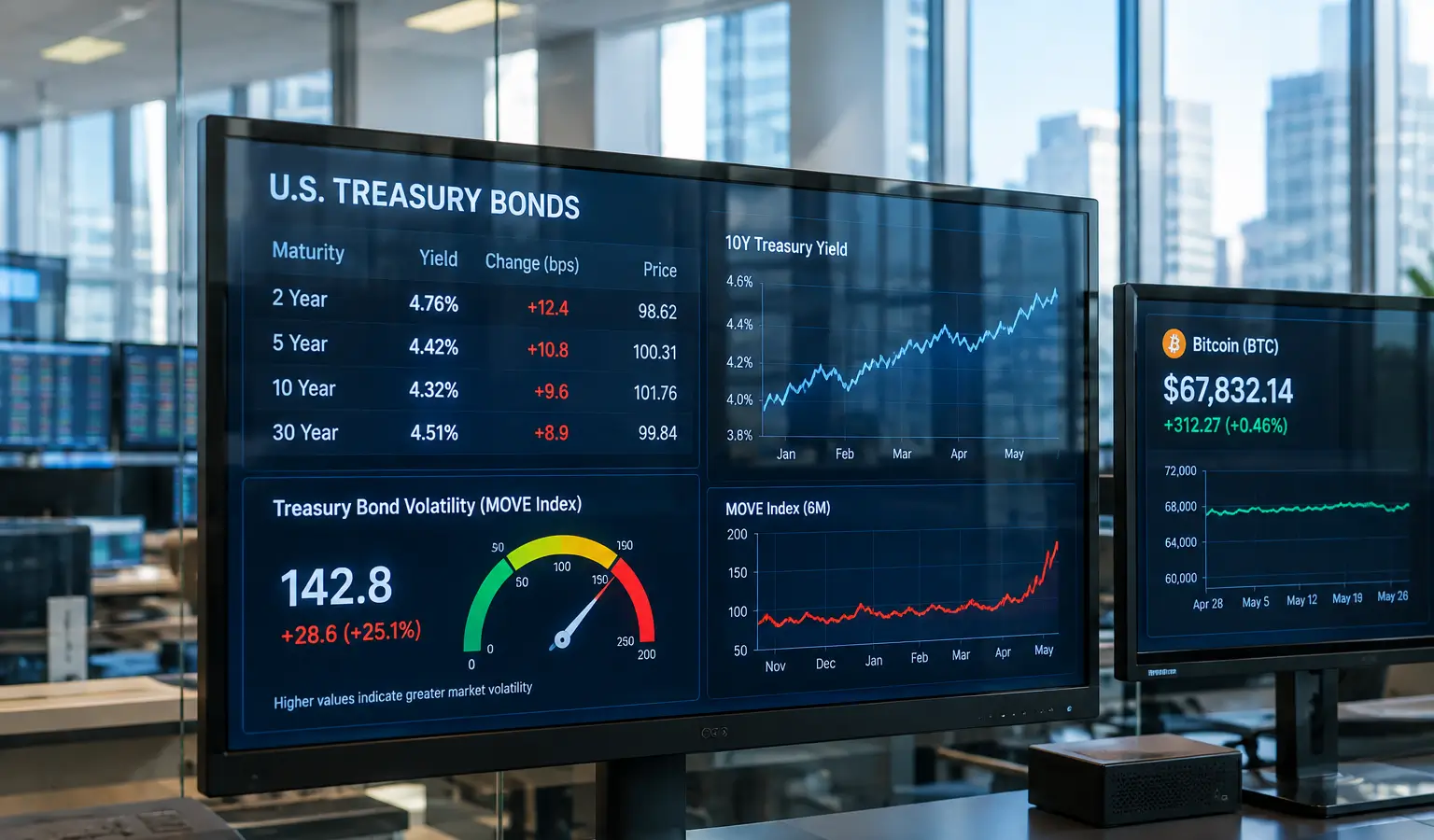
The bond market is sending a clear warning signal this week, while Bitcoin and U.S. stocks remain noticeably calm. The MOVE index, a gauge of expected volatility in the U.S. Treasury market, jumped from about 80 on Tuesday to 104 on Thursday. That is the highest level since March, when the index was still at 199.
Bonds Are Getting More Uneasy
The MOVE index is often seen as the bond market's version of the VIX. It measures expected swings in the U.S. Treasury market based on options across the full yield curve. A higher reading suggests traders expect bigger moves in interest rates.
That rising unease fits with the broader increase in government bond yields worldwide. The war in the Middle East has pushed oil and diesel prices higher, which makes the inflation picture more complicated and raises questions about how much room central banks still have to tighten policy further. The U.S. 10-year yield briefly touched 5.2% on Thursday before slipping back to 5.163%.
Bitcoin and Stocks Stay Calm
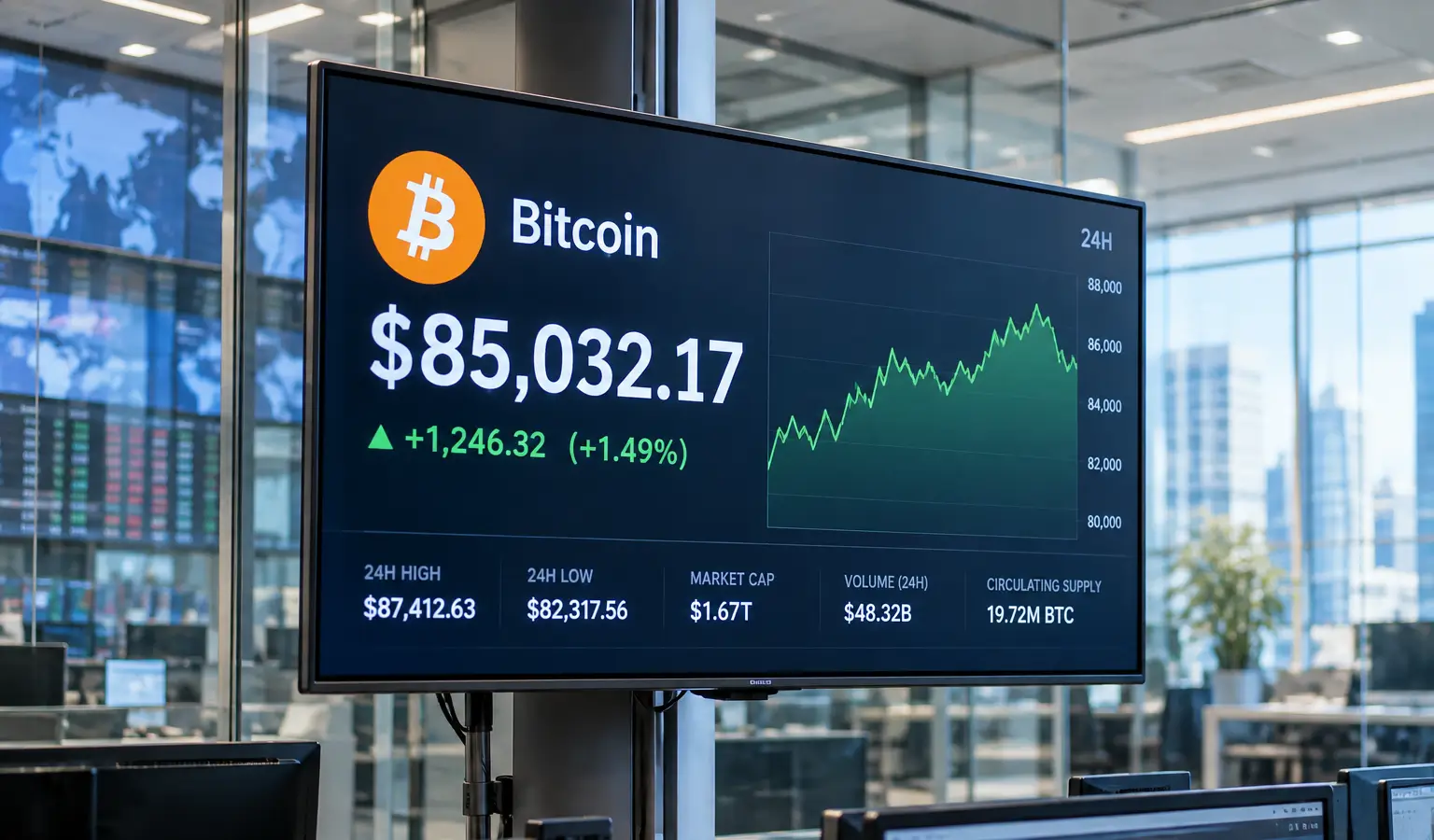
While bond traders are paying more for protection against rate moves, Bitcoin's expected volatility remains low. Volmex's annualized 30-day BVIV is around 37, close to this year's low of 35. The VIX, which tracks expected volatility in the S&P 500, is also hovering around 14 and is therefore close to its yearly low.
The combination of a rising MOVE index and a calm VIX shows that the tension is mainly in bonds and has not yet spread broadly to stocks or Bitcoin. The correlation between the VIX and MOVE has even turned slightly negative over 20 days, while the relationship between BVIV and MOVE is clearly more negative. That fits the picture that Bitcoin traders currently have less need for volatility protection than bond traders.
Why This Matters
For European crypto followers, this matters mainly because Bitcoin does not always follow the same signals as traditional markets. If stress in government bonds keeps building, it could later spill over more broadly into risk assets, but that is not visible in Bitcoin volatility right now. The current gap between bonds and crypto mostly shows how differently investors in each market are reading the same macro news. That fits the broader picture that Bitcoin reacts less directly to interest rates than gold, which sometimes lets the coin move more independently than other risk assets.