CBDCs and loan guarantees: government’s comeback?
Growing government control of the economy is increasingly threatening the efficiency of the market-based system.

The increasing government oversight of the economy is increasingly endangering the efficiency of a market economy. What role do credit guarantees, digital central bank money (CBDCs), and web3 play in this?
Since the early 1980s, we’ve seen an expansion of so-called free markets. The state has pulled back from its active role in steering the economy. Now there are signs that this phase is ending and we’ll be dealing with government interventions again, as was common in Europe before 1979.
Why a turning point?
Historian and investment expert Russell Napier explained in a recent interview with NZZ why our economic system is heading down a new path right away. He notes that it’s now mainly up to the government to allocate resources, since government and private debt are too high to generate enough growth. This growth, driven by the government, together with inflation, is the only chance to shed the debt burden—just like after World War II.
Hello credit guarantees, goodbye central banks
In this new phase, the government is pushing central banks toward the status of surrogate agents. The last few years after the financial crisis already showed how political pressure central banks face from governments can be. While understandable, governments are increasingly meddling with central-bank policies due to COVID, the energy crisis, and the war in Ukraine. They provide loans with state guarantees that affect market activity and market rates. The price of money (interest rates) is thus being consumed more and more.
According to Napier, 40 percent of all new bank loans to businesses in Germany are already government-backed. In France, that share would be as high as 70 percent. Guarantees to banking institutions thus become the strongest tool for the government to steer and support the economy. Especially because they’re easier to implement politically than issuing direct government debt or raising taxes. From a political standpoint, this form of centralized control seems the only feasible way to tackle climate change, the energy transition, or other challenges like aging populations.
The big risk is that banks don’t perform the same level of risk assessment when they aren’t on the hook for defaults themselves. So the loan’s purpose becomes more important than the borrower’s loan itself.
4 percent instead of 2 percent as the new inflation target?
Government efforts to raise normal GDP push for higher inflation. Three to four percent could become the new range to keep the economy moving without spooking the public. After all, higher inflation can be made more tolerable for much of the population with higher savings-interest rates, so people aren’t getting poorer too quickly.
For investors, this means a new market regime that calls for more active steps to counteract rapidly rising purchasing power loss. At the same time, investments in certain sectors need to account for the state’s steering power. This could have positive effects, since a flood of resources could lift the market capitalization of relevant companies.
On the flip side, productivity tends to fall, as seen in China for years. When capital is allocated by the state rather than the free market, production tends to drop. The value of money thus erodes.
Decentralization vs. centralization
Against this backdrop, we’re seeing a new role for decentralized control mechanisms that are needed to maintain economic stability and long-term market health. A planned economy can help address short-term problems or push political goals like the energy transition. Overreliance on centralized control risks a market that becomes less functional and shows more losses.
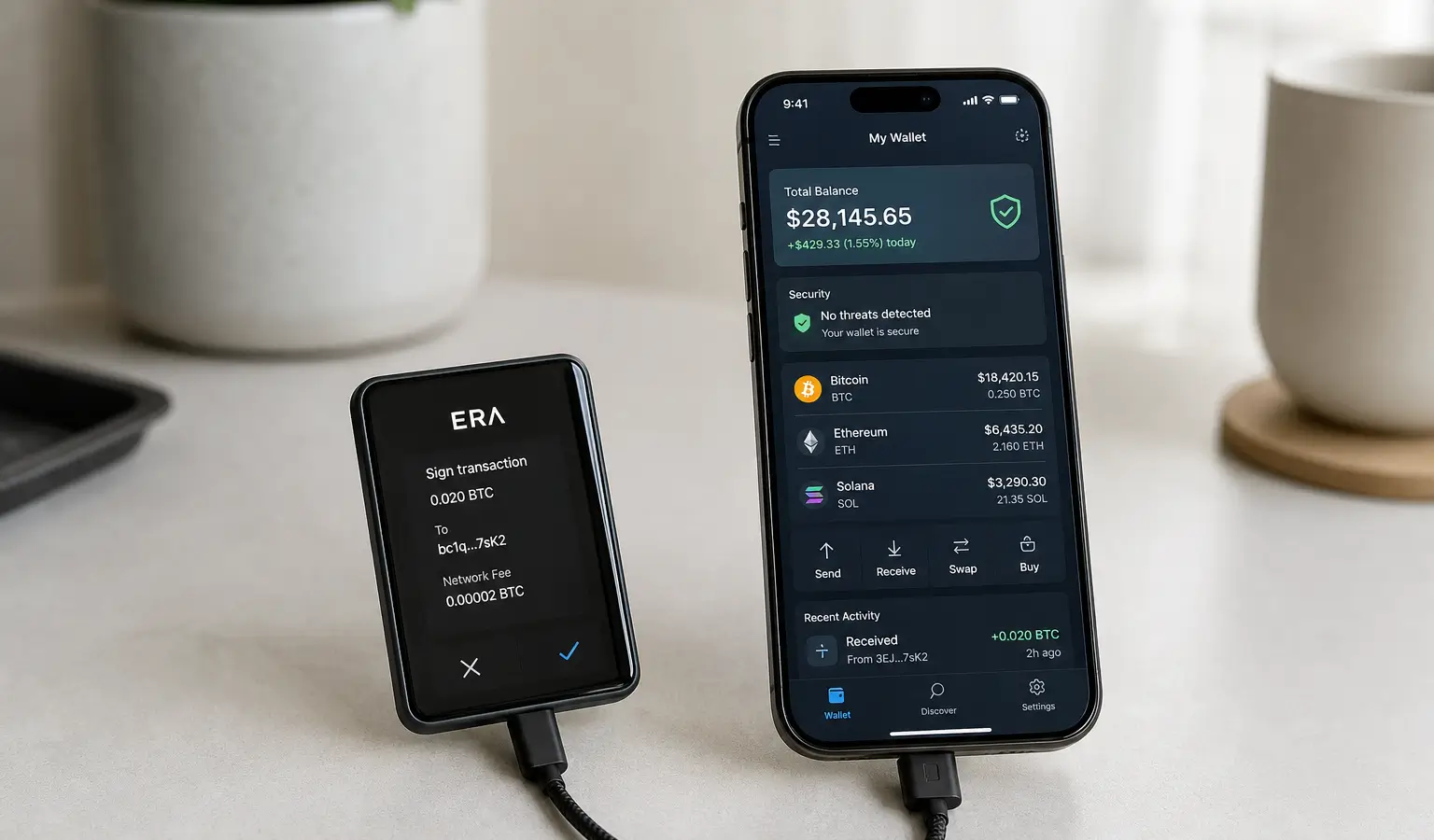
This is where blockchain tech, Bitcoin, and web3 could become a major counterforce. Unlike state-directed systems, decentralized markets can recover, enabling high productivity and market rates through decentralized exchanges. Our economy could increasingly move toward a hybrid model, with more state direction on one side and a free-market web3 on the other. This is exactly what’s needed to transmit signals and information to the market, which is partly lost through government control.
The CBDC instrument
As we already see in China, digital central bank money can be used to weaken central banks and empower the state. In the end, the government may try to push its own policy and governance into the design.
A simple example, already tested in China, would be for the government to introduce discounts for public transport to push its green agenda. With digital money and digital money infrastructure, the state can more easily implement its allocation preferences. CBDCs thus expand the government’s toolkit and reinforce centralization.
The push for a counter-movement—preserving or reclaiming decentralized market forces and mechanisms—has never been stronger than in today’s unsettled period. The role of the state, and thus the market, is undergoing the biggest change in 40 years. The consequences of this shift—and the resulting tension between centralized and decentralized—will shape a whole new market environment this century.
Read more about CBDCs here more on CBDCs.