Clarity Act Faces Uncertainty as Senate Heads Into Recess
The bill is meant to define the split between the SEC and CFTC, but political fights and a packed Senate calendar are putting pressure on the process.
Key Takeaways
- The Clarity Act is still waiting on a possible Senate vote, but summer recess is approaching fast and floor time is tight.
- Open issues remain around illicit finance, agriculture, and ethics rules tied to possible conflicts of interest.
- The bill could shape how crypto is classified in the U.S., but a vote may not happen until September or later.
The U.S. crypto market structure bill, the Clarity Act, is running into a time crunch in the Senate as summer recess draws near. Lawmakers still have no clear answer on whether the bill will get a vote, or when that might happen, and only two legislative days remain.
Time Is Running Out in the Senate
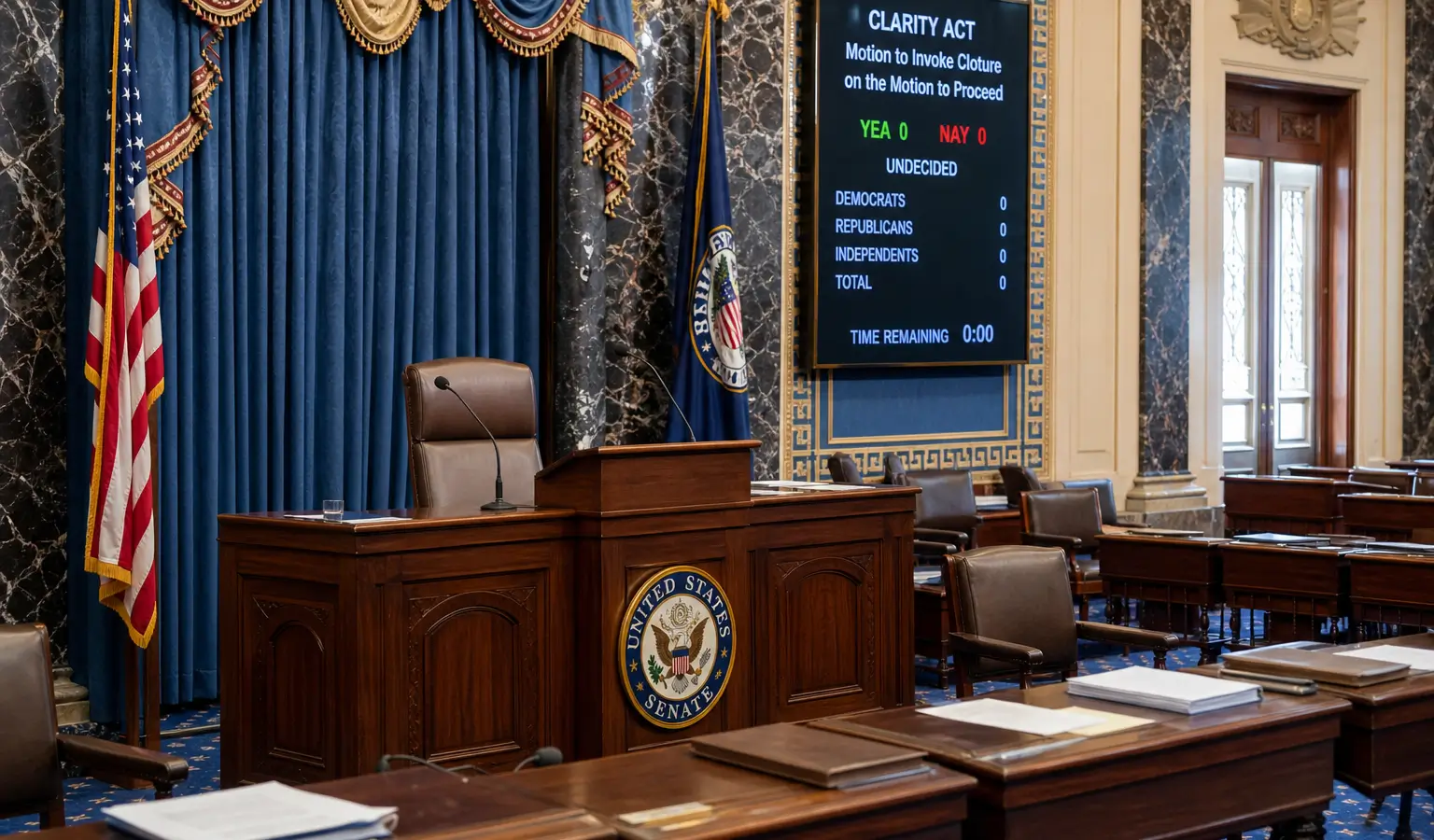
Under the current calendar, the Senate could adjourn on August 7, though there is still a slim chance it stays in session longer. If Majority Leader John Thune files for cloture on Wednesday evening, that could set up an initial procedural vote, provided the chamber can make room around its other business.
That other business is already crowded. Senators are also handling Todd Blanche’s nomination for Attorney General, a federal funding bill, sanctions on Russia, and possibly legislation on college sports. With just 14 working days left in September and October, that leaves very little breathing room for the Clarity Act.
What Is Still Open
The Clarity Act is not locked in yet. Lawmakers are still working through provisions on illicit finance, agriculture, and an ethics rule designed to prevent top officials, including President Donald Trump, from profiting from the crypto industry.
That ethics language is especially sensitive politically. The White House is still reviewing a proposal from Senators Thom Tillis and Ruben Gallego, and Tillis said there has already been some outreach about it. Any feedback from the White House, or approval of the idea, could influence Democratic support.
Why This Matters
For European crypto readers, the main issue is that the Clarity Act is meant to decide how the United States will classify crypto under the law. The bill would draw the line between the SEC and the CFTC and divide digital assets into digital commodities, investment contract assets, and payment stablecoins. The so-called asset maturity path is also important, since tokens that were first sold as investment contracts can later move into a different category if they become sufficiently decentralized.
In other words, this debate goes well beyond Washington. If the Senate fails to move the bill forward now, the issue could slide into September or even past the election, when the political landscape may look different again. For now, lawmakers are still under pressure, in part because of the ongoing fight over the ethics rules and Trump’s crypto income, as seen in this recent Senate pressure on Trump’s memecoin.