Coldcard Bug Drains 594 Bitcoin in 25 Minutes
Block links the theft to a flaw in Coldcard’s key generation, with older single-signature wallets looking especially vulnerable.
Key Takeaways
- About 594 Bitcoin, worth around $38 million, were stolen Friday from about 500 wallets through a flaw in Coldcard’s key generation.
- The attack lasted 25 minutes and mostly hit older, single-signature wallets that had been sitting untouched for years.
- Block tied the vulnerability to firmware 4.0.0; based on the initial analysis, Mk4, Q, and Mk5 do not appear to be affected.
About 594 Bitcoin, worth roughly $38 million (€33.1 million), were siphoned off Friday in an attack that targeted about 500 wallets after attackers exploited a flaw in Coldcard hardware wallet key generation. The theft unfolded over 25 minutes and mainly hit older, single-signature wallets that had been left untouched for years.
How the Attack Worked
In a report from Block’s Bitcoin engineering and security teams, the company said the problem came from the way Coldcard generated keys. A build setting allowed the hardware randomness generator to be skipped, while a check in a supporting library only verified that the setting existed, not that it was actually enabled. As a result, key generation could fall back to software using the chip serial number and clock registers, which are not secret.
Block traced the change to a March 1, 2021 commit that appeared in firmware 4.0.0. The flaw affected not only wallet seeds, but also paper wallet private keys, seed-splitting masks, device cloning keys, and Key Teleport transactions. In all, 1,324 pieces of Bitcoin were moved in 500 transactions across three blocks, and 562 BTC were later consolidated into a single address that has not moved since.
Why This Is Extra Sensitive
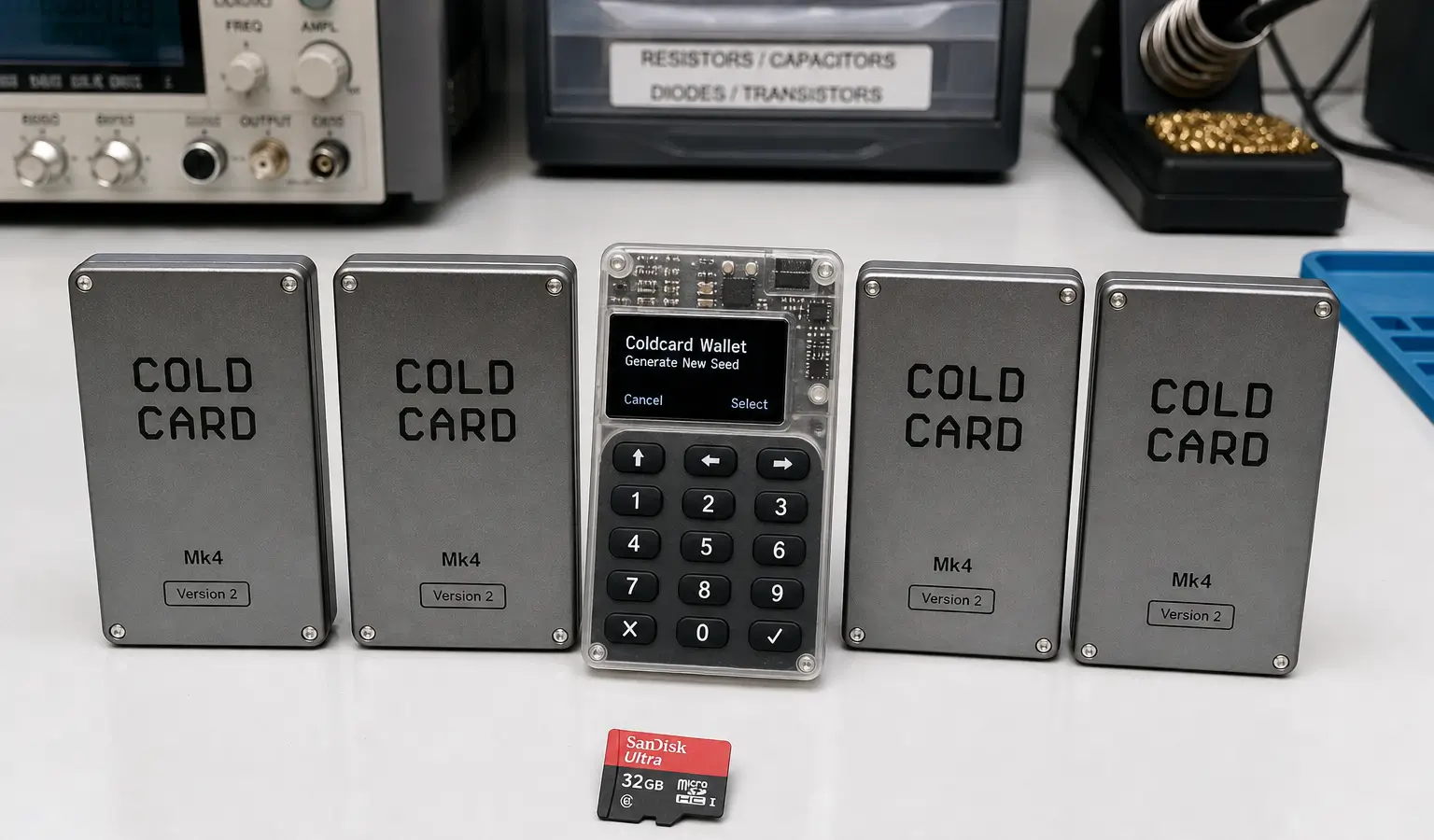
Coldcard is a hardware wallet made by Canadian company Coinkite and is widely used as an offline tool for storing Bitcoin keys. The company has released several generations, from Mk2 through Mk5, and warned that users who created a seed on a Mk3 with version 4.0.1 or later may be exposed. Based on the initial analysis, Mk4, Q, and Mk5 do not appear to be affected, although both Coinkite and Block say the findings are still preliminary.
The timing makes the situation even more complicated, since the affected coins were spread across the period from 2021 through 2026, almost exactly matching the life of the bug. Block said it shared its findings with Coinkite and published them even without full exploit testing, because the attack was already in progress.
What This Means for Bitcoin Users
For Bitcoin users, the incident is a reminder that hardware wallet security depends on more than just keeping keys offline. The seed has to be generated correctly in the first place. Coldcard’s air-gapped setup and microSD-based transaction signing do reduce online exposure, but they do not protect against a weakness in key generation. That makes this case relevant for anyone self-custodying Bitcoin, especially if a wallet has not been checked in a long time.
More broadly, crypto attacks are increasingly targeting keys and operational mistakes instead of smart contracts. A recent analysis of private keys shows that key management has become one of the biggest attack surfaces.