Crypto PACs Back Republicans With $170 Million
Fairshake and other crypto PACs are mainly backing Republicans, hoping for more room in Washington for market structure legislation and tax rules.
Key Takeaways
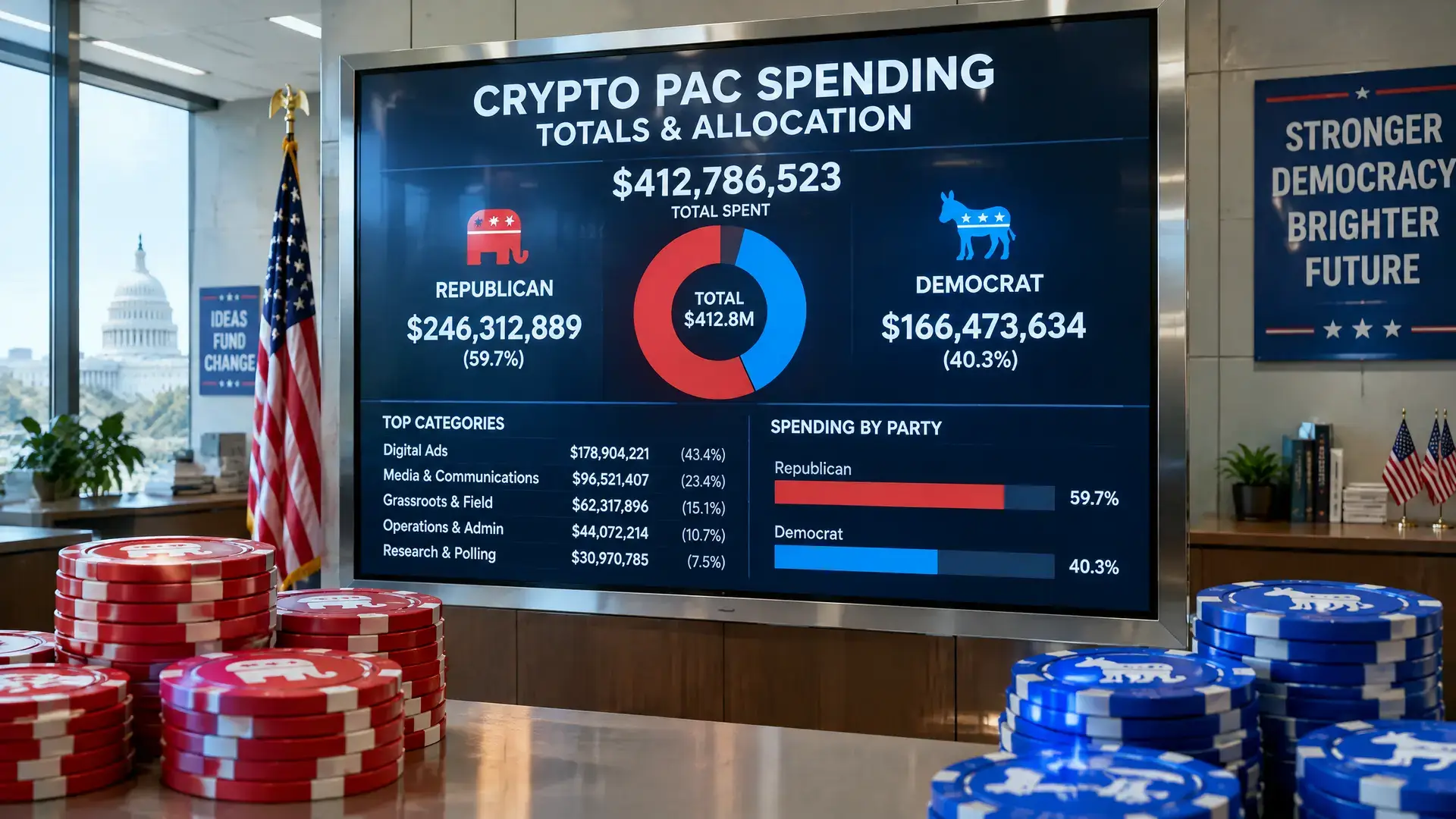
- The crypto industry spent nearly $170 million on political campaigns in the weeks before the U.S. midterm elections, mostly on Republican candidates.
- Fairshake was the biggest player with $154 million in spending, while Digital Freedom Fund and Fellowship Fund also put millions to work.
- The election outcome could affect future U.S. crypto regulation, while the industry is this year’s biggest corporate spender with $189 million.
In the final weeks before the U.S. midterm elections, the crypto industry put nearly $170 million (€152 million) into political campaigns. Most of that money went to Republican candidates. That shows the industry is taking a pretty clear side, even as polls point to a rough night for that party.
Fairshake Leads the Pack
The biggest player is Fairshake, the best-known crypto-backed super PAC in Washington. According to a spokesperson, the group and its affiliated funds spent $154 million (€138 million) on candidates they support. Another $56 million (€50.1 million) is still set aside for the next election round. That fits the approach from two years ago, when the group also moved early and spent heavily.
The smaller Digital Freedom Fund, backed mainly by Tyler and Cameron Winklevoss, also jumped into the fight in a big way. This super PAC spent more than $8 million (€7.2 million) this month to try to stop Democratic challengers in Ohio, Texas, and Iowa. Another group, the Fellowship Fund, which received money from Cantor Fitzgerald and is closely tied to stablecoin leader Tether, gave $3.8 million (€3.4 million) to Republicans earlier this year and later added another $600,000 (€537,100) to Democratic incumbents.
Why This Matters for Europe
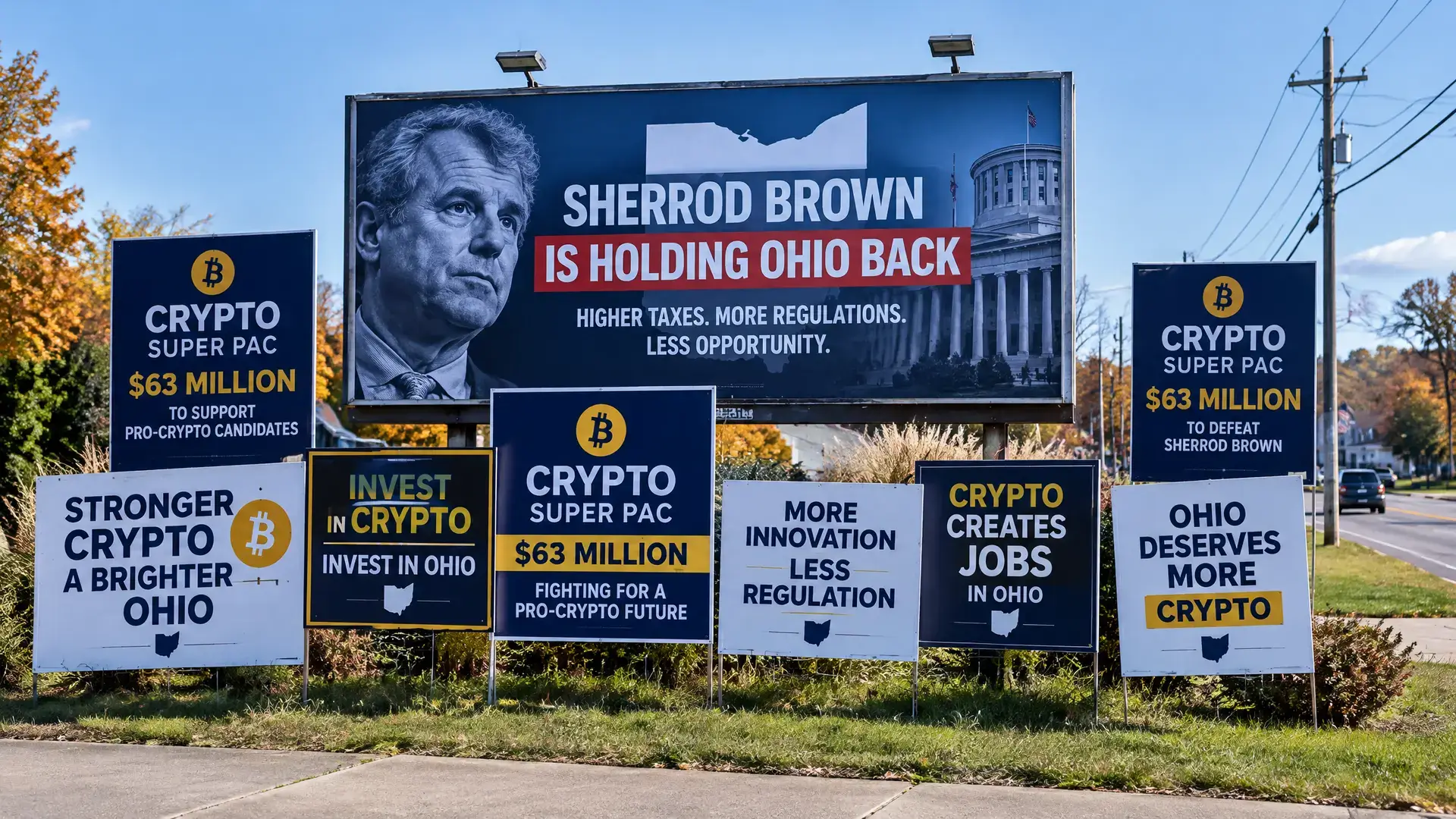
For European crypto watchers, this campaign shows how strongly the sector in the United States is focused on regulation and political influence. The election results could decide how quickly a new push for market structure legislation or tax rules gets moving again. Even if the crypto PACs see their preferred candidates win, major bills will still need support from both parties in the Senate. That also applies to the fight around Sherrod Brown in Ohio, where Fairshake and allies are spending millions to block his return to the Senate.
More Money Than Ever
The three biggest crypto PACs together came to nearly $170 million (€152 million), not counting smaller donations from executives and so-called dark money that does not have to be disclosed publicly. That puts the sector at the top of the list of political spenders in this election cycle, well ahead of industries like gambling and investment firms.
What stands out is that the sector mostly used its money to stop Democratic candidates, not to get back at Republicans who previously did not vote for the Digital Asset Market Clarity Act. Fairshake and its allies, which are mainly backed by Coinbase, a16z, and Ripple Labs, focused in part on Sherrod Brown’s attempt to return to the Senate. In Nebraska, nearly $11 million (€9.8 million) went toward support for Republican Pete Ricketts.
The political stakes are especially high this year. According to OpenSecrets, the crypto industry is the biggest corporate spender in this election cycle, with $189 million (€169 million) in spending. That is more than the previous record of $170 million (€152 million) in the 2024 elections. At the same time, the Federal Election Commission was hit by a cyberattack shortly before the elections, which temporarily halted the release of campaign data and put extra pressure on transparency around the money flows.