

DBS and JPMorgan Link Blockchain Networks for Dollar Payments
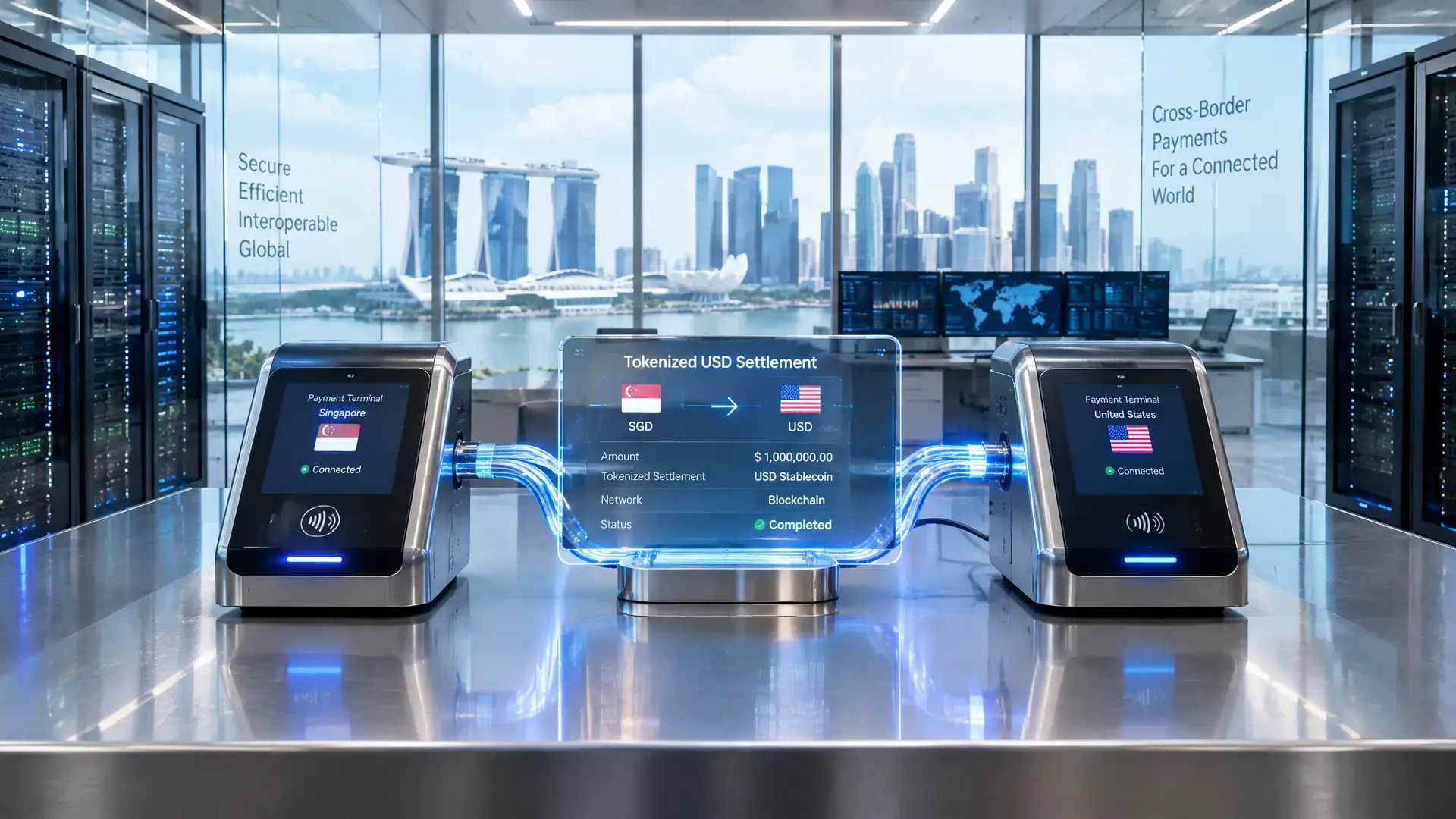
The link, using tokenized deposits and Partior, is meant to make business dollar payments possible 24/7, including between Singapore and the U.S. The project ties into MAS initiative Project BLOOM.
Key Takeaways
- DBS and JPMorgan have linked their blockchain networks, allowing selected customers to move dollars even on weekends.
- The link uses tokenized deposits and runs on permissioned blockchains with settlement through Partior.
- The banks want to make cross-border payments faster; a transfer between traditional and blockchain accounts still pauses for three hours on Saturdays.
DBS and JPMorgan have linked their blockchain networks, allowing selected customers to move U.S. dollars between the two banks at any time, including on weekends. The link uses tokenized deposits and is meant to make cross-border payments faster and more flexible for business customers.
How the Link Works
The connection links DBS Token Services with Kinexys by J.P. Morgan, JPMorgan's blockchain payment service. Both systems run on permissioned blockchains, which means only approved banks and customers have access. That is different from open networks like Bitcoin and Ethereum, where anyone can participate.
For settlement, the banks use Partior, a blockchain network they helped set up. The link also ties into Project BLOOM, an initiative by the Monetary Authority of Singapore to make tokenized money safer and more widely usable. DBS and JPMorgan jointly lead the working group that is looking at how different forms of digital money can work together.
What Tokenized Deposits Are
With tokenized deposits, it is still just a bank deposit in dollars. The bank turns the balance on its own blockchain into a digital token, alongside the traditional banking rails. So the customer does not get a new crypto coin, but a digital version of an existing bank balance that can be moved through the blockchain.
The banks are mainly outlining a practical use case for companies with teams in multiple countries. A business with an account in Singapore and an account in the U.S. can send money on Saturday and give the American branch immediate access, without waiting for traditional banking hours on Monday.
Why This Matters for Europe
The move fits into a broader trend where major banks are testing tokenized deposits for 24/7 payments and better cash management. Standard Chartered already launched tokenized deposit transfers for business customers in Hong Kong, while other major banks are also working on similar networks. For European crypto and fintech watchers, this shows that blockchain infrastructure is being used more and more in the traditional payments world, without it immediately meaning a new crypto token.
Ant International said it will use the link to manage liquidity between its entities in different markets. At the same time, there is still one limitation: within the Kinexys network, payments can run day and night, but the step between a traditional bank account and a blockchain account still pauses for three hours every Saturday. According to the banks, a solution is being worked on.