DHS Financial Surveillance Collides With American Constitutional Rights
DHS is reportedly combining financial data, travel behavior, and other signals for predictive policing. The criticism touches on the Fourth Amendment and broader questions about privacy and surveillance.
Key Takeaways
- DHS is under fire because it is using Americans’ financial data to alert local police about possible suspects.
- Critics call this approach predictive policing and say mass surveillance clashes with the presumption of innocence.
- The author wants DHS to stop this practice and for Congress and judges to enforce stricter controls on financial data.
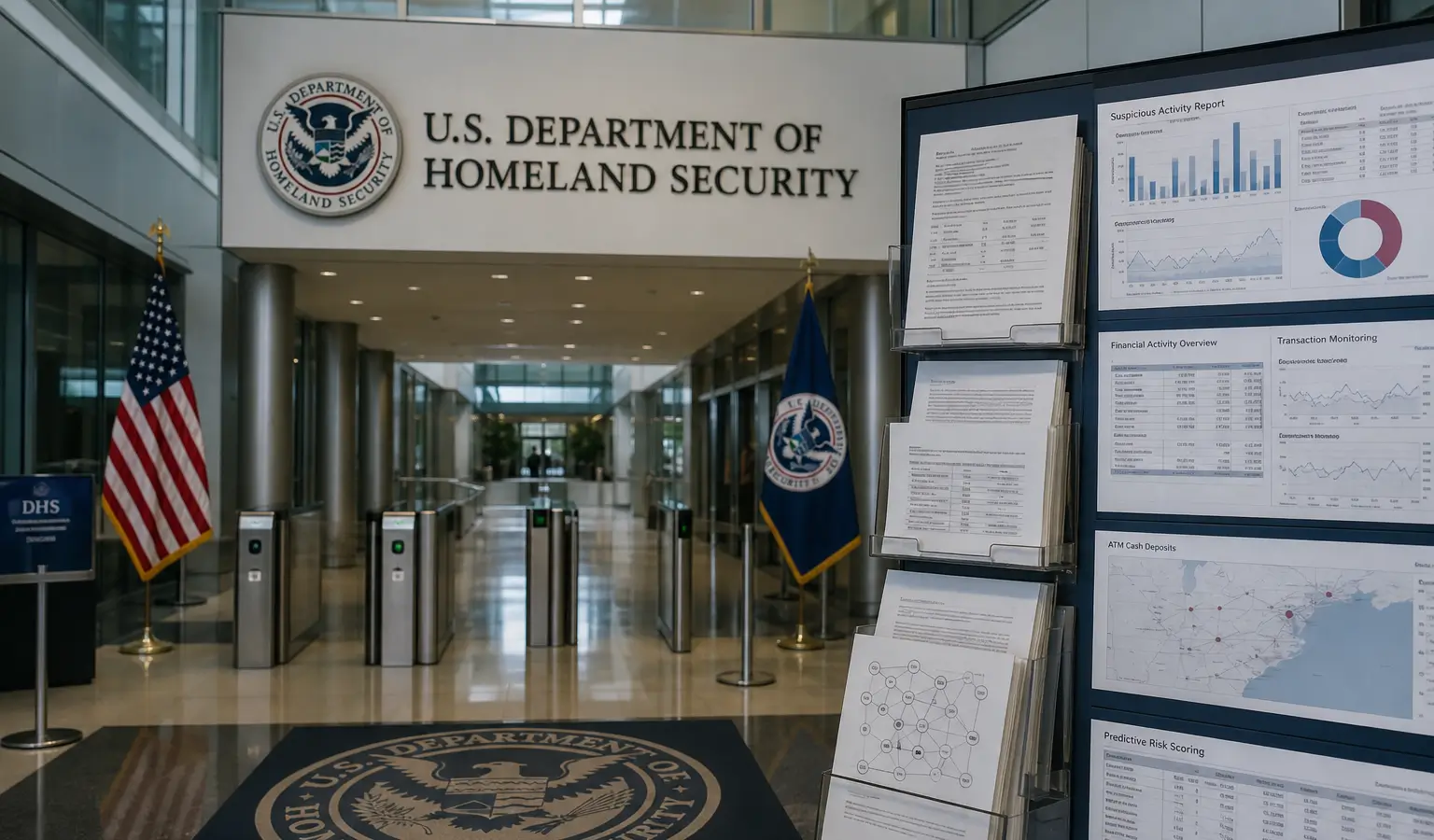
The American Department of Homeland Security (DHS) is under fire because it is reportedly using Americans’ financial data to give local police tips about possible suspects. Critics call that approach a form of predictive policing that relies on mass surveillance and, in their view, clashes with the idea that someone is innocent until proven otherwise.
Financial Data as a Suspicious Profile
According to the reporting, DHS looks at patterns in financial activity and links possible criminal signals to them. In practice, that means transactions, travel behavior, and other data can together form a profile before there is any concrete suspicion.
The text mentions several examples. Kyle William Olson in Montana was detained after a signal from a Border Patrol Predictive Intelligence Targeting Team. A memo said that “financial activity patterns commonly associated with illicit narcotics activity” had been seen, but not which records were used or how they were obtained. Alek Schott was also reportedly detained after information reached local police through federal surveillance; no drugs were found on him.
Why This Raises Legal Concerns
The core criticism is that financial transactions are being treated as evidence before any specific crime has been established. That makes the line between surveillance and suspicion very thin, especially when government agencies combine data without a clear explanation of the source, selection, and use.
On top of that, the U.S. government has already been pushed back on this issue before. In the Supreme Court case Chatrie v. United States, the court ruled in 2026 that requesting location data through a geofence search is a Fourth Amendment search and therefore requires constitutional justification. That ruling highlights how sensitive broad government data collection is when it is not clear in advance exactly who is being investigated.
What This Says About Surveillance
For European crypto readers, this matters because it shows how far financial monitoring can go when regulators, banks, and law enforcement keep combining data more and more. In crypto, that is especially sensitive because transaction data often quickly becomes part of debates about compliance, anti-money-laundering efforts, and privacy. The question is not just what is technically possible, but also what limits a rule-of-law system places on that use.
The author of the piece argues that DHS should stop using financial information for predictive policing and that the U.S. Congress should audit the data sources, selection criteria, and error margins. According to him, judicial approval should also be required before sensitive financial records are used in an investigation into a specific suspicion.
The debate is also growing in the crypto world over how far surveillance should go. The case around the Clarity Act and sanctions enforcement shows that more data access for law enforcement is seen not only as a risk, but also as a tool to better fight illegal money flows.