Dinari Opens Tokenized U.S. Stocks to American Investors
Dinari’s rollout uses USDC and self-custody across Ethereum, Arbitrum, Base, and Avalanche. It lands as competition over tokenized equities intensifies, with Robinhood, Kraken, and Ondo also pushing into the space.
Key Takeaways
- Dinari is now making its tokenized U.S. stocks available to eligible American investors through its blockchain-based dShares.
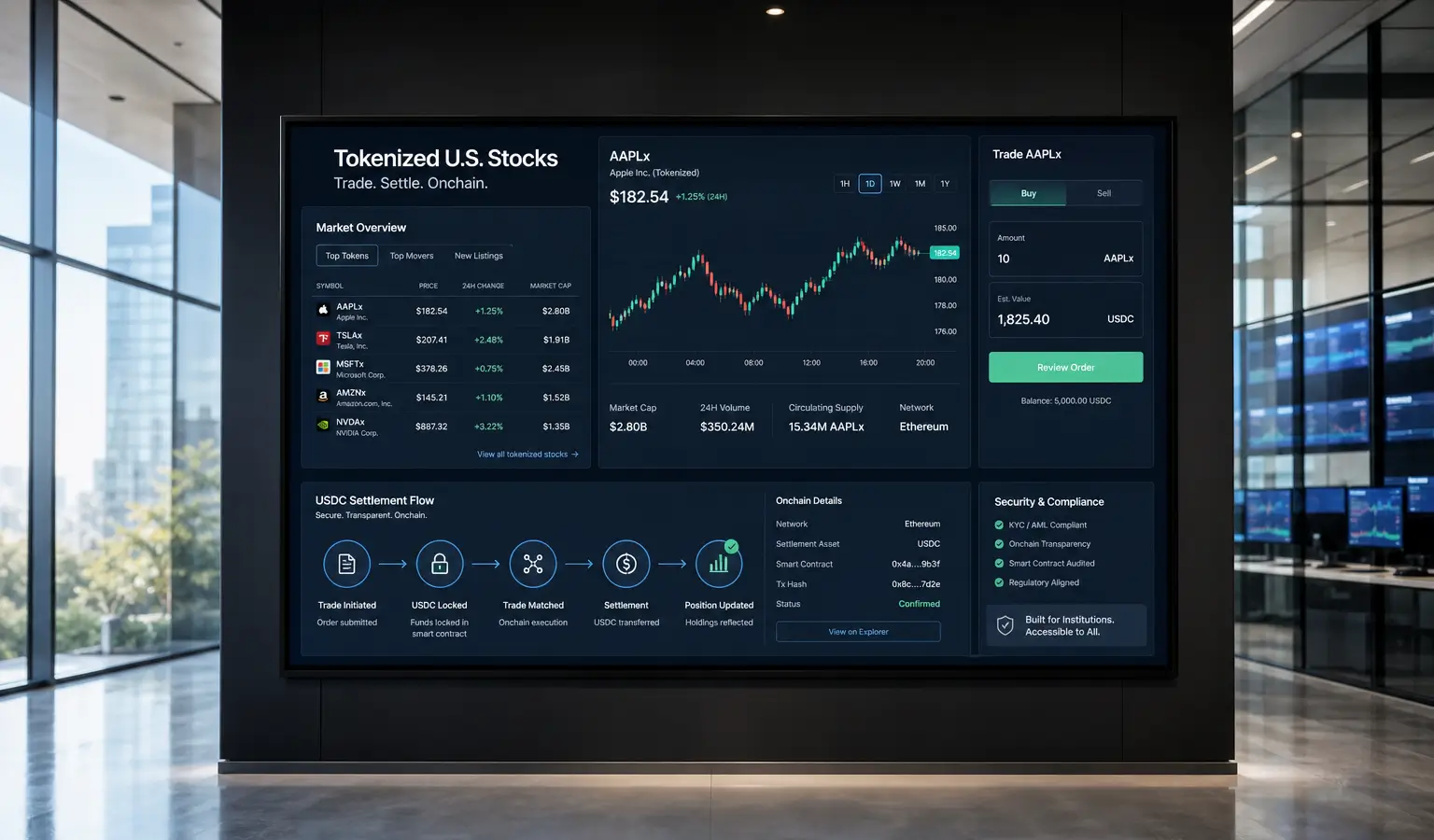
- Investors can trade 724 tokenized stocks, including every S&P 500 company, using USDC on Ethereum, Arbitrum, Base, and Avalanche.
- The launch comes as tokenized equities draw more attention, with Dinari leaning on regulated backing, self-custody, and preserved shareholder rights.
Dinari is widening access to its blockchain-based tokenized U.S. stocks for eligible American investors. In other words, the crypto company is bringing its custodial tokenization model to the U.S. market as competition around blockchain stocks continues to pick up.
724 Stocks Through USDC
Dinari says investors can now trade 724 tokenized U.S. stocks, including every company in the S&P 500. Transactions are settled with Circle's USDC stablecoin and can be handled from self-custody wallets.
The tokens are live on Ethereum, Arbitrum, Base, and Avalanche. The company says support for Solana and Sei will be added soon.
The service is powered by Dinari's regulated broker-dealer and transfer agent setup. Circle, Stripe subsidiary Privy, Para, and Monaco are among the partners involved in the rollout.
Race for Tokenized Equities
The launch lands in the middle of a broader push into tokenized equities, a corner of the market that is increasingly being treated as the next major real-world asset use case. After tokenized U.S. Treasury funds, the focus is shifting toward public stocks, with the pitch centered on faster settlement, cleaner recordkeeping, and more flexible ownership.
Citi estimates tokenized securities could become a $5.5 trillion (€4.8 trillion) market by 2030. Meanwhile, several players are taking different routes into the same space. Robinhood and Kraken parent Payward have expanded tokenized stock products outside the U.S. through offshore structures, while Ondo Finance recently rolled out an SEC-aligned framework for tokenized stocks linked to BlackRock's iShares Core S&P 500 ETF and Micron shares.
Dinari is trying to sit somewhere between those approaches. The company says its dShares are backed one-to-one by underlying shares held with regulated custodians. That structure is meant to preserve dividend rights, voting rights, and corporate actions, while still allowing the assets to be held in self-custody wallets and traded with USDC.
Why This Matters
For European crypto readers, the rollout is another sign of how quickly tokenized equities are moving from a niche concept to a more serious market structure. The combination of regulated infrastructure, stablecoin settlement, and self-custody could matter for anyone tracking how traditional securities and blockchain are getting closer together.
Dinari says its dShares are already available in more than 85 jurisdictions. With the U.S. launch, eligible domestic investors can now access the product too, even as the tokenized assets market keeps maturing.