DTCC Brings Tokenized Securities Live in Wall Street Test
The trial ran with JPMorgan, BlackRock, and Vanguard through existing settlement rails. DTCC uses digital twins of stocks, ETFs, and Treasurys under SEC oversight.
Key Takeaways
- DTCC completed its first live production transactions with tokenized securities on Wednesday, alongside more than two dozen major financial institutions.
- The trades covered tokenized stocks, ETFs, and U.S. Treasurys, moving through existing market rails as digital twins of the underlying assets.
- DTCC plans a broader rollout in October. Mark Wendland said the test shows the system works technically, but not that there is already broad market demand.
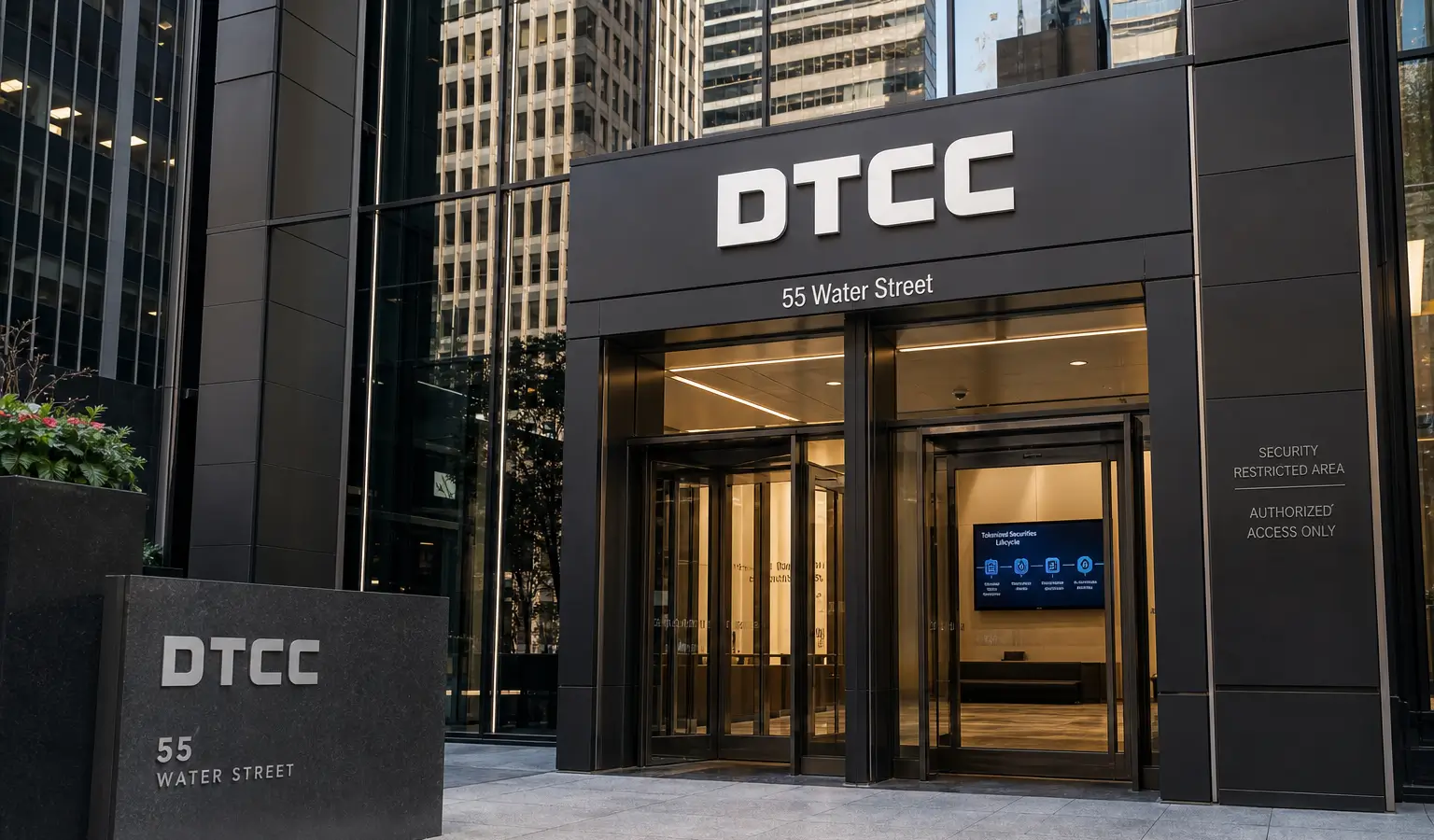
The Depository Trust & Clearing Corporation (DTCC) handled its first live production transactions with tokenized securities on Wednesday. For a company that sits at the center of the American settlement system, the move is another sign that blockchain is edging further into traditional finance.
Live Test With Major Players
More than two dozen large financial institutions joined the trial, including JPMorgan Chase, Goldman Sachs, BlackRock, and Vanguard, along with several technology firms. The activity covered tokenized stocks, ETFs, and U.S. Treasurys, and it included collateral transfers, repos, margin movements, securities trades, and asset transfers.
DTCC said the test was not run in a sandbox or isolated pilot. Instead, it took place in live production using assets already held at The Depository Trust Company, DTCC’s central securities depository. That makes the trial especially notable, since it shows tokenized assets moving through the same infrastructure Wall Street has relied on for decades.
Digital Twins in Existing Rails
DTCC processes more than $114 trillion (€99.9 trillion) in securities and handles ownership and settlement for stocks, bonds, and other assets every day. Rather than issuing brand-new digital instruments, the system creates blockchain-based digital twins of existing securities that preserve the same legal ownership, dividend, and governance rights as the underlying asset.
That sets this model apart from many tokenized stock products already available on crypto platforms. Those offerings often act more like wrappers that track a stock’s price, but they do not automatically carry the same rights as the actual share. DTCC’s goal is to let securities move between traditional electronic records and blockchain-based tokens without changing who owns them.
Some of the transactions used Hyperledger Besu, while others ran on Canton Network, a blockchain built for regulated financial markets that combines privacy with selective data sharing for authorized parties. The SEC previously issued DTC a No-Action Letter, which allowed tokenization of certain DTC-custodied assets under existing U.S. market rules.
What This Means for Europe
For European crypto and market observers, the main point is that tokenization is no longer just a crypto-native experiment. It is now being tested inside established market infrastructure as well. DTCC is clearly framing the service within existing rules rather than as a separate market, which shows how closely traditional finance and blockchain are starting to converge.
DTCC says the service will expand more broadly in October, when eligible participants will be able to convert certain securities into blockchain-based representations for production use. Mark Wendland of Canton Strategic Holdings said the test proves the concept works technically, but he also noted that it does not mean there is already broad demand from the market.