

EU Wants Billions Fund for AI and Quantum Startups
Through the Quantum Act, Brussels also wants to speed up quantum-safe cryptography, with implications for Bitcoin, wallets, and exchanges in Europe.
Key Takeaways
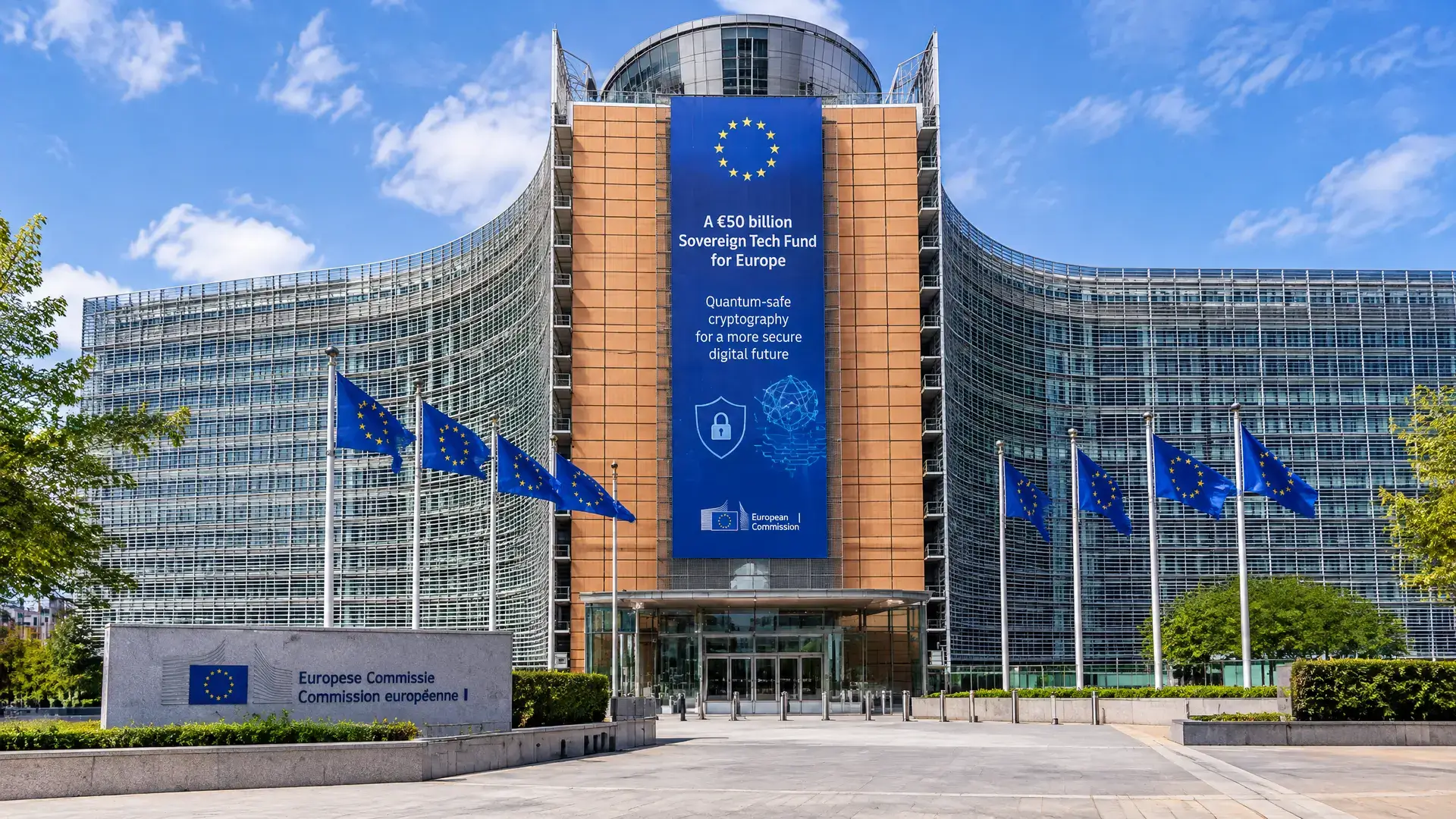
- The European Commission wants to set up a Sovereign Tech Equity Fund that could raise up to 50 billion euros for AI and quantum computing companies.
- The fund is meant to give European tech companies more room to grow and make them less dependent on capital from the U.S. and China.
- The Quantum Act also focuses on quantum-safe cryptography and extra protection against quantum threats.
The European Commission wants to set up a fund that can buy shares in AI and quantum computing companies. At the same time, Brussels is working on stronger protection against quantum threats. The plan is meant to give European tech companies more room to grow in their own region and become less dependent on capital from the U.S. and China.
Big Fund for European Tech
The proposed Sovereign Tech Equity Fund, or Stef, is supposed to raise up to 50 billion euros, or about $54.7 billion (€49.9 billion). According to the Financial Times, the money would come from the Commission, the European Investment Bank, and EU member states, with the goal of also attracting private investors.
Through the proposed Quantum Act, the Commission wants the authority to set up the fund. An EU study by the European Investment Bank shows why Brussels is moving fast: by their tenth year, European scale-ups had raised about half as much capital as similar companies in San Francisco.
According to the Commission, that shortage of local financiers is pushing European companies to look more often to foreign lenders, buyers, or stock listings. The new fund would also be much larger than the existing Scaleup Europe Fund, which launched this year with a commitment of 1 billion euros.
Quantum Safety on the Agenda
The Quantum Act is not just about investment, but also about security. The proposal calls for a coordinated shift to quantum-resistant cryptography, with monitoring of readiness and extra safeguards in public procurement.
That matters for the crypto market because a powerful enough quantum computer could, in theory, break the digital signatures that authorize Bitcoin transactions. The industry has been watching this for a while, and in July nine parties, including BlackRock, Coinbase, and Strategy, pledged a combined $15 million (€13.7 million) over three years for research into Bitcoin security and open-source development.
Why This Matters for Crypto
For European crypto investors, this plan shows that quantum security is no longer just a technical topic, but also a policy issue. If the EU really speeds up quantum-safe cryptography, it could eventually affect how exchanges, wallets, and other players set up their systems. For Bitcoin, the main point is that this discussion is already happening at the level of legislation and public infrastructure.