Fidelity Says Tokenization Is Mainly About Balance Sheet Management for Pension Funds
Fidelity sees tokenized funds mainly as a tool for liquidity and balance sheet management at large institutions. The growth of tokenized money market funds and RWAs points to broader institutional adoption.
Key Takeaways
- Fidelity says tokenized funds are more about balance sheet management at large institutions than simply offering 24/7 liquidity.
- Giselle Lai said global institutions often keep cash spread across several accounts, and tokenized assets could make that setup more efficient.
- The tokenized asset market is expanding quickly, with more than $15 billion in tokenized money market funds and over $31 billion in onchain real-world assets.
Fidelity International says tokenized funds are drawing interest from large institutions mainly as a balance sheet management tool, not just because they can move around the clock. During the WebX conference in Tokyo, Giselle Lai, Fidelity International’s director and APAC digital assets strategist, said that this could end up being the most compelling use case.
Balance Sheet Management Over Trading
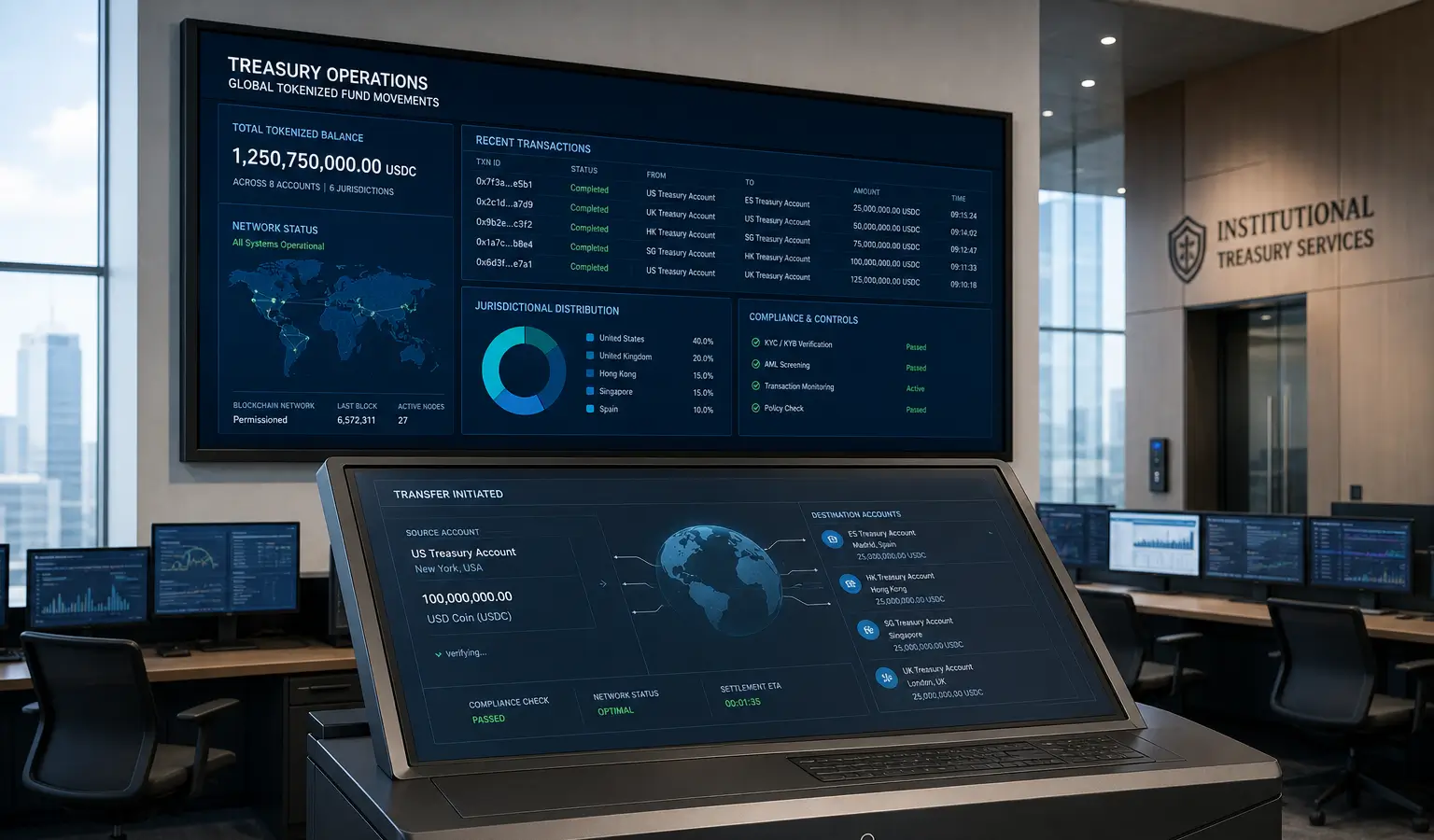
Lai said global institutions often need to keep cash distributed across bank accounts in different countries. That setup helps them meet regulatory requirements, manage currency exposure, and maintain enough liquidity. In reality, though, that cash often sits idle, and shifting balances between jurisdictions can be slow and cumbersome.
She argued that tokenized assets could make that process more efficient. For companies that need to manage liquidity across multiple bank accounts, a tokenized instrument may be a more workable option than traditional structures, especially since it can generate returns continuously and move more quickly.
Market Is Growing Fast
Tokenized products already exist, but for now they are still mostly used as investment vehicles. The most established category is tokenized money market funds, which are typically backed by U.S. Treasuries. The largest player, BlackRock's USD Institutional Digital Liquidity Fund, launched in March 2024.
That market has since grown to more than $15 billion (€13.2 billion) in assets under management. The broader onchain real-world asset market, excluding stablecoins, has also climbed past $31 billion (€27.2 billion), according to the figures cited. That reflects a wider trend in which tokenizing real assets is increasingly viewed as a major use case for blockchain, with some forecasts pointing to a market worth trillions of dollars.
Momentum has been strong as well. Some market data shows tokenized assets have increased 600 percent in 18 months, rising from less than $400 million (€351 million) to more than $2.7 billion (€2.4 billion). At the same time, some forecasts suggest institutional investors could already have a small but growing allocation to tokenized assets by 2026.
The shift is also starting to move deeper into banks and market infrastructure. For instance, Swift is testing a blockchain ledger with 17 major banks for 24/7 cross-border payments using tokenized deposits, while settlement still takes place through existing payment rails.
Why This Matters
For European crypto readers, the bigger point is that the tokenization conversation is moving beyond retail trading and into the plumbing that supports large-scale capital flows. If tokenized funds do become a standard tool for balance sheet management, that could increase demand for onchain liquidity, collateral, and settlement across the institutional market. Lai also noted that this transition will take time, and that a mature ecosystem will likely develop gradually, much like the ETF market did over the years.