FSB Warns Stablecoin Rules Haven't Been Tested
The G20 watchdog points to gaps in national rules and risks around multi-issuer structures, reserves, and cross-border settlement.
Key Takeaways
- The FSB warns that stablecoins have not yet been tested in a severe market crisis and that current rules may contain cross-border gaps.
- Multi-issuer structures are especially risky because reserves can be held in different countries and it may be unclear which insolvency rules apply.
- The watchdog wants more data, information sharing, and planning for stress or failure, partly because of the international setup of stablecoins.
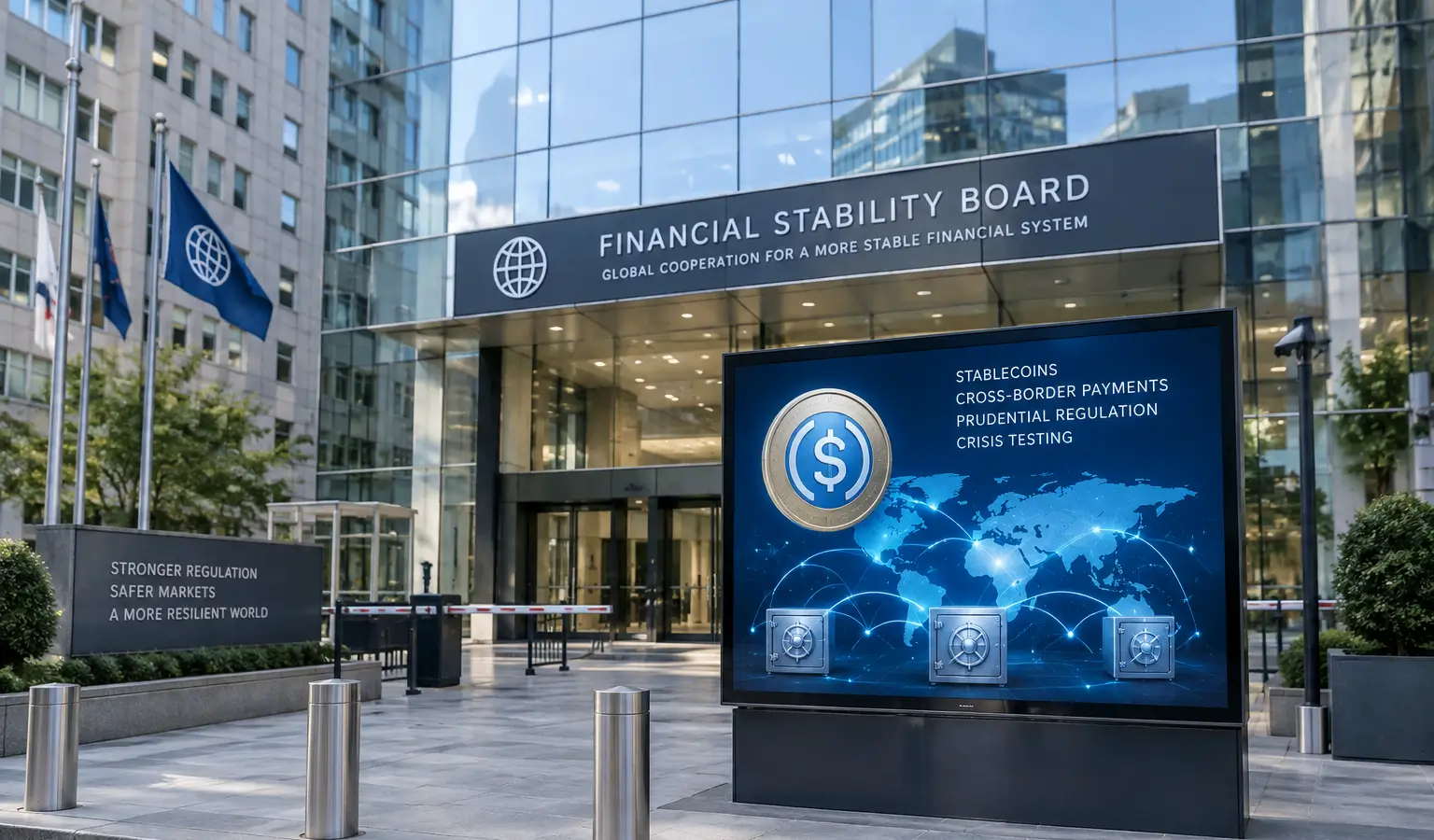
The Financial Stability Board (FSB) warns that stablecoins have not yet been tested in a severe market crisis and that current rules can have gaps across borders. The G20 watchdog is therefore calling for more information sharing, monitoring, and planning for stress or failure involving stablecoins.
Rules Are Falling Behind
In the report, the FSB says that global stablecoins, crypto tokens pegged to a fiat currency, have not yet been tested under severe stress or insolvency. At the same time, national rules are developing at different speeds, which could make it unclear how holders get their money back if an issuer goes under.
For European crypto followers, that matters because stablecoins are not only used to move quickly in and out of crypto, but could also play a role in cross-border payments over time. The FSB stresses that this international setup is exactly what makes it hard to act quickly and consistently in a crisis. That also matters in Europe, where the MiCA rules for USDT show how regulators can treat the same stablecoin very differently.
Risk With Multiple Issuers
The watchdog is especially pointing to so-called multi-issuer structures. In these setups, related companies can issue the same stablecoin and carry the same liability, while the reserves are held in different countries.
If holders can redeem with each company in the group, demand can pile up at one party while the reserves sit elsewhere. Moving those reserves can be harder in a crisis. It can also be unclear which country’s insolvency rules apply in a bankruptcy.
The FSB also warns about a mismatch between 24-hour stablecoin trading and the opening hours of the markets for the underlying reserves. If redemptions do not keep pace with sales, a token can lose its peg. At the same time, the FSB says deep and liquid secondary markets can also pull a token back toward its peg through arbitrage.
More Data and Coordination Needed
The FSB says weak data is another problem. Because crypto transactions are pseudonymous, it is hard to figure out where holders are located and which jurisdiction applies. The watchdog therefore wants more cross-border information sharing and better preparation for stress or failure.
Andrew Bailey, who is also governor of the Bank of England, wrote that global stablecoin structures are cross-border by definition, while national rules are still taking shape at different speeds. The warning comes a few days before the G20 meeting of finance ministers and central bankers on October 15.