

Google Could Take a Stake in TeraWulf Project After Anthropic Default
Google is backing TeraWulf’s 20-year lease and could step in at the Kentucky data center if Anthropic defaults. The setup highlights the shift from Bitcoin mining to AI infrastructure.
Key Takeaways
- Google could become a co-owner of TeraWulf’s data center project if Anthropic fails to meet its rent obligations.
- The new lease runs for 20 years and is worth $19 billion for 401 megawatts of computing power in Kentucky.
- TeraWulf is shifting from Bitcoin mining to AI infrastructure, while Google’s support only kicks in after the data rooms are completed.
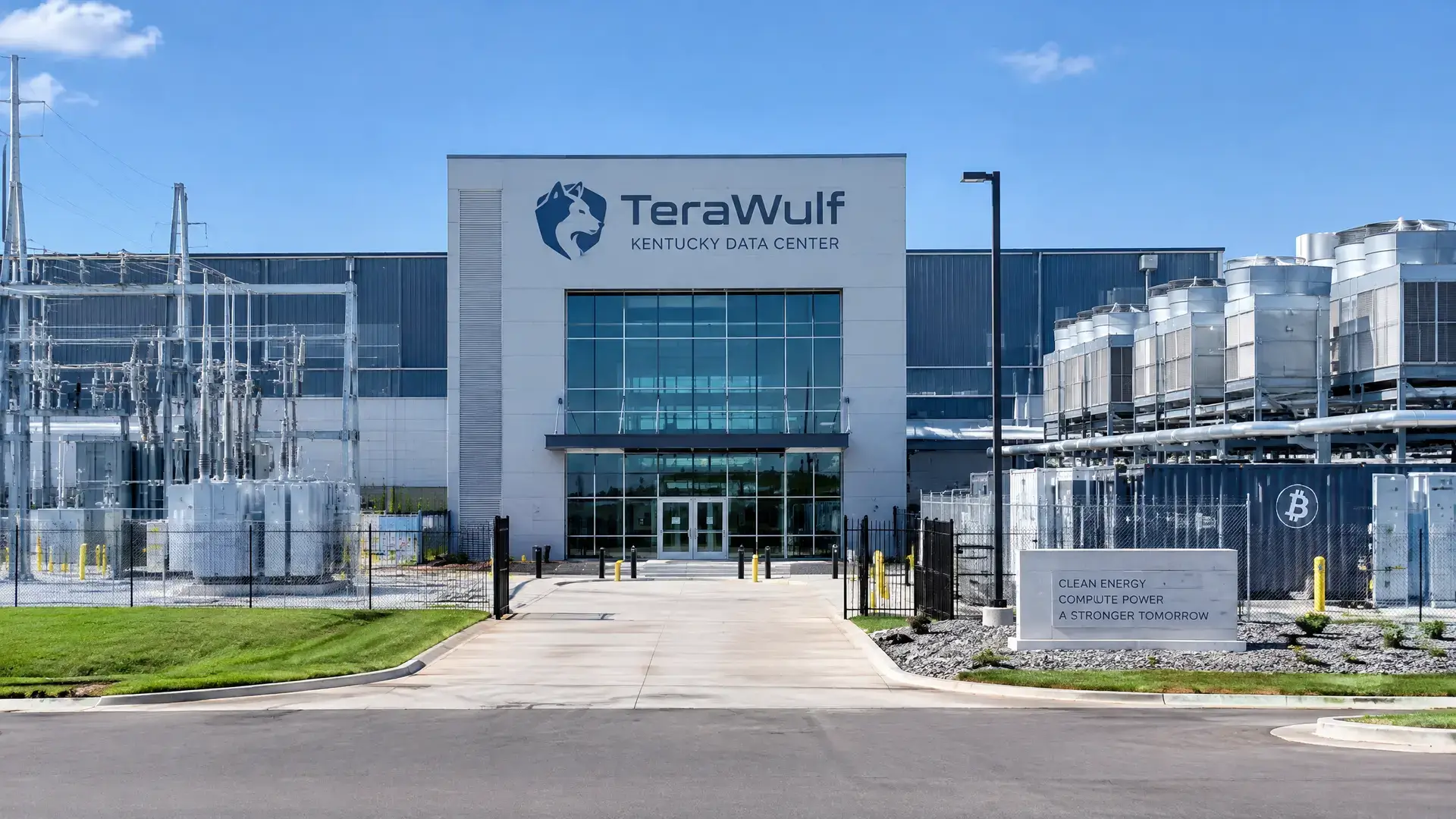
Google could become a co-owner of a data center project from Bitcoin miner TeraWulf if Anthropic fails to meet its rent obligations. The new deal centers on a 20-year lease worth $19 billion (€16.9 billion) for 401 megawatts of computing power at the campus in Kentucky.
Lease With a Backstop
TeraWulf said in a filing submitted on Wednesday that Google has guaranteed Anthropic’s obligations. The contract is meant to help the company secure financing for the project, which is expected to start delivering capacity by the end of 2027.
If Anthropic does not pay its rent or becomes insolvent, Google can step in as the tenant and take over the lease. Under certain conditions, Google can also pay a termination fee and take a stake in Raylan Data, the subsidiary running the project.
The size of that stake depends on how much Google pays. In the contract, the termination fee is measured against the total development and construction costs, including land, infrastructure, equipment, and financing. For example, if Google pays 30% of those total costs, it also gets 30% of the subsidiary.
TeraWulf Shifts Toward AI
The deal fits into TeraWulf’s broader shift. The company built its name around Bitcoin mining, but it is increasingly focusing on power and infrastructure for AI companies. The agreement with Anthropic is one of the biggest contracts in that transition.
For the first six years after Google’s support begins, the company must in principle take over the lease instead of ending it. One exception applies if the TPU pods in the halls, Google’s own AI chips, can use less than half of the reserved capacity for the tenant.
The obligations expire if Anthropic, or a parent or subsidiary company, has an investment-grade credit rating for at least three months. The agreements were signed on November 4, but Google’s support for each of the three leased sections only starts once the final data room in that section has been delivered. TeraWulf expects those deliveries to continue into the second quarter of 2028.
Other Bitcoin miners are looking for the same way out. Riot Platforms previously signed a similar long-term deal with Anthropic, showing how quickly the sector is shifting toward AI infrastructure.
Why This Matters
For European crypto readers, this deal shows how Bitcoin miners are broadening their business model beyond mining alone. That matters because these companies are increasingly becoming dependent on large AI contracts, even though their roots are still in the crypto sector. The structure also shows how big the capital needs are for AI infrastructure, with players like Google taking a major role through contracts and guarantees.