Google Lowers Quantum Error on Willow, Bitcoin Remains Vulnerable
Google says it has achieved a major error reduction on Willow, but the quantum threat to Bitcoin is still theoretical for now. Old addresses with visible public keys remain the main concern.
Key Takeaways
- Google says Willow has delivered a practical breakthrough in quantum computing, with about 40 times fewer errors in magic states.
- The development matters for Bitcoin because powerful quantum computers could, in theory, derive private keys from public keys.
- Google estimates that an attack on Bitcoin would require less than 500,000 qubits, while Willow’s 105 qubits are still far below that.
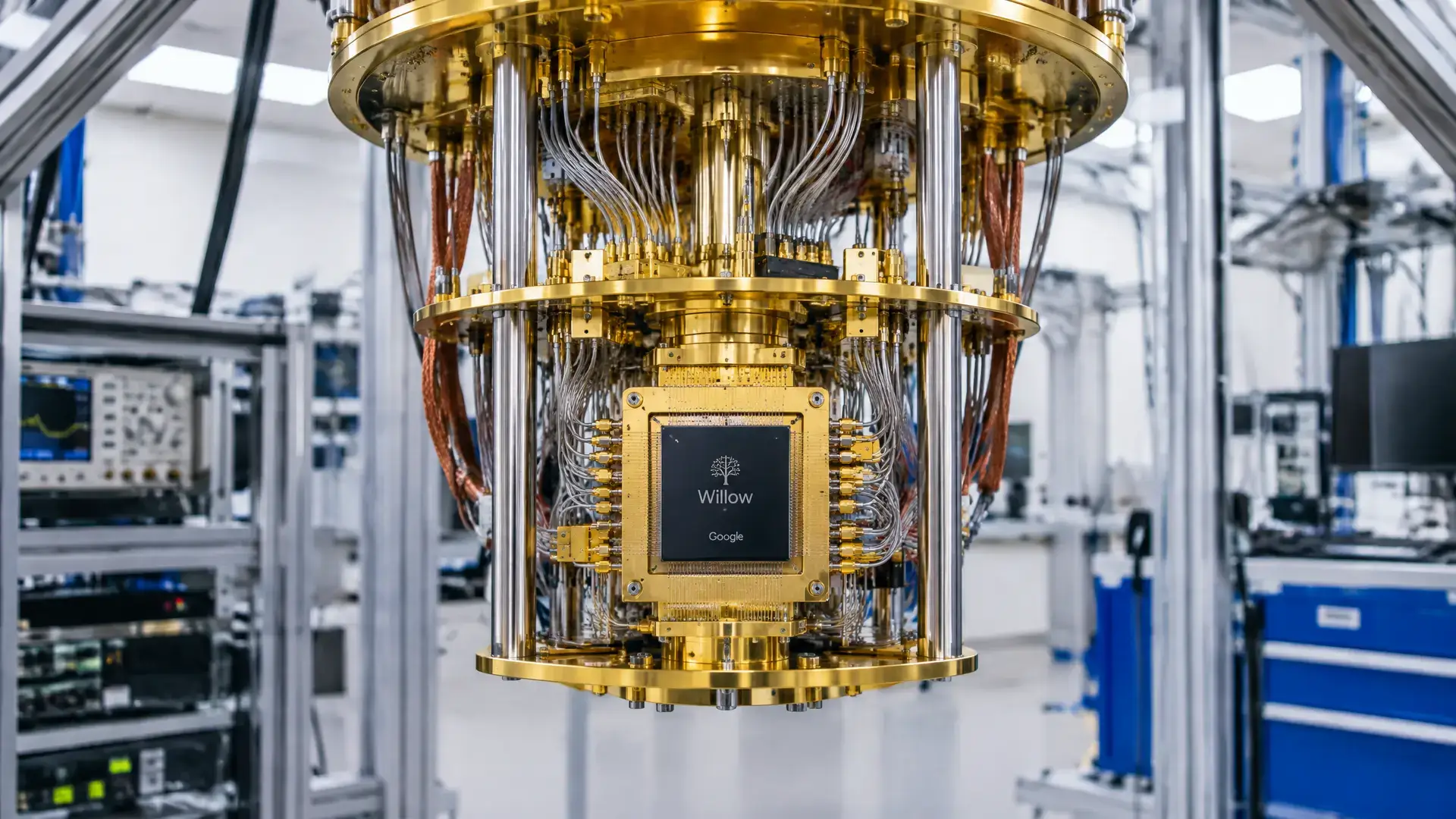
Google says its Willow chip has shown, for the first time, a practical solution to one of the biggest bottlenecks in quantum computing. In research published in Science on October 15, the number of errors fell by about 40 times, according to the company. For Bitcoin, this matters mainly because powerful quantum computers could one day, in theory, derive private keys from public keys.
What Google Actually Showed
The breakthrough centers on so-called magic states, special building blocks that quantum computers need to carry out useful calculations. Google calls the new method magic state cultivation. In this process, the chip starts with a rough, error-prone state, runs checks, and throws out failed attempts. What remains is a much cleaner state.
On Willow, those cultivated states reached about 99.99% fidelity, a record according to Google. The company says some estimates show that producing clean magic states can consume up to 95% of a machine’s capacity. If this approach works at larger scale, it could significantly shrink the machine needed for practical quantum tasks.
Why This Matters for Bitcoin
Google uses the same measure, the required machine size, to estimate the threat to Bitcoin as well. In March, the company said an attack on Bitcoin would require less than 500,000 qubits. That would also require tens of millions of operations that need magic states. Willow itself has 105 qubits, so it is still far below that level.
Google itself stressed that many technical challenges remain and that larger tests are still needed. At the same time, the debate is already open in the Bitcoin community. Coinbase wants Bitcoin prepared for the quantum threat now and called for post-quantum signatures, flexible transaction formats, and a phased migration of wallets. Work is underway on quantum-resistant cryptography, including lattice-based signatures, but such a shift would require broad consensus within a decentralized network.
What This Means for Bitcoin Holders
For European crypto readers, the main point is that the timeline still looks far off. Current estimates suggest that a quantum computer capable of truly breaking Bitcoin is probably still at least a decade away, and possibly beyond 2035. That gives developers time, but it does not make the issue of old addresses and public keys any less important.
Glassnode estimates that 6.04 million BTC, or 30.2% of all mined Bitcoin, sits in addresses with visible public keys. At a price of $81,857 (€73,000), that stash is worth about $494 billion (€441 billion). Some of it could still move to safer addresses, but a June study estimated that about 2.3 million BTC is lost, inactive, or from Bitcoin’s early years. Coinbase previously called the move to quantum-resistant security a difficult issue, with options ranging from freezing old coins to recovery tools for owners.