Greece Wants to Introduce a 10% Tax on Crypto Gains
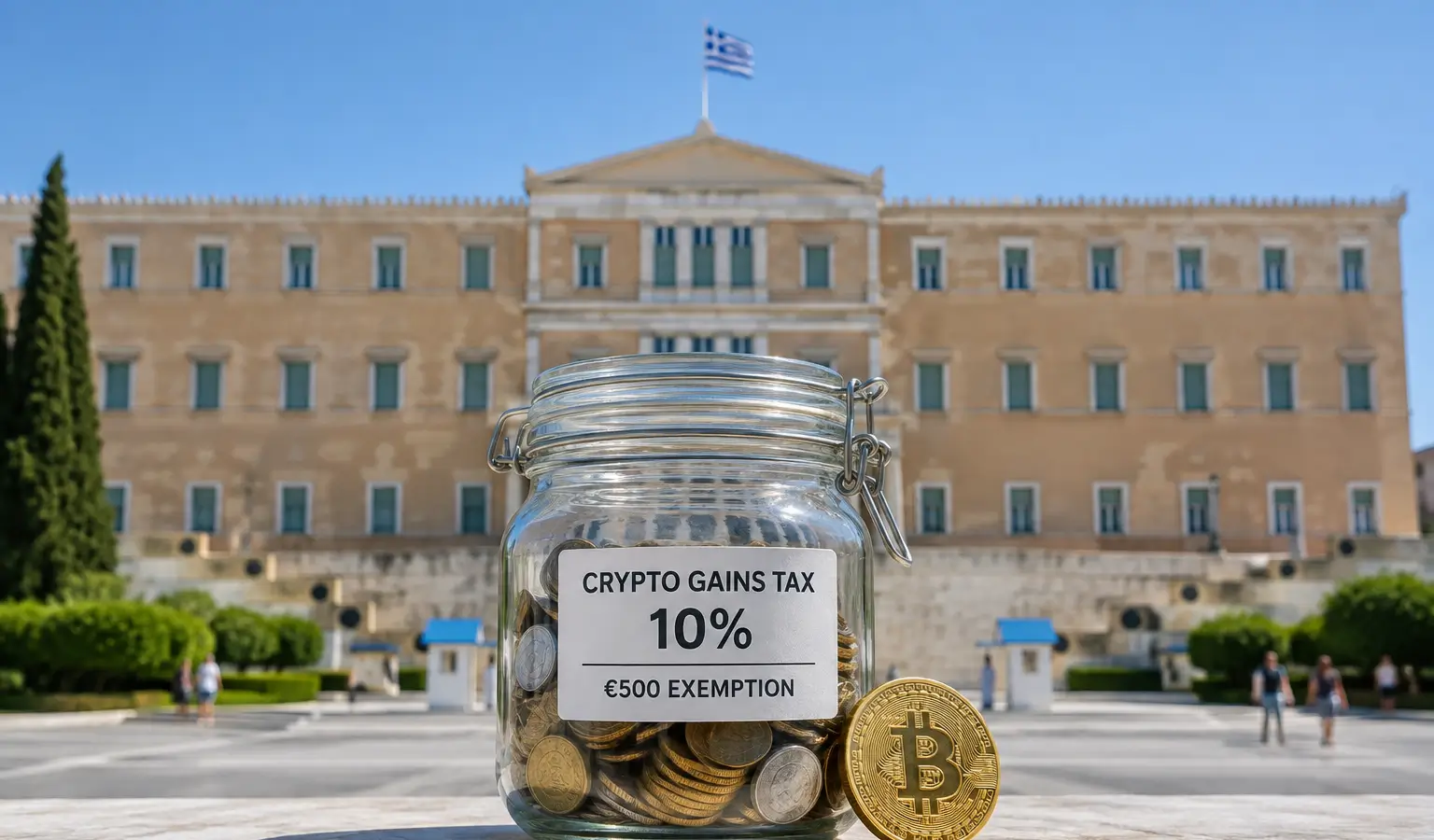
The proposal goes to parliament in November and fits into a broader EU trend where crypto is increasingly treated as an investment for tax purposes. Profits of up to 500 euros per year will remain exempt.
Key Takeaways
- Greece is preparing a 10% tax on crypto gains.
- Profits of up to 500 euros per year will remain exempt under the proposal.
- The proposal goes to parliament in November and fits into a broader European trend.
Greece is preparing a 10% tax on crypto gains. Under the proposal, which goes to parliament in November, profits of up to 500 euros per year will remain exempt. That puts the country in line with a broader European trend in which crypto is increasingly treated like traditional investments such as stocks.
Low Tax Rate in Europe
The Greek tax would be relatively low within the European Union. In Germany, the tax on capital gains is 26.4%, while France has a flat 30% rate for crypto gains. Italy's plans are also above 25%.
That comparison shows that European countries are tightening their tax rules for crypto more and more, but with clear differences from country to country. Greece is choosing a lower rate and a limited exemption, which sets the proposal apart from stricter regimes elsewhere in the EU. In the Netherlands, the debate has also been going on for some time: the Box 3 plan shows that crypto can actually be taxed more heavily than stocks there.
Unclear Picture of the Market
The size of the Greek crypto market is hard to pin down because many investors use platforms outside the country. As a result, Greek authorities have not yet made an estimate of the expected tax revenue. That makes it difficult for policymakers to determine exactly how much activity would fall under the new rules.
More European Tax Rules
The plans fit into a broader move in which countries are increasingly treating crypto the same as other investment products for tax purposes. For European crypto investors, that could matter because national rules are diverging more and more, and the tax treatment varies widely from country to country. It also shows that governments no longer see crypto as a separate niche, but as part of the mainstream investment market.