

Hong Kong and Swift Test Tokenized Deposits for Payments
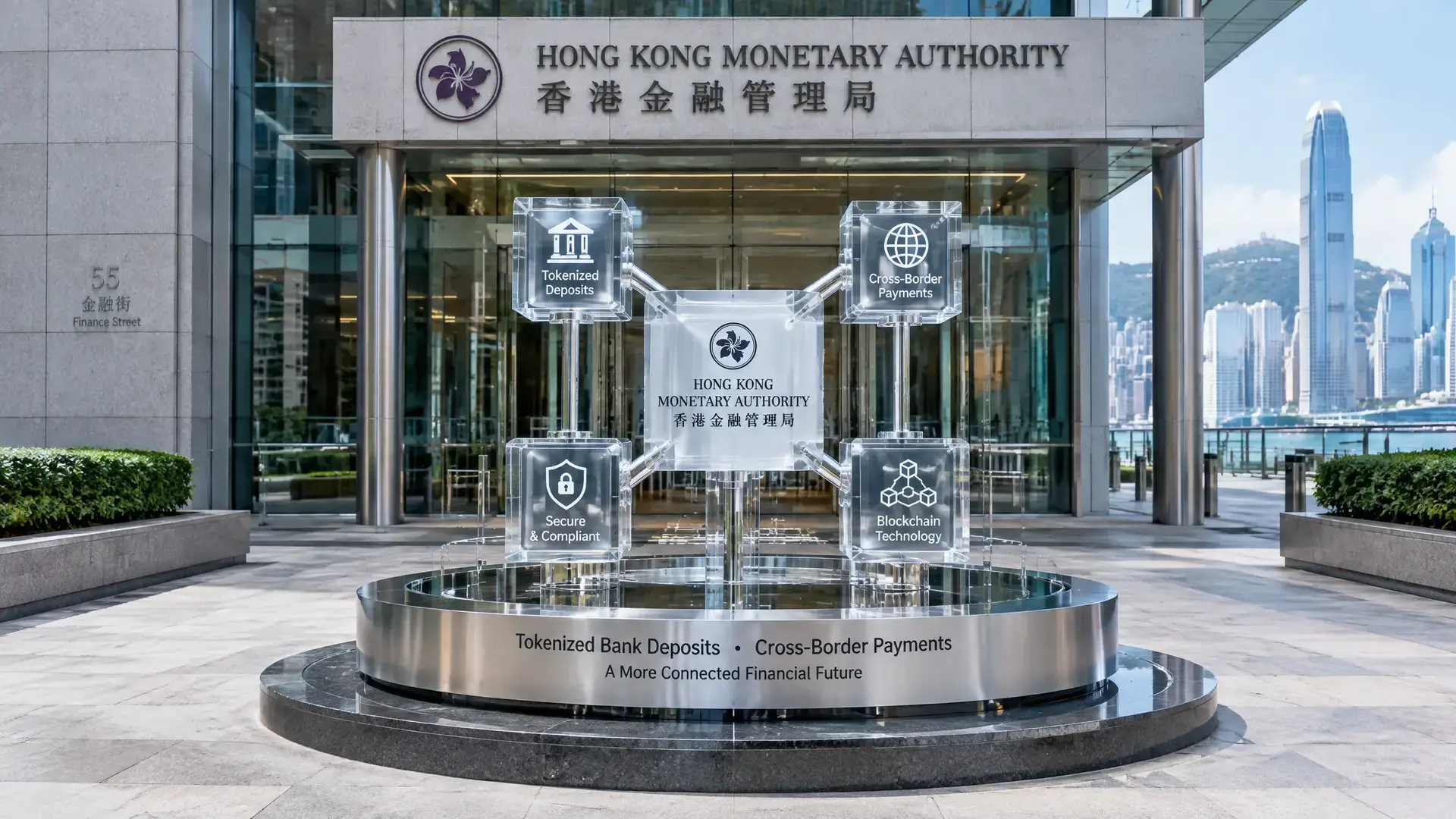
HSBC, Standard Chartered, and Bank of China are taking part in an HKMA test with Swift and Project Ensemble. The trial is meant to show how tokenized deposits can speed up cross-border payments 24/7.
Key Takeaways
- Hong Kong and Swift are testing tokenized deposits with major banks for faster, around-the-clock international payments.
- HSBC, Standard Chartered, and Bank of China are taking part in the research within Hong Kong's Project Ensemble.
- The project is still exploratory and is meant to give banks a blockchain option alongside stablecoins.
Hong Kong and Swift are testing with major banks how tokenized deposits can make international payments faster and keep them running around the clock. The project is meant to give banks a blockchain option alongside stablecoins, but for now it is still in the exploratory phase.
Banks Look for an Alternative
The Hong Kong Monetary Authority, or HKMA for short, said Monday that HSBC, Standard Chartered, and Bank of China are taking part in the research. They are connecting Swift's blockchain-based ledger to Project Ensemble, Hong Kong's platform for tokenized assets and deposits.
Tokenized deposits are digital versions of bank balances on a blockchain. Unlike stablecoins, they come from a bank's balance sheet, which means they stay within the regulated banking system. For banks, that makes them an interesting way to move money across borders without giving up the customer relationship or deposits.
Swift, which connects more than 11,500 financial institutions, says the goal is to link new payment systems across national borders. According to the HKMA, the collaboration is also looking at how tokenized deposits can support international transactions that run day and night.
From CBDC Tests to Payments
The collaboration builds on work that Hong Kong and Swift started in 2023 around the question of how CBDC systems can communicate with each other. CBDCs are digital versions of national currencies issued by central banks, not private companies.
Wish Wu, CEO of Pharos, said stablecoins have shown that money can move 24/7 and across borders, but that banks now want to do the same within their own system. He called tokenized deposits a possible front end for digital banking, while central bank money handles settlement.
Similar rails are also being built elsewhere in the sector: Standard Chartered has already launched tokenized deposit transfers in Hong Kong for corporate clients, also with support from HKMA infrastructure.
Why This Matters
For European crypto readers, this matters because it shows how traditional banks are using blockchain without immediately turning to public stablecoins. Projects like this could become important for how regulated institutions later connect payments, deposits, and possibly CBDCs. The test also fits into a broader wave of experiments around international payments, where banks and central banks are trying to combine the speed of crypto-like systems with existing rules.