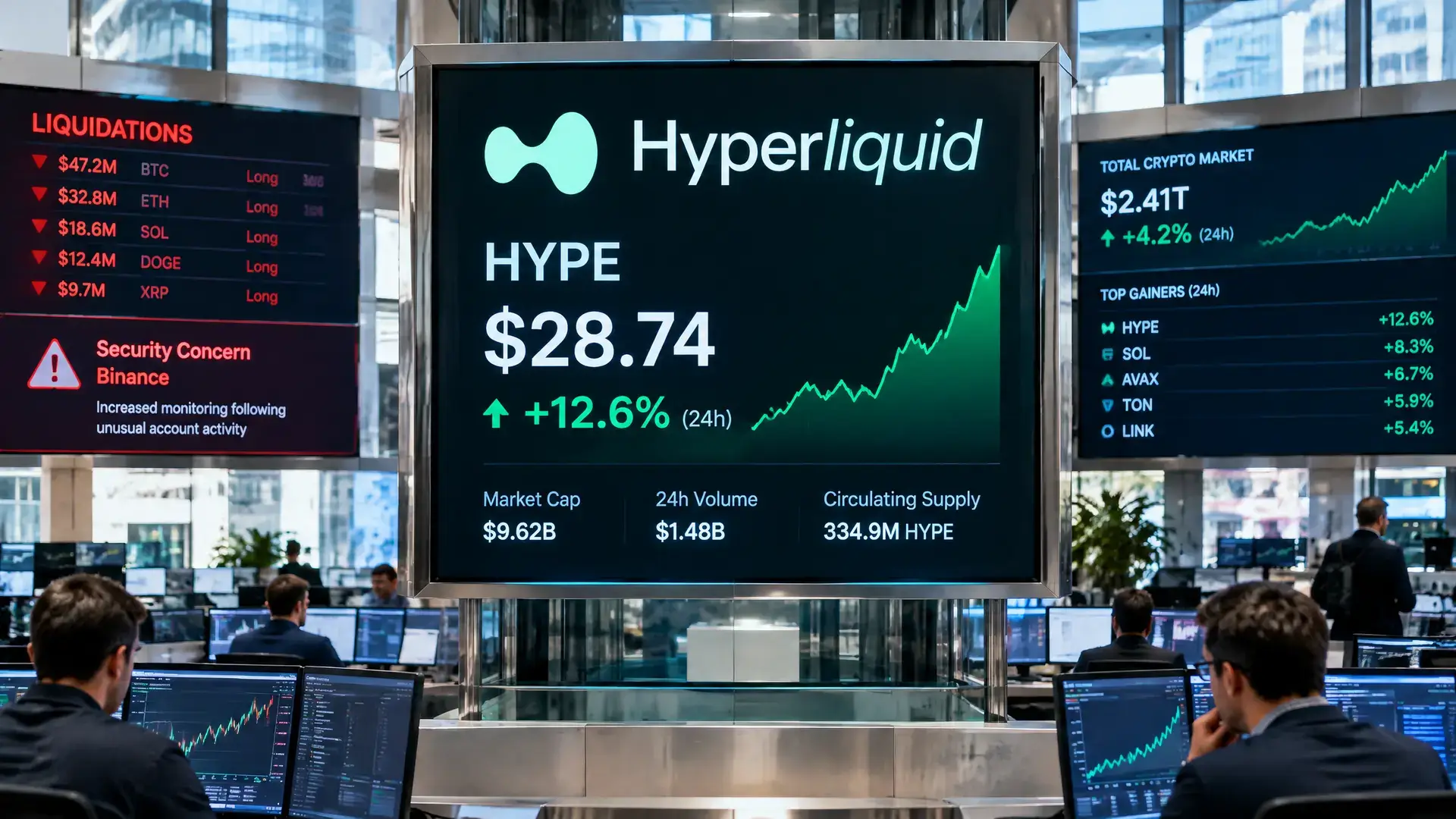
Hyperliquid Earns From Coinbase Deal in Bear Market
Grayscale sees the USDC interest flowing through Coinbase as steady cash flow for Hyperliquid, alongside trading fees and external futures. The revenue also feeds the HYPE buyback and burn mechanism.

Key Takeaways
- Through Coinbase, Hyperliquid receives monthly interest on about $6 billion (€5.4 billion) in customer deposits, worth about $105 million (€94 million) in September.
- Coinbase keeps 10% of that interest and passes 90% on to Hyperliquid, making this a steady revenue source that depends less on trading volume.
- The interest income flows into a mechanism that buys and burns HYPE, while external markets and stablecoin interest broaden the revenue model.
Hyperliquid receives a large share of the monthly interest on about $6 billion (€5.4 billion) in customer deposits that flow through Coinbase, according to Grayscale. That means money keeps coming in even when trading is barely happening. In September, that brought Hyperliquid about $105 million (€94 million), according to the analysis, almost the same as a year earlier despite the weak crypto market.
How the Deal Works
The arrangement started in May, when Coinbase became the treasury partner for USDC on Hyperliquid. USDC is a dollar stablecoin, and the deposits are invested in U.S. government bonds, which turns the interest into real cash. Coinbase keeps 10% of that interest and passes 90% on to Hyperliquid. According to Grayscale, this is the platform's most stable revenue source because the proceeds do not depend on trading volume.
The deal also had a strategic side. USDC became the main trading currency on Hyperliquid, pushing out USDH, a competing stablecoin that wanted to keep the interest inside the platform. For Coinbase, that meant a stronger role in USDC distribution, while it also keeps the underlying deposits themselves.
More Than Just Trading Fees
In the middle of 2025, more than 90% of Hyperliquid's revenue still came from its own trading fees, according to Grayscale. In September, that share had dropped to 64% because outside parties are also offering futures on things like silver, oil, and pre-IPO stocks, while giving up as much as half of the fees. Grayscale called that an outsourced revenue model and estimated the proceeds from it at $38 million (€34 million) last month.
The shift matters for the broader crypto market because Hyperliquid shows how a blockchain-based exchange can generate revenue from stablecoin interest and external markets, not just from spot or derivatives trading. For European crypto followers, the key point is that the income stream moves less directly with sentiment in the bear market, although the scale still depends on how much USDC flows through the platform.
HYPE Benefits Too
According to an earlier Grayscale report, 99% of Hyperliquid's fees go to a fund that buys and burns HYPE, similar to a stock buyback. The interest income from the Coinbase deal also flows into that mechanism. Grayscale does say, though, that it does not assign any value to Coinbase's side of this setup.
The timing is notable because the owner of the New York Stock Exchange and Kraken's parent company took steps this week to make Hyperliquid more accessible to U.S. traders. That lined up with a rise in HYPE on Wednesday, but Grayscale does not directly link that move to the interest deal.