Kalshi Adds 3 Million Users on World Cup Hype
During the World Cup, Kalshi traded more than $1.2 billion on the title market. The CFTC-regulated prediction market is still facing legal challenges in the U.S.
Key Takeaways
- Kalshi added three million new users during the 2026 World Cup and saw trading volume jump sharply.
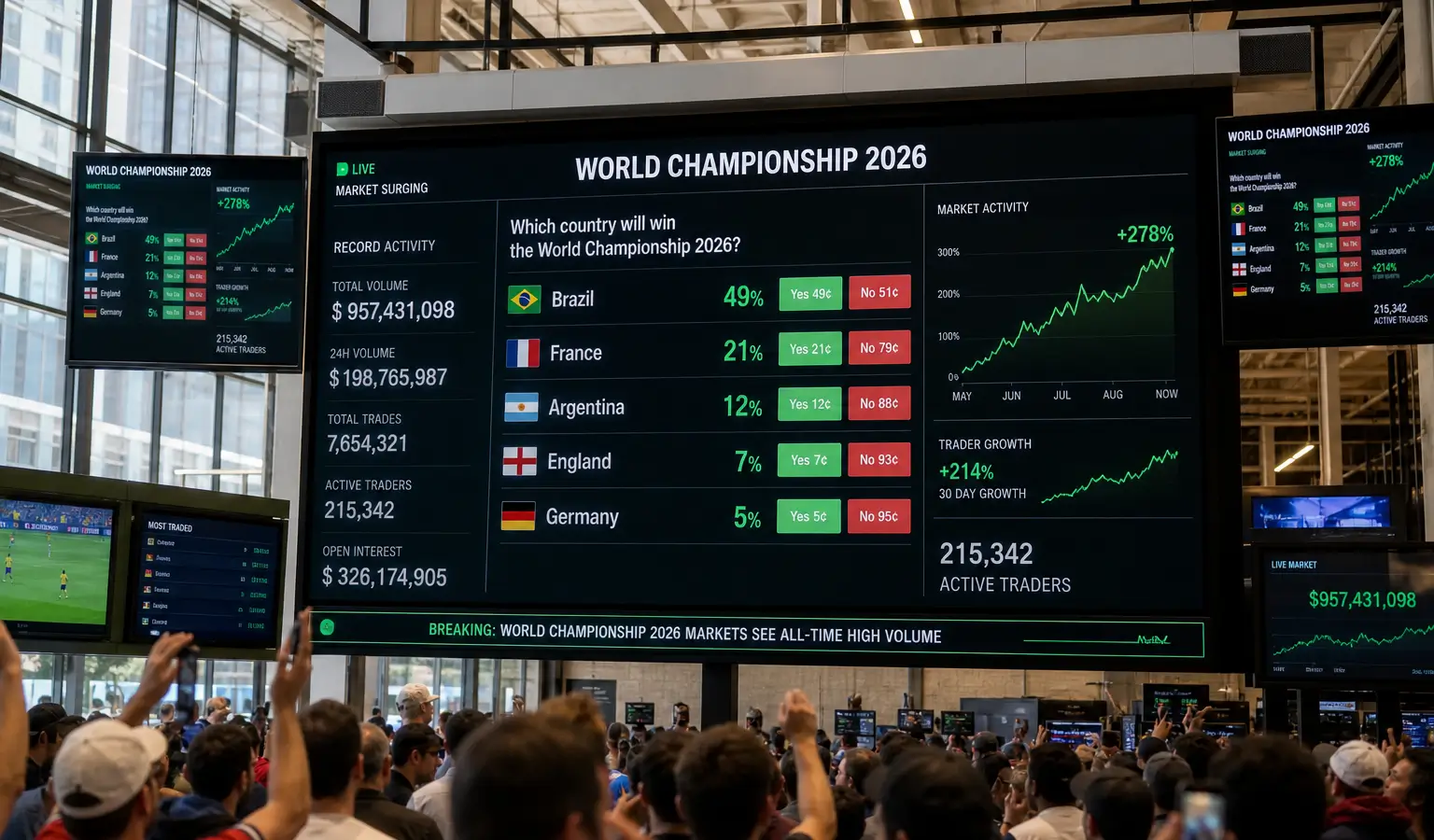
- More than $1.2 billion was traded in the market for the world title, a record for a single market on the platform.
- The growth comes as legal debates continue in the U.S. over whether sports contracts on prediction markets should count as bets.
Kalshi picked up three million new users during the 2026 World Cup, and activity on the platform surged along with it. More than $1.2 billion (€1 billion) changed hands in the market for the world title, setting a record for a single market on the platform. That market wrapped up on Sunday after Spain edged Argentina 1-0 in the final.
Global Sports as a Growth Engine
The jump underscores how aggressively Kalshi is using major sports events with global reach to drive growth. Vijay Viswanathan, associate dean of integrated marketing communications at Northwestern University, said soccer has an audience that few other events can rival because it reaches nearly every country.
Kalshi backed that reach with a wide marketing push. The company teamed up with ADI Predictstreet, FIFA’s official prediction market sponsor, for stadium co-branding during the tournament. It also surfaced odds in ChatGPT searches through a partnership with OpenAI, while running campaigns with Luka Modric and Jose Mourinho and working with the Argentina national team.
CEO Tarek Mansour told CNBC the approach is really about being fast and relevant, not just chasing raw volume. As he put it, “Our volumes are where the news is at.”
Regulation Remains a Risk
The growth comes as prediction markets in the U.S. are still tied up in legal fights. Kalshi is the first CFTC-regulated prediction market exchange in the United States and operates under federal oversight, much like major futures exchanges. Even so, federal authorities and several states are still battling over whether sports contracts are basically just another form of sports betting.
That dispute has already produced a CFTC case against Kentucky this year. Another dispute involving Kalshi shows just how heated the fight over oversight and state involvement has become. Brian Sung, a partner at law firm Haynes Boone, said the marketing push may not change how judges eventually rule, but it does shape how regulators and the public see prediction markets.
For European crypto and market watchers, that matters because the boundary between event trading, gambling, and regulated financial products is being tested more closely than ever. In the U.S., the issue could go even further, potentially reaching the Supreme Court and setting a broader legal framework for this kind of investment product.
After the Tournament
Kalshi is now running into a familiar post-event slowdown: when matches are not on, volume falls back. Mansour said the same pattern showed up after earlier major events. He expects the company will need fresh catalysts to keep growth going once the World Cup ends.