

Latvia Cools on Bitcoin Reserve and Tokenized Bonds Plan
Latvia’s central bank points to the Eurosystem and sees no firm commitment to Bitcoin reserves or tokenized government bonds. There is, however, more room for crypto reporting and tax regularization.
Key Takeaways
- Latvijas Banka says there was never any talk of a national Bitcoin reserve and that any such decision would have to be made at the European level within the Eurosystem.
- The central bank is also cooling expectations around tokenized government bonds; a legal framework is being explored, but there is no confirmed rollout in 2027.
- Latvia is open to crypto as a tax payment method and will introduce a scheme in 2027 that lets people declare unreported crypto at 10%.
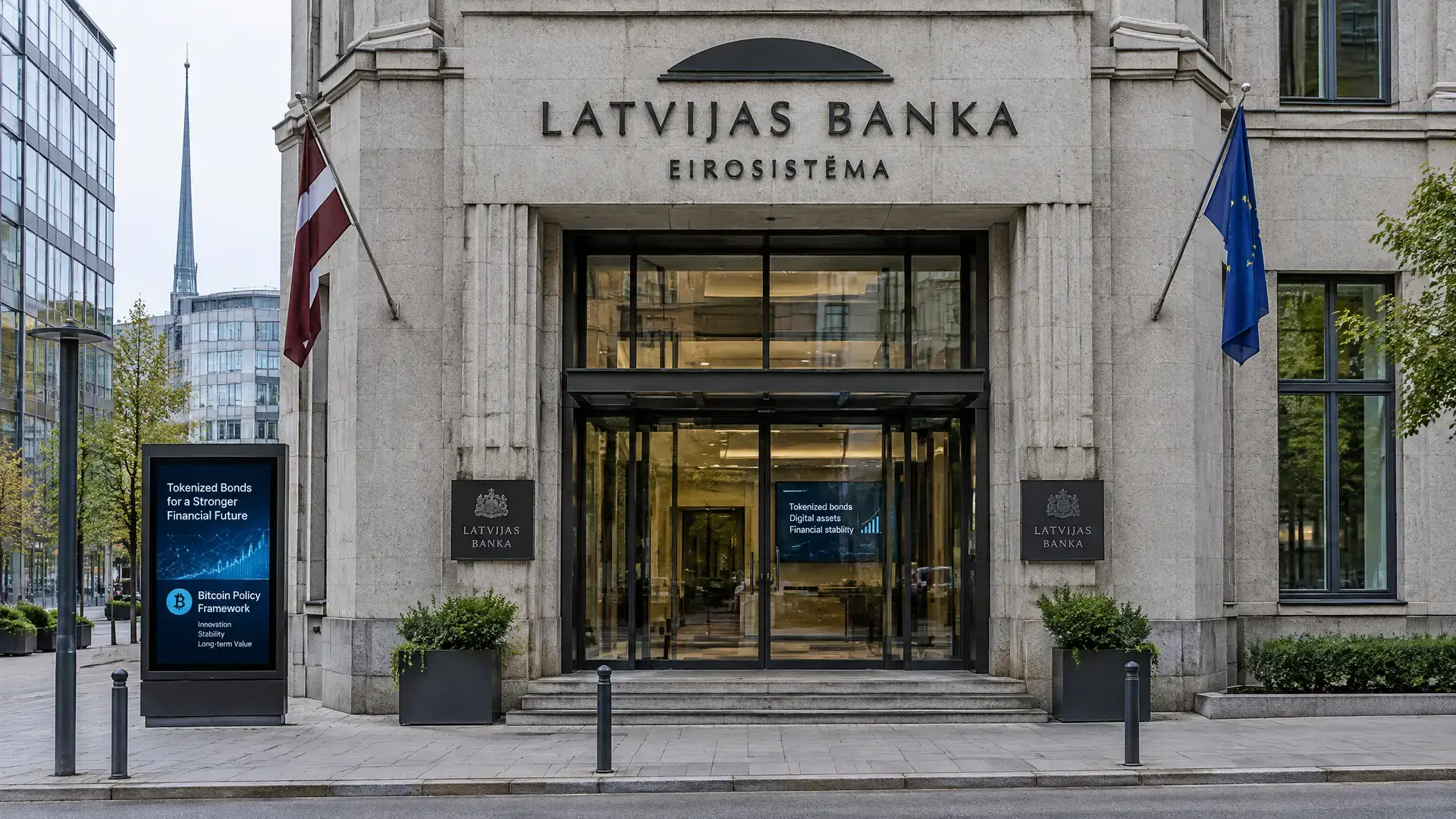
Latvia’s central bank has never discussed a national Bitcoin reserve and also sees no firm commitment to tokenized government bonds in 2027. That puts Latvijas Banka on a more cautious crypto policy path than Economy Minister Viktors Valainis outlined earlier.
Reserve Plan Gets No Support
Deputy Governor Santa Purgaile said in Riga that a Bitcoin reserve was never discussed within the central banking community. According to her, such a move could not be made by Latvia alone anyway, because the country is part of the Eurosystem. She said a reserve decision would then have to be made for all of Europe.
That cautious stance fits with the European Central Bank’s line. ECB President Christine Lagarde said earlier in 2025 that she was convinced Bitcoin would not end up in a central bank’s reserves. For European policymakers, the big question is still how far national ambitions can go within the wider euro framework. Meanwhile, the topic is still alive in the U.S. too: a U.S. bill on a Bitcoin reserve shows how differently countries are handling the same debate.
Tokenized Bonds Remain Uncertain
Purgaile also cooled expectations around tokenization. Valainis said last month that rules for tokenized commercial real estate and government bonds could already arrive in the first half of 2027. Latvijas Banka does support the work and sits on a working group building a possible legal framework, but according to Purgaile, tokenized bonds for next year are not confirmed yet.
She described the work mainly as an intention to keep building the framework and infrastructure. For investors and market participants, that mostly means Latvia is moving toward digitalization, but it still has not set a firm date or a final product.
Tax Route Gets More Room
While the central bank is hesitant on reserves, it is much less negative about crypto as a tax payment method. Purgaile said Latvijas Banka is not against proposals that would let residents pay personal taxes in crypto. The technical details still need to be worked out, though, and she could not say whether this could start as soon as next year.
The tax route is already taking shape. Latvia’s parliament approved changes in October that give residents from April 1 to May 31, 2027, the chance to declare previously unreported crypto at a flat 10% rate on the market value as of December 31, 2026. New crypto investment accounts go live on January 1.
The Financial Intelligence Unit sees the scheme as a way to bring hidden holdings into the open. Deputy director Paulis Iļjenkovs called it a very good initiative and said the law makes clear that reporting does not launder criminal money. According to him, more transparency also improves Latvia’s risk profile, while the regulator at the same time keeps a closer eye on sanctions and the source of funds.