MiCA Still Has No ART Applications in the EU
EU rules for basket-backed stablecoins have proven so strict that no issuer has managed to secure an ART license. Meanwhile, growth is happening mostly in e-money tokens and licensed CASPs.
Key Takeaways
- Two years after MiCA, the EU still has not approved a single issuer for an asset-referenced token.
- ARTs are running into demanding rules around capital buffers, transaction caps, and possible direct EBA supervision.
- The market is expanding mostly through e-money tokens and licensed CASPs, while ARTs and basket tokens remain outside the EU framework.
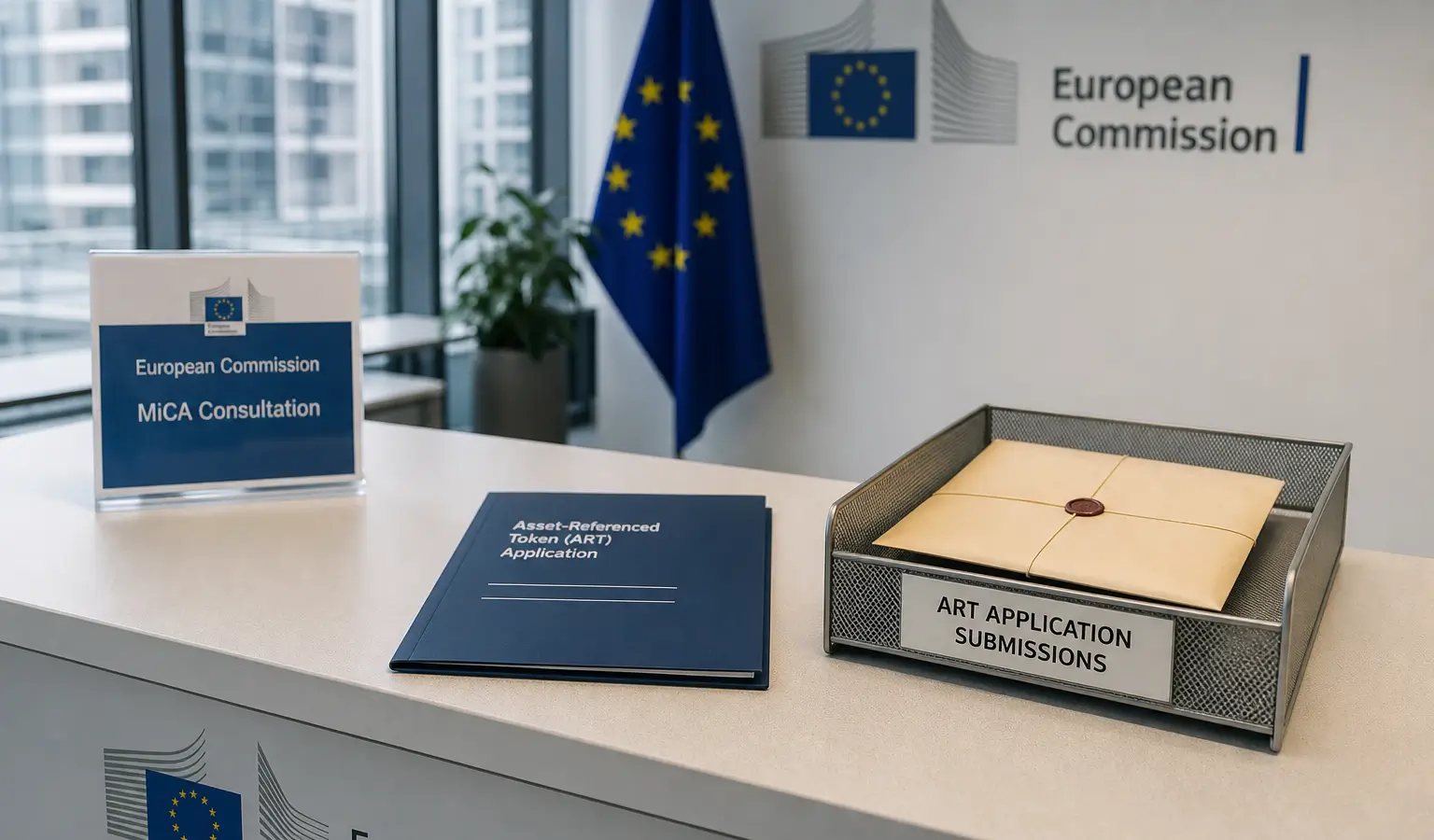
It has been two years since MiCA came into force, and the EU still has not signed off on a single issuer of an asset-referenced token, or ART. That is notable because the rulebook was supposed to bring structure to a large part of Europe’s crypto market and give more clarity to stablecoins backed by more than one asset.
Why ARTs Are Stalling
ARTs are stablecoins pegged not to one currency, but to a basket of assets. That basket can include currencies, commodities, or other crypto assets, or even a simple 50 percent euro and 50 percent U.S. dollar mix. MiCA created a separate framework for them in part because of the concerns raised after Facebook’s Libra, especially around currency baskets and their potential effect on financial stability.
The problem is that the requirements are tough. Issuers must keep 350.000 euro or 2 percent of reserves on hand, whichever amount is higher. If a token crosses 1 million transactions and 200 million euro in daily payments, new issuance has to stop. And if the token is deemed significant, it also comes under direct EBA supervision.
According to Patrick Hansen, EU Strategy and Policy Director at Circle, the fact that the register has remained empty since June 2024 suggests a deeper issue. In his view, the category either needs to become workable or it will fade away.
The Market Took a Different Route
Even though ARTs have yet to gain traction, e-money tokens have continued to grow. The number of EMT issuers has climbed to 21 from 19 in March, while the latest ESMA register shows 280 licensed CASPs. In other words, MiCA is pulling more firms into the regulated system, but mostly in areas where the compliance burden fits existing products more naturally.
That matters for European crypto readers because ARTs were designed for tokens that do not fit the standard stablecoin model. In practice, fiat-backed tokens and regulated service providers appear to be finding their place, while gold and basket tokens are still outside the EU framework for now. Tether Gold and PAX Gold still have a combined market value of $4.4 billion (€3.8 billion), but they remain outside the European perimeter.
What Brussels Has to Decide Now
The ART debate is unfolding as the European Commission takes another look at MiCA. The consultation runs until August 31, and a report, possibly including a legislative proposal, is due by mid-2027 at the latest. Hansen says that among the biggest stablecoins, only USDC, USDG, and EURC are MiCA-compliant, while Tether’s position has already pushed Revolut to plan to drop USDT.
That leaves Brussels with a bigger question than whether MiCA works at all: what kind of crypto it actually works for. For ordinary euro- or dollar-backed tokens, there is a clear path. For ARTs, though, that path still looks closed in practice.