MiCA Is Being Reworked as Stablecoins Take Center Stage
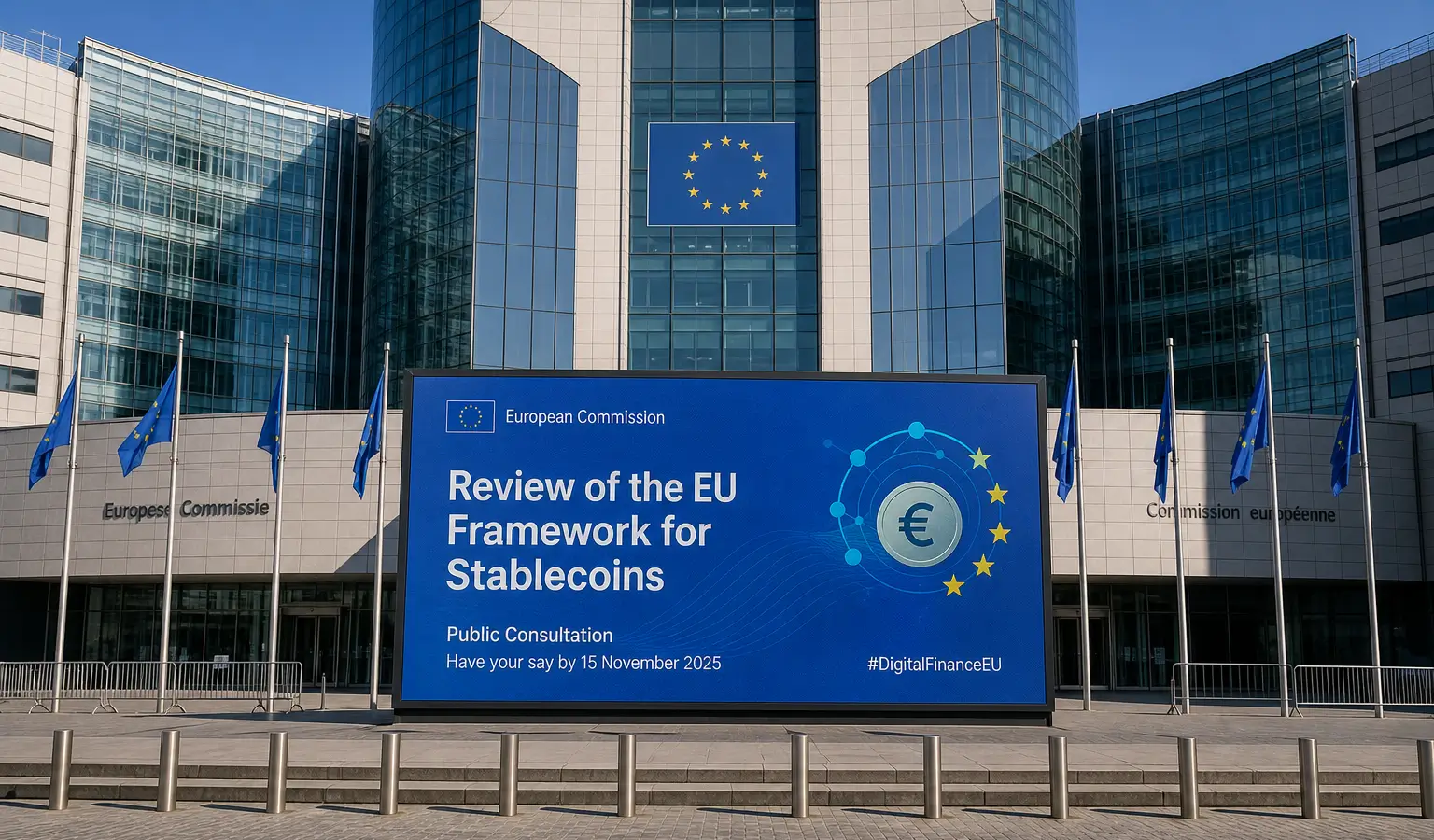
Brussels is revisiting the stablecoin rules as dollar tokens dominate and the ECB warns about the impact on monetary policy. Reserve requirements, oversight, and euro stablecoins are also back on the table.
Key Takeaways
- Europe is revisiting MiCA as stablecoins, especially dollar-backed tokens, become more important in cross-border payments.
- The European Commission is weighing tighter or updated reserve rules, while the U.S. has already set federal standards through the GENIUS Act.
- The direction of MiCA 2.0 could help determine how oversight, euro stablecoins, and Europe’s stablecoin market evolve from here.
Europe is taking another look at MiCA as stablecoins become a much bigger part of international payments. The rulebook is only three years old, but the market around it has changed quickly. That shift is pushing Brussels beyond a framework that was mostly designed for spot crypto and into a wider debate over reserve requirements, oversight, and the place of euro stablecoins.
Stablecoins Are Driving the Debate
Stablecoins are now at the center of the MiCA review, largely because dollar-pegged tokens have become a key tool for cross-border payments. The European Central Bank has been warning for some time that this trend could chip away at its ability to steer monetary policy in the eurozone. Even so, the ECB itself is still putting most of its focus on a digital euro rather than euro stablecoins.
According to John Orchard, chairman of the Digital Monetary Institute at OMFIF, some European policymakers are now less skeptical than they once were. He said ECB officials appear more open to stablecoins on bank balance sheets and possibly as a remittance tool, although wholesale settlement remains a touchy subject. That reflects a broader European discussion about how far fixed-value tokens can expand without unsettling monetary relationships.
Brussels Is Looking at the U.S.
The U.S. framework is adding another layer of pressure to Europe’s review. Through the GENIUS Act, the U.S. introduced federal rules for payment stablecoins last year, covering issuance, reserves, and oversight inside the existing U.S. system. That makes the gap with Europe even more obvious, especially with dollar stablecoins still dominating nearly the entire market.
Reserve rules are another major difference. Under MiCA, stablecoin deposits have to be routed back into the banking system, while under GENIUS, reserves can be held in U.S. Treasury securities. Orchard said the European Commission is exploring whether issuers could instead hold European money market instruments. That would move the framework closer to the U.S. model, but it also raises concerns about fragmentation and added red tape.
Why This Matters for Europe
For European crypto firms and institutional players, the outcome of MiCA 2.0 could play a major role in how stablecoins are actually used. The discussion is not only about oversight, but also about whether Europe can build a real euro stablecoin market without relying so heavily on dollar liquidity. The rise of Qivalis, a consortium of banks and financial institutions working on a euro-denominated stablecoin, shows that this strategic debate is already playing out in the market.
For Dutch and European readers, the key point is that the review could also reshape how oversight is divided between national regulators like BaFin and European institutions. Orchard noted that a more centralized setup would only be possible if the rules are changed. At the same time, B2C2 in Luxembourg said local expertise and a practical split of responsibilities still matter for companies trying to grow their European footprint.