

Nvidia Shipments Halted After New U.S. Export Rules
The move follows tighter U.S. export controls on AI chips for Chinese customers through data centers in Southeast Asia. Financing for projects involving ByteDance and others is also coming under pressure.
Key Takeaways
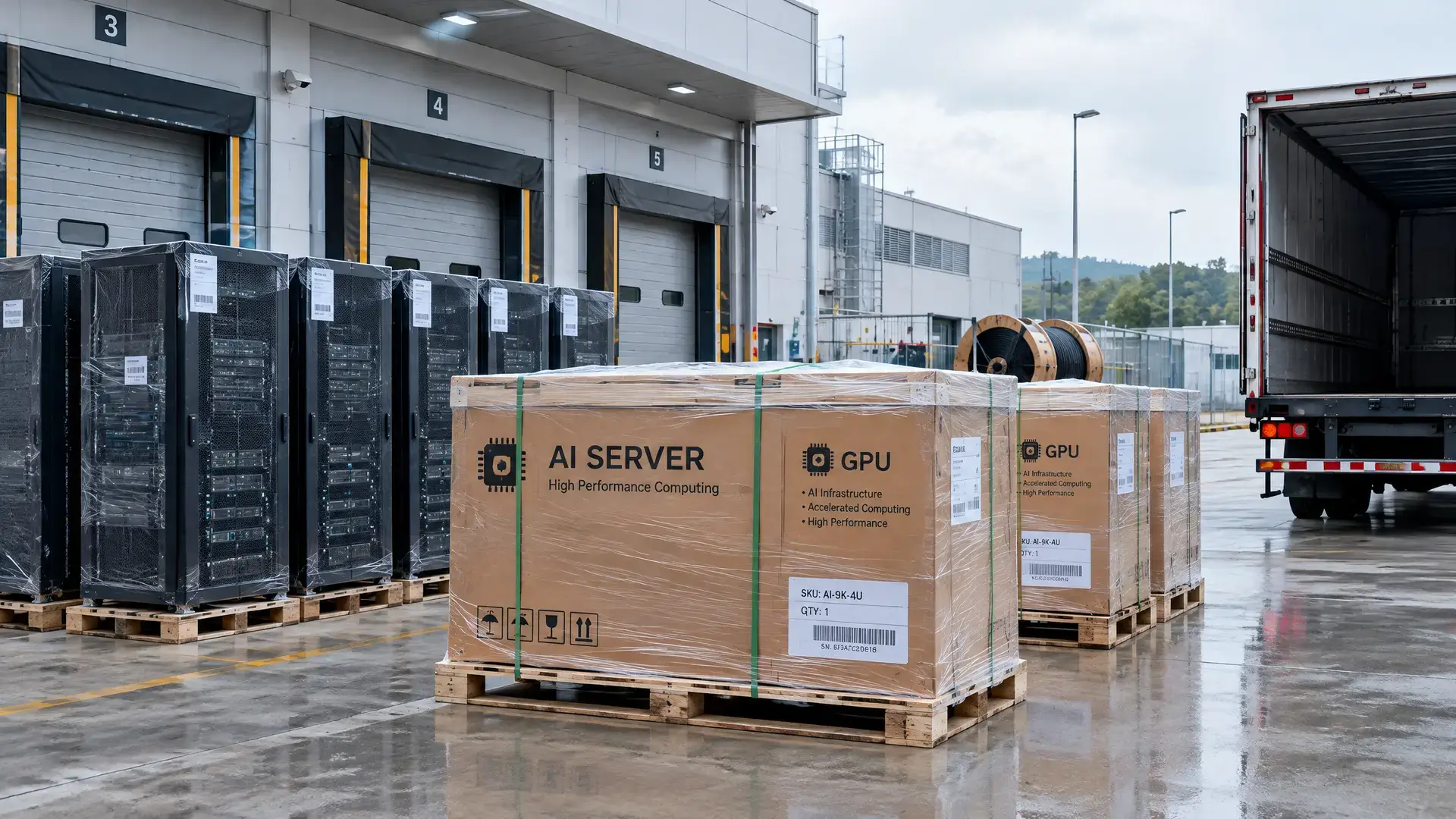
- Nvidia has asked partners to pause server shipments with its chips to Malaysia, Singapore, Thailand, and Indonesia.
- New U.S. export rules impose licensing requirements on data centers that provide enough computing power to Chinese companies.
- Banks are rethinking loans for Asian data centers, while AI stocks and Nvidia remain under pressure.
Nvidia has asked partners like Dell Technologies and Super Micro Computer to pause server shipments with its chips to Malaysia, Singapore, Thailand, and Indonesia. The move follows tighter U.S. export rules meant to limit Chinese companies' access to advanced AI chips through foreign cloud providers.
New Rules Hit Asia
The U.S. Bureau of Industry and Security introduced new export controls on November 16 for advanced AI chips to countries including Malaysia, Singapore, Thailand, Indonesia, and Brazil. Data centers in those countries now face licensing requirements if they provide enough computing power to companies from China or other restricted jurisdictions.
That makes it harder to deliver equipment and could delay projects. The rules mainly affect the fast-growing digital infrastructure in Southeast Asia, where a lot of capacity is being built for international cloud and AI services.
Financing Comes Under Pressure
According to Bloomberg, lenders are taking more time to review a $6.6 billion (€6 billion) loan for Bridge Data Centres, owned by Bain Capital. The company's Malaysian sites serve ByteDance. Banks are also taking another look at a $480 million (€439 million) loan for Aolani, a Singapore-based cloud provider with ties to ByteDance.
If servers or permits arrive later, that could push back revenue from these projects. That may make lenders more cautious about new capacity, especially since the market has already been weaker for months.
AI Stocks Remain Vulnerable
The shipment pause comes at a time when the AI trade is already under pressure. Nvidia has lost as much as 50% since its October peak. The Nasdaq 100 has fallen 17% from its high, while other AI-related names have also dropped sharply.
For European readers, this matters because the U.S. export rules affect not just chipmakers, but also data center and cloud financing outside the U.S. If banks get stricter, that could slow the rollout of AI infrastructure in several regions, even if demand for computing power itself does not disappear right away.