OpenAI Puts ETH on Shaky Ground, Bitcoin Stays Safe
OpenAI says it has broken a 27-year-old complexity assumption, but that does not directly affect Bitcoin and Ethereum cryptography. The debate mainly highlights the long-term risk from quantum computers.
Key Takeaways
- OpenAI says an AI model has disproven the Exponential Time Hypothesis with a faster approach to a classic logic problem.
- The claim is still being reviewed independently and does not mean P = NP has been proven or that modern encryption suddenly becomes breakable.
- Bitcoin signatures rely on elliptic curve cryptography, so this breakthrough does not directly affect the security foundation of Bitcoin and Ethereum.
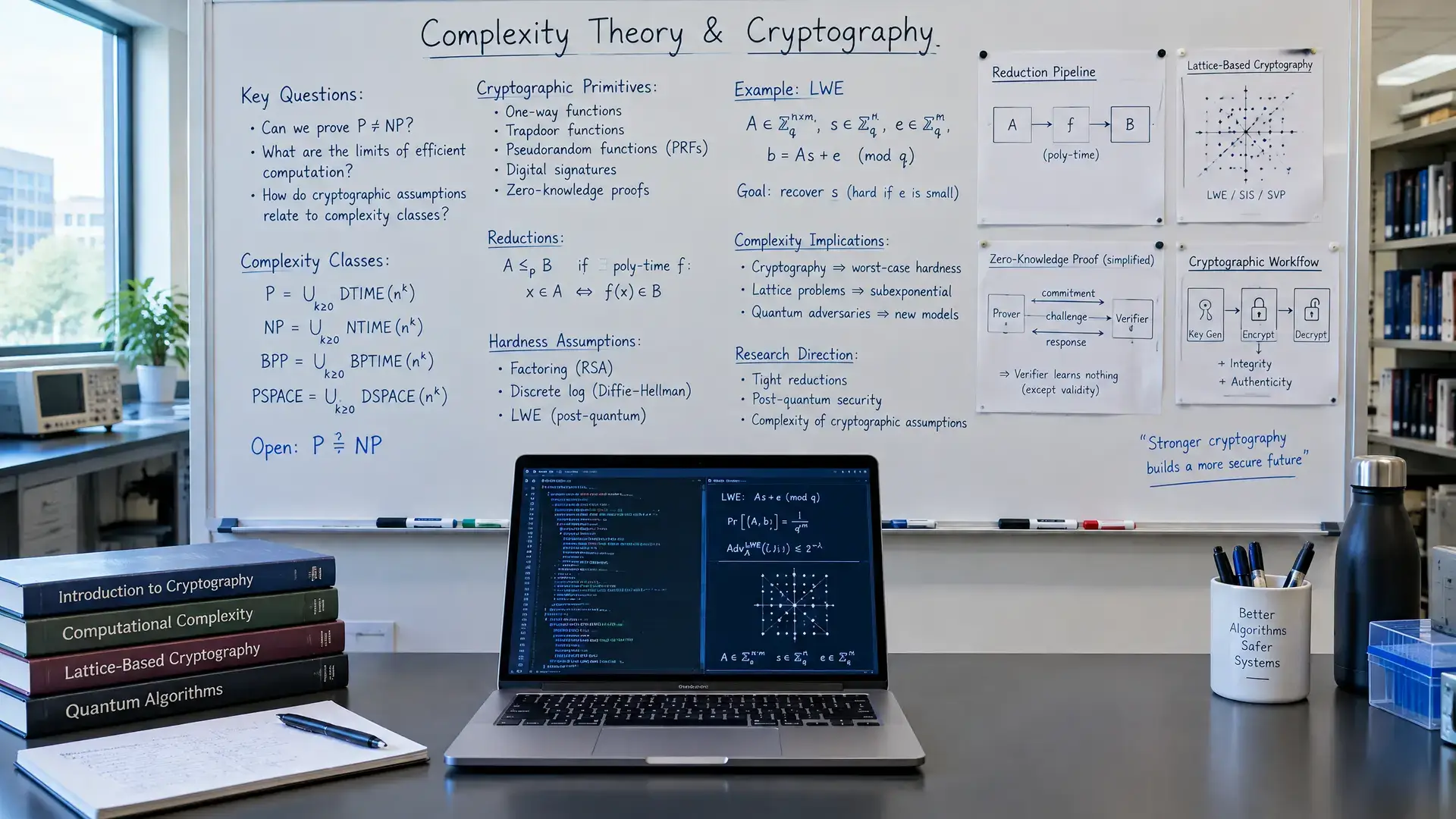
OpenAI says that an AI model has disproven the Exponential Time Hypothesis with a faster method for a classic logic problem. The claim is still being reviewed independently, but it does put a 27-year-old assumption about computational complexity under pressure. For Bitcoin and Ethereum, that by itself does not mean any direct danger to the cryptography that secures their networks.
What ETH Actually Says
The Exponential Time Hypothesis is about 3-SAT, a problem with true-false switches and rules that are linked together. The idea is simple: checking a possible solution is easy, but finding one gets much harder as more variables are added.
Russell Impagliazzo and Ramamohan Paturi formulated the hypothesis in 1999. The theory says that no algorithm can escape that exponential growth in the worst case. According to OpenAI, that assumption has now been broken with an algorithm that handles inputs with n variables in about 2^(n/√log n) steps.
Why Bitcoin Is Not Directly Affected
The key nuance for crypto investors is that this breakthrough is not the same as P = NP. That bigger question is still open. So even if ETH falls, that does not mean modern encryption suddenly becomes breakable.
Bitcoin signatures rely on elliptic curve cryptography, and specifically on a different hard math problem than 3-SAT. The AI breakthrough does not directly affect that foundation. OpenAI itself also warns that practical speed gains would still require much more research.
What This Does Mean for Crypto
For European crypto readers, the main takeaway is that research like this shows how quickly assumptions about security can shift. Based on the information available, current Bitcoin cryptography remains safe, but the debate does underline how important it is for wallets and networks to keep relying on strong mathematical assumptions.
There is also another well-known long-term risk for Bitcoin: powerful quantum computers. They have long been seen as a possible problem for ECDSA signatures, but current machines are not capable of that yet. That makes the OpenAI claim mainly a scientific milestone, not a direct market risk for BTC or ETH.