

Optimizely Leak Hits HSBC, BBC, and Ledger With Crypto Theft
The attack through Optimizely also hit Ledger and other financial websites; crypto addresses on Bitcoin, Ethereum, and Solana were especially redirected.
Key Takeaways
- A flaw in Optimizely's web testing software may have affected 178 websites, including HSBC, BBC, Salesforce, and Ledger.
- The malicious code replaced crypto wallet addresses and could also steal payment data, cookies, and screenshots.
- Researchers linked the attack to about $7,040 in received wallets and see it as a supply chain attack.
A flaw in Optimizely's web testing software may have exposed visitors to 178 major websites to crypto theft and payment data interception. The affected names include HSBC, Salesforce, the BBC, and hardware wallet maker Ledger. The incident shows how one third-party vulnerability can be enough to hit a lot of websites at once.
How the Attack Worked
According to Optimizely, an unauthorized party was able to place code into customer projects on November 16 through a flaw in the sign-up process. That code was then automatically loaded on websites that use Optimizely for tests with different page layouts and text. The company says it removed the malicious code and fixed the flaw.
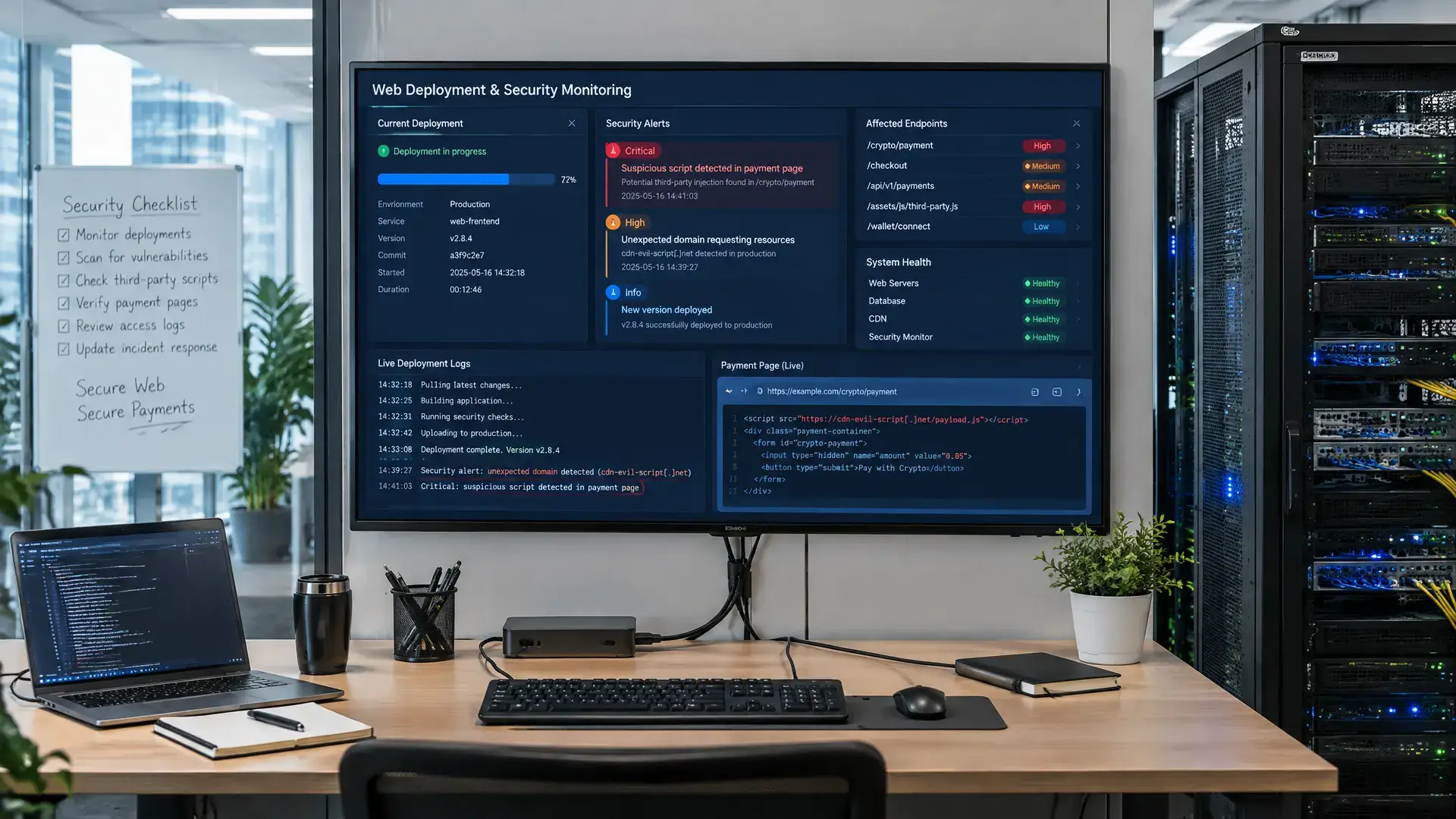
The attack mainly targeted sites that accept crypto payments. The code looked for wallet addresses on Bitcoin, Ethereum, Solana, Tron, and five other networks and replaced them with the attacker's addresses. That happened both in input fields and in text that visitors copied to their clipboard. Anyone who then pasted such a changed address into a crypto wallet and approved the transaction would have sent money to the attacker.
More Than Just Crypto
The script did more than replace addresses. According to the researchers, it also skimmed card numbers from payment forms, copied cookies and screenshots, and even delivered exploit kits for older iPhones. That fits the familiar pattern of web skimming, where malicious JavaScript is placed on a site to steal visitors' payment data.
Helme identified six affected organizations as crypto or trading companies, including Ledger, IG Group Holdings, OANDA's Coinpass, Interactive Investor, TMS Brokers, and Betashares. Another 32 organizations are banks or other financial companies. Wallets tied to the attack received about $7,040 (€6,390) by Monday morning, mostly in Bitcoin, according to Report URI. Bloomberg could not independently verify that amount.
Why This Matters for Crypto
For crypto users, this is mainly a reminder that the risk is not only in a wallet or exchange. If a trusted service delivers code to a website, a flaw there can affect many users at once. That still makes address swapping a simple but effective trick for attackers, because they do not need to break into a wallet, only change the address someone copies.
The attack also fits a broader trend of supply chain attacks, where an attacker abuses a trusted third party to hit multiple organizations at once. Researchers also said they have not linked the attack to AI tools so far, despite the recent attention on AI-driven cyberattacks.
That risk also keeps coming back in hardware wallets and supply chains. For example, an earlier Ledger case involving tampered hardware already raised extra questions about how safe the wallet distribution chain really is.