Pakistan Launches Crypto Investigation Unit to Fight Money Laundering
The FIA is focusing on money laundering and terror financing through crypto, while PVARA is rolling out the new licensing and oversight framework for exchanges and wallets.
Key Takeaways
- Pakistan has set up a special crypto investigation unit within the FIA to tackle money laundering and terror financing through crypto.
- The unit falls under NC3 and investigates crypto in criminal cases, while regulation stays with the Pakistan Virtual Assets Regulatory Authority, PVARA.
- Pakistan is pairing tougher enforcement with new crypto laws after parliament passed the Virtual Assets Act in March 2026.
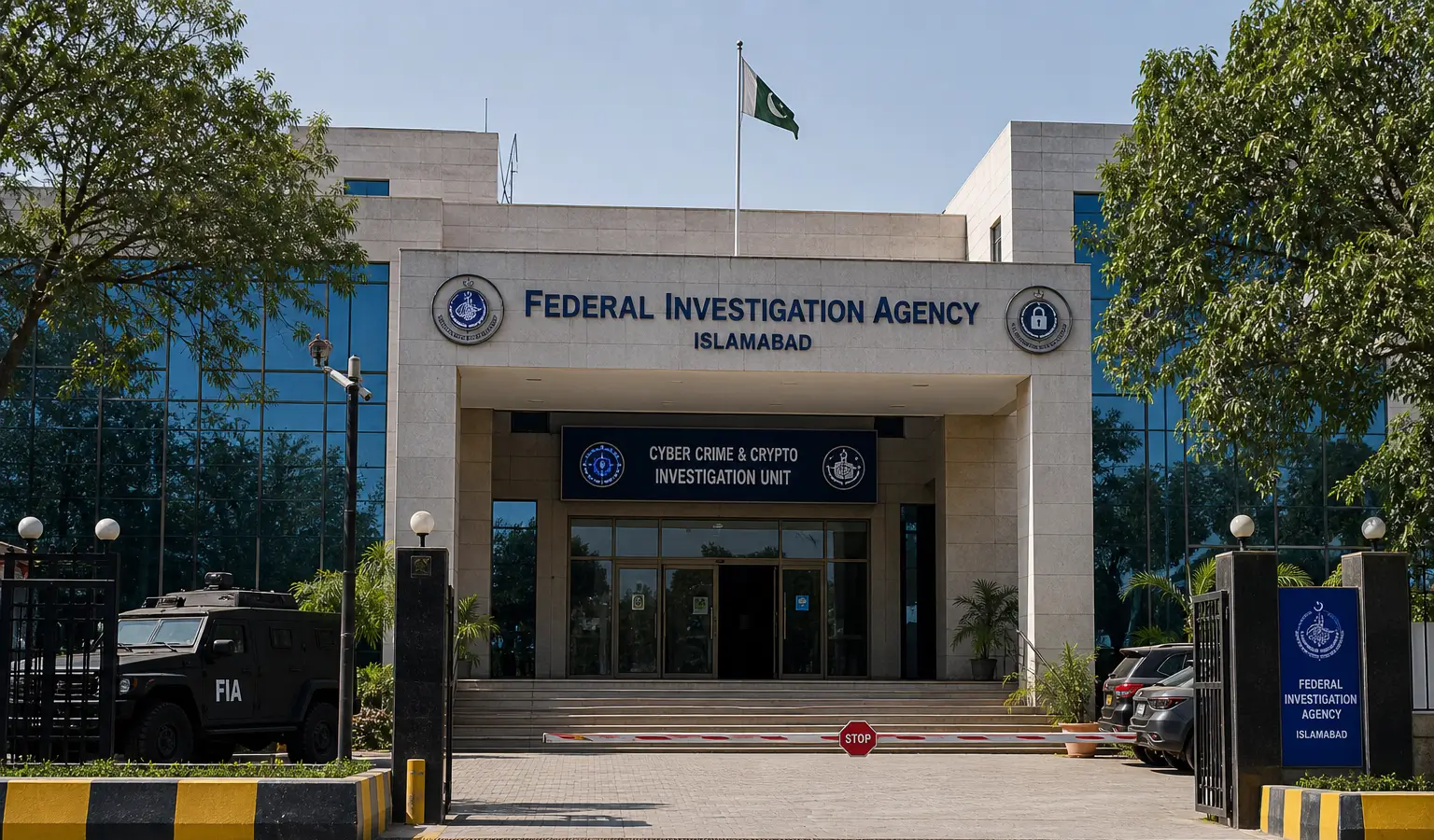
Pakistan has launched a dedicated crypto investigation unit inside the Federal Investigation Agency (FIA) to go after money laundering and terror financing linked to crypto. The move signals that Islamabad is taking a harder line on crypto enforcement, even as formal regulation of the sector now sits with a separate authority.
Under NC3
The new unit operates under the newly active National Command and Control Centre, or NC3. FIA Counter-Terrorism Wing Director Dr Muhammad Athar Waheed said the team is meant to investigate crypto in criminal cases, not oversee the market. That responsibility remains solely with the Pakistan Virtual Assets Regulatory Authority, or PVARA.
Waheed also urged the National Cyber Crime Investigation Agency and the Anti-Narcotics Force to create similar units. The idea is to bring law enforcement, cybercrime, and anti-drug efforts closer together as crypto-related crime continues to grow.
Regulation and enforcement
The timing is notable because Pakistan has also been building out its crypto rulebook over the past few years. In March 2026, parliament passed the Virtual Assets Act, which gives PVARA the role of federal regulator for licensing and oversight of exchanges, token issuers, wallet services, and some DeFi protocols. PVARA itself was established earlier, in July 2025, as part of that broader policy shift.
That marks a sharp break from the 2018 ban, when the central bank cut regulated firms off from virtual assets. The State Bank later eased that stance somewhat by restoring partial access to banking services for crypto companies.
Why this matters
For European crypto readers, Pakistan is worth watching because it is moving toward legalization and stricter enforcement at the same time. That reflects a wider global trend in which regulators are treating crypto not only as a financial market, but also as a law enforcement concern. Pakistan is also one of the largest crypto markets in the world, which makes any change in oversight or enforcement especially significant. The direction is similar to other countries that are bringing crypto more tightly into their enforcement systems, such as South Korea, where regulators have already investigated dozens of manipulation cases since new laws took effect.