

Payward Expands AAVE Position and Seeks Closer Ties With Aave
The Kraken parent is betting on AAVE through an affiliated fund and is hinting at more purchases. The move fits Payward’s broader push into asset management and DeFi.
Key Takeaways
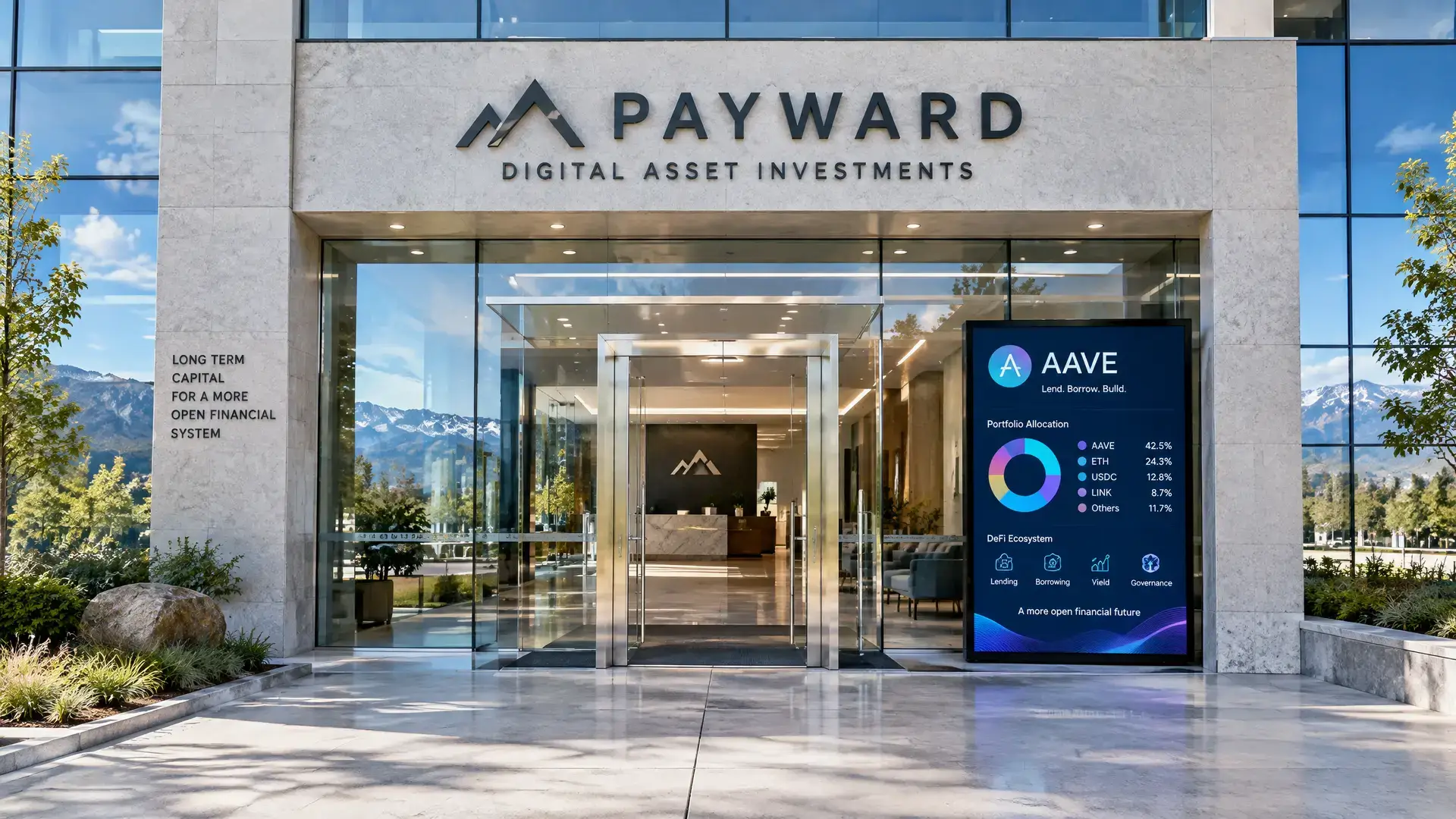
- Payward, the parent company of crypto exchange Kraken, bought an unknown amount of AAVE tokens together with customers through an affiliated investment fund.
- The tokens were bought on the secondary market; Payward is not ruling out more purchases and more cooperation with Aave.
- The investment fits Payward’s broader strategy around DeFi, asset management, and tokenized products, while Aave reports about $33 billion in net deposits.
Payward, the parent company of crypto exchange Kraken, has bought an unknown amount of AAVE tokens together with customers. With that, the company is taking a new step into DeFi and asset management, while also looking at further cooperation with Aave.
AAVE Bought Through Fund
The purchase went through Digital Asset Special Investments I, LP, an investment fund tied to Payward, and through customers of the company’s asset management business. According to Thursday’s announcement, the tokens were bought on the secondary market. Payward, which is based in Wyoming, also said it may make more purchases.
What stands out is that Payward did not buy the tokens directly from Aave. That lines up with earlier signals from June, when Aave founder Stani Kulechov publicly distanced himself from reports about a possible sale of 15% of Aave Group at a valuation of $385 million (€342 million). Those earlier talks were still about a much broader deal, but the new announcement no longer mentions shares.
More Than Just Trading
The investment fits into Payward’s broader effort to build an asset management arm around digital assets, structured yield, and tokenized investments. The company has split that expansion into four pillars: trading, banking, asset management, and Payward Services, which provides financial infrastructure to banks, fintechs, and other platforms.
According to Gurpreet Oberoi, vice president of asset management and institutional at Payward, the investment reflects long-term confidence in onchain credit markets and DeFi, as well as customer demand for exposure to infrastructure shaping the future of finance. Aave lets users deposit digital assets to earn interest and borrow against collateral through blockchain-based smart contracts.
Why This Matters
For European crypto readers, this is especially relevant because major players in the industry are increasingly looking beyond trading alone. Payward has been building a broader platform for some time, including through the acquisition of derivatives exchange Bitnomial and stablecoin payments company Reap earlier this year. Moves like these show that exchanges and crypto companies want to expand their role into payments, derivatives, and tokenized products.
That also fits the broader shift toward onchain credit and yield products. In a recent analysis of crypto lending vaults, the rapid inflow of institutional capital into this segment was already highlighted, while risks around collateral, liquidity, and smart contracts are getting more attention.
Aave itself remains one of the biggest DeFi protocols. According to the announcement, the network has about $33 billion (€29.3 billion) in net deposits and $11 billion (€9.8 billion) in active loans. The AAVE token also gives holders voting rights over decisions about the protocol and the treasury.