Robinhood Charges Nearly 2% Spread on Bitcoin Trades
The costs are built into the execution price, which makes the standard route more expensive than many traders expect. Robinhood points to Smart Exchange Routing as a cheaper alternative.
Key Takeaways
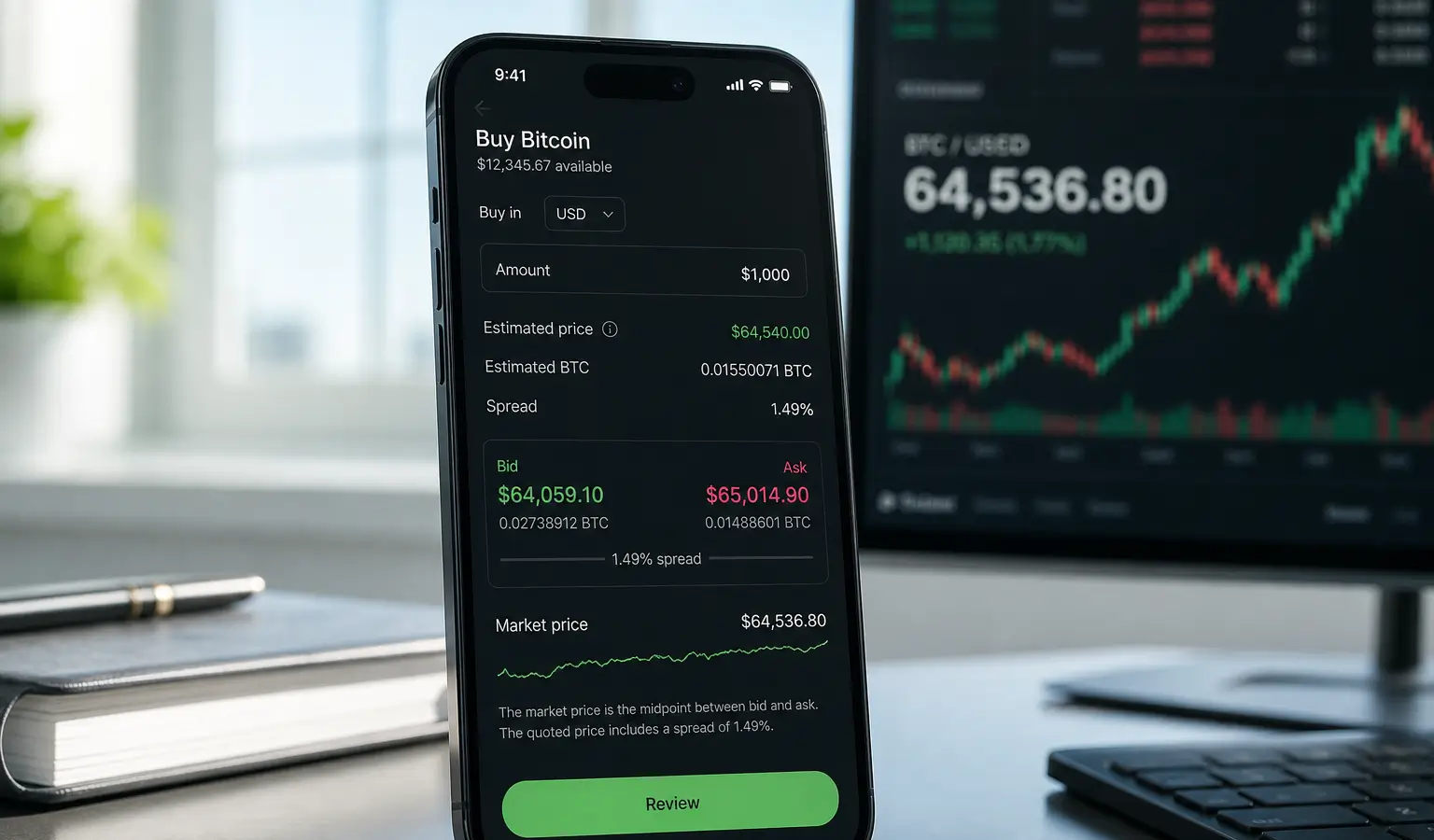
- On its standard route for crypto orders, Robinhood charges nearly a 2% spread when buying and selling Bitcoin.
- The costs are built into the execution price through market maker routing, not listed on a separate bill.
- Smart Exchange Routing can be cheaper, with a disclosed fee between 0% and 0.95% depending on trading volume.
Robinhood charges nearly 2% on its standard route for crypto orders to buy and sell Bitcoin. The costs are built into the price itself, not listed on a separate bill. That makes the route more expensive than many traders expect at first glance.
How the Spread Works
The discussion started after Delphi Digital founder Tommy Shaughnessy shared a screenshot this week showing a Bitcoin spread of $1,426.03 (€1,240). Based on that quote, the bid price was $75,361.72 (€65,800) and the ask price was $76,787.76 (€67,000), a difference of 1.87%. Shaughnessy called that excessive for an asset of this size.
At Robinhood, the default setting is called market maker routing. With this setup, crypto orders do not go directly to an exchange, but to an outside trading firm. Robinhood Crypto receives $0.95 (€0.83) for every $100 (€87) in volume. That amount is built into the execution price, which means buyers pay more and sellers receive less.
A Cheaper Alternative Exists
Robinhood itself points to Smart Exchange Routing as an alternative. With that option, the disclosed fee ranges from 0% to 0.95%, depending on the user's 30-day trading volume. For active traders, that difference can be big, even though the standard route is still the option many users will probably see first.
Johann Kerbrat, senior vice president and general manager of crypto at Robinhood, also said customers do not need to sell their coins first to move them off the platform. According to him, BTC and other supported crypto can be sent directly to an external crypto wallet.
Why This Matters
For European crypto readers, this is especially relevant because it shows how big the gap can be between a seemingly simple buy button and the real execution costs. In the crypto market, transparent fees are often just as important as the visible price. For comparison, standard spot fees on major crypto exchanges are often much lower, which makes the debate over routing and price execution even sharper.
Robinhood also opened agentic trading for crypto this year, allowing outside AI agents to trade through a separate account. The company does allow some limits there: agents cannot transfer, stake, or borrow. That mix of AI access and limited functionality makes the cost structure even more relevant for users who want to trade through automated tools.