Schiff Says the Crash Will Hit Bonds Before Bitcoin
Schiff says rising Treasury yields and higher mortgage rates pose a bigger threat to stocks, housing, and crypto than Bitcoin itself.
Key Takeaways
- Peter Schiff says the next market crash, in his view, will begin in bonds rather than with Bitcoin.
- He argues that higher U.S. Treasury yields are a threat to stocks, housing, and crypto because they raise borrowing costs.
- Schiff expects Bitcoin to fall more sharply in a stock sell-off and says gold should benefit if risk appetite weakens.
Peter Schiff says the next major market downturn will not start with Bitcoin, but with bonds. The longtime gold bull argues that rising U.S. Treasury yields are a bigger threat to stocks, housing, and crypto than BTC’s own swings.
Bonds as the Breaking Point
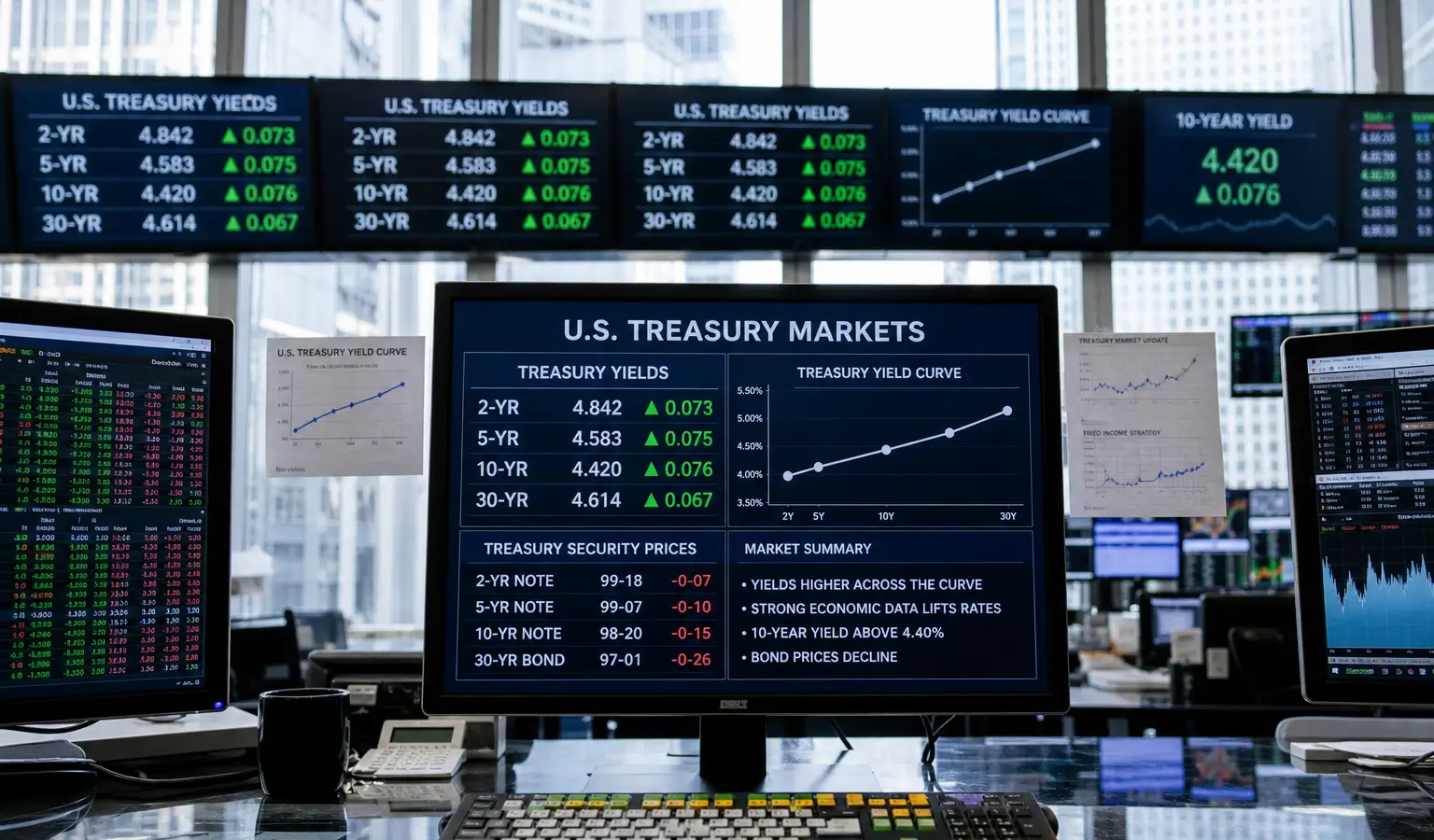
In his latest podcast, Schiff said trouble in Treasuries could ripple through multiple markets at once. The 10-year Treasury is trading around 4.5%, while the 30-year has moved up toward 5%. The yield curve is still sloping upward, with the 2-year near 4.21% and the 3-month to 10-year spread still positive. That setup usually points to economic growth, but Schiff says it does little to ease financing pressure.
He expects higher rates to keep pushing borrowing costs higher. In his view, that could drag on stocks and add more stress to a housing market that is already tight. The average 30-year mortgage rate is 6.49%, according to Freddie Mac, a level that continues to keep many buyers out of the market.
Bitcoin Still Looks Vulnerable, He Says
Schiff says Bitcoin has held up better than many skeptics expected so far, but he does not see that as evidence of a safe haven. BTC is trading around $64,200 (€56,200), with a market cap of about $1.29 trillion (€1.1 trillion), still roughly 49% below its October 2025 peak.
In his view, Bitcoin would likely fall harder if stocks sold off. He also noted that major banks keep publishing bullish Bitcoin price targets, while the weak performance of Strategy's preferred shares suggests investors inside the company are less convinced.
Schiff links that to his broader view that gold should do well when risk assets lose momentum at the same time. He said on the podcast that the precious metals market looks positioned for a strong move higher, while the stock market, in his view, still has room for a sharp decline.
Why This Matters
For European crypto readers, the main point is that Schiff is moving the conversation away from crypto and toward U.S. rates and credit markets. If Treasury yields keep climbing, dollar funding could get more expensive and risk appetite could weaken across the board. The coming weeks around bond yields may therefore offer a useful read on how exposed crypto looks in a stress scenario.
Bitcoin’s link to rates has been part of the market debate for some time. In a recent analysis of signals from the bond market, a flatter Treasury curve was already flagged as a possible headwind for BTC and other risky assets.