Solana CISO Warns of AI-Driven Crypto Scams
Coates sees deepfakes, fake identities, and phishing as a bigger risk than smart contracts. In the meantime, Solana is working with projects and regulators on tighter security.
Key Takeaways
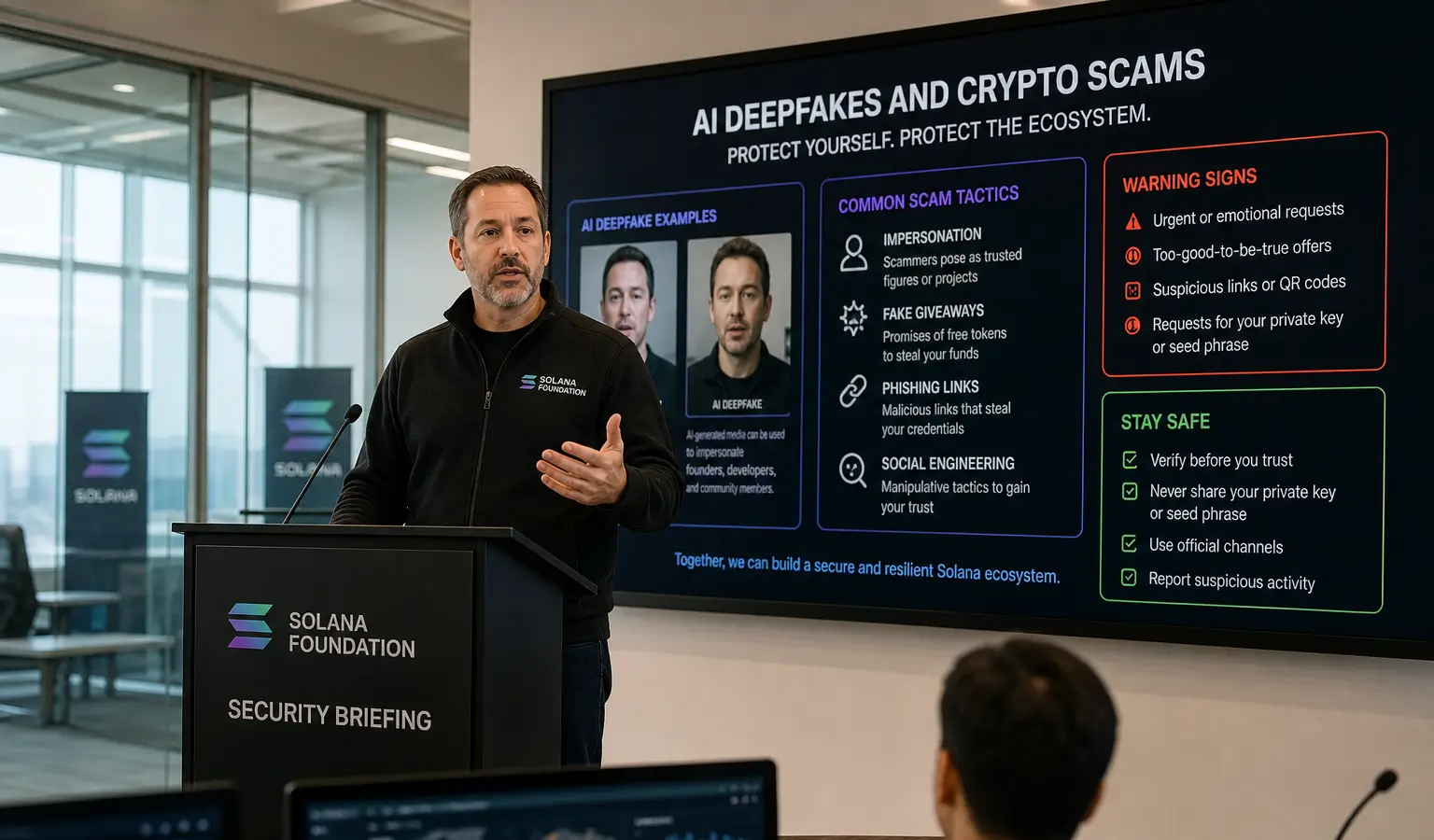
- Solana CISO Michael Coates says AI-powered scams, fake identities, and social engineering are emerging as the next big risks in crypto.
- He says attacks are becoming harder to spot thanks to deepfakes, spoofed calls, and highly tailored messages.
- Solana is pushing for stronger security practices, regulatory discussions, and a plan for quantum computing.
Michael Coates, the new CISO of the Solana Foundation, says the next major security problems in crypto are more likely to come from AI-driven scams, fake identities, and other social engineering tactics than from smart contracts. In his view, the biggest threat is not necessarily on the blockchain itself, but in the ways people are tricked into making mistakes.
AI Makes Scams More Convincing
In an interview, Coates said attackers are leaning more heavily on tools that sit outside the usual blockchain risk profile. That includes deepfakes, fake phone calls, and messages so personalized that they can be difficult to distinguish from legitimate communication. It also reflects a wider shift in crypto, where AI is being used not only to improve defenses, but also to make phishing and fraud easier to scale.
He added that a lot of crypto incidents actually begin as a Web2 issue, such as a stolen identity or a lapse in operational security. Once an attacker gets in, the money is often gone for good. Coates said that is part of what makes the industry such an appealing target for bad actors.
Solana Focuses on Security
Coates joined the Solana Foundation earlier this year. His work now includes protecting the foundation itself, but also helping projects across the Solana ecosystem adopt stronger security habits. He is also in discussions with regulators about what proper cybersecurity standards should look like.
The former CISO of Twitter and security leader at Mozilla said security has to be treated as a layered problem. No organization can stop every scam attempt, he said, but multiple defenses can still limit the damage when one layer fails. For Solana, that also means preparing for quantum computing, and Coates said the foundation already has a strategy in place.
Why This Matters for Crypto
For European crypto investors, the takeaway is that many of the biggest losses in the industry come not just from code failures, but from people being manipulated. As AI tools improve, fake accounts, bogus support channels, and convincing impersonations of well-known figures may become even harder to catch in time. That makes security more than a technical issue. It is also about operations and user behavior.