Solana Tests Alpenglow for Faster Finality
The test on the public testnet is meant to cut finality from about 13 seconds to 0.15 seconds. That matters especially for exchanges, bridges, and payment apps on Solana.
Key Takeaways
- Solana is testing Alpenglow on its public testnet to speed up finality from about 13 seconds to 0.15 seconds.
- Alpenglow replaces TowerBFT with Votor, where validators exchange votes directly and can lock in a block after one or two rounds.
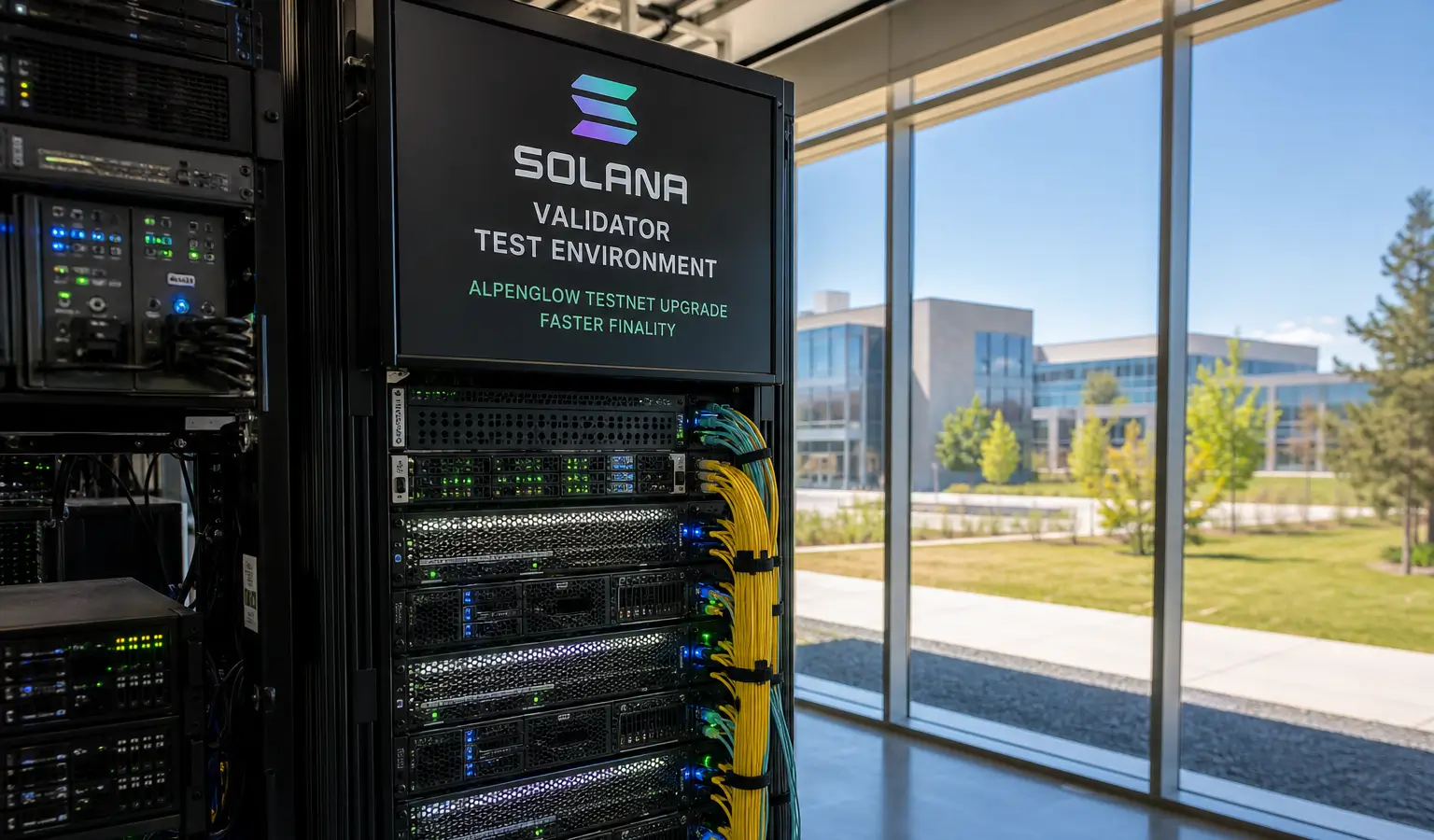
- The upgrade is first being tested with worthless tokens on a copy of the main chain, while Rotor is expected to replace data processing later.
Solana has started testing Alpenglow on its public testnet. The upgrade is meant to shorten the time it takes for a payment to become irreversible, from about 13 seconds to 0.15 seconds.
What Alpenglow Changes
That step is all about finality. Exchanges wait for it before crediting deposits, bridges wait before releasing funds on another chain, and merchants want to be sure a payment can no longer be reversed.
Alpenglow replaces the current TowerBFT system with Votor, a new voting protocol. Instead of a long series of on-chain votes, validators send their votes directly to each other and can lock in a block after one or two rounds.
The upgrade is first being tested on a copy of the main chain with tokens that have no value. That lets developers check the transition, spot bugs, and restart the testnet without touching users' money.
Why This Matters
For European crypto users, this could matter especially because faster finality affects the practical side of payments and infrastructure. If a chain gives clearer confirmation of a transaction faster, that can be important for crypto exchanges, bridges, and payment apps running on Solana.
Earlier, Solana already took steps to improve network performance, including a shorter slot duration that sped up block production. The upgrade also appears to be rolling out in phases. Alongside Votor, there is also Rotor, which is expected to replace data processing within the network later, but there is still no concrete launch date for that.