

Solana Wants to Stop Wasted Work on Rejected Blocks Faster
The Agave proposal should let validators stop as soon as a rival block has been finalized. That should save computing work, even as pressure on Solana’s validator base and decentralization continues.
Key Takeaways
- Solana developers want validators to stop working on blocks that have already lost finality faster.
- The Agave proposal should prevent computing work from being wasted when a rival block has already been finalized.
- The change fits into Solana’s broader focus on higher network performance, while pressure on the validator base continues.
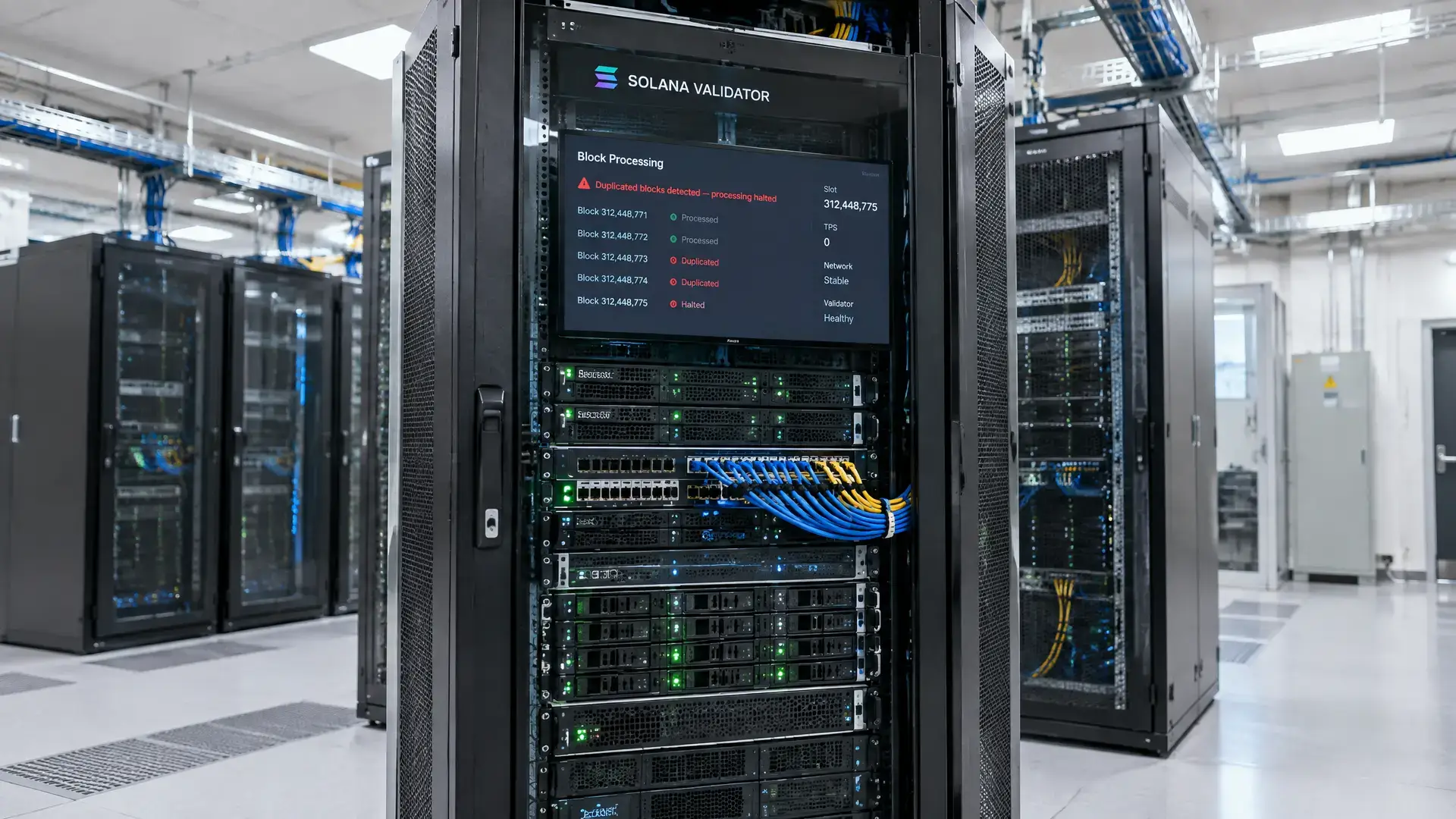
Solana developers want validators to stop working on blocks that have already lost network finality faster. A proposal for Agave, the software that many Solana validators run, should prevent computing work from being wasted if the network has already chosen another version of the same block.
What the Proposal Changes
The proposal was submitted on Monday by Philippe Laferrière of Anza, the company behind Solana’s main validator software. The change would let validators drop a block immediately once the network has finalized a rival block. That removes the need to keep finishing a block that no longer matters.
Under the current process, two slightly different versions of the same block can appear on the network at the same time. A validator can start processing before it is clear which version will remain valid. That means transactions get recalculated and balances get updated, only to later find out that all that work was for nothing.
Why This Matters for Solana
That takes a lot of computing power, especially when a block contains thousands of transactions. If the other version gets finalized halfway through, the remaining work is still wasted. The proposal should reduce that kind of waste and fits into Solana’s broader push to keep improving network performance.
That speed has already increased in recent months. In October 2026, the network reached a target slot time of 200 milliseconds, compared with 400 milliseconds in June 2026. That should make faster confirmations possible and improve the network’s efficiency. The move toward faster finality also fits that trend: Alpenglow should cut the time to finality further to about 150 milliseconds.
More Pressure on Validators
At the same time, Solana’s validator base has been under pressure for a while. In May 2026, the number of active validators was about 71% lower than at the March 2023 peak, based on the provided figures, falling from 2,564 to 734. Over the same period, the Nakamoto Coefficient dropped from 31 to 18, which points to less distribution of power within the network.
For European crypto followers, that matters because Solana is not only focused on speed, but also on how efficiently that speed is delivered. If validators do less unnecessary work, that can help the network use its infrastructure better, while the debate over decentralization continues at the same time.