South Korea Prosecutes 18 Polymarket Users Over $12.7 Million
Police linked blockchain transactions to 26 wallets; the case centers on whether Polymarket contracts fall under South Korean gambling law.
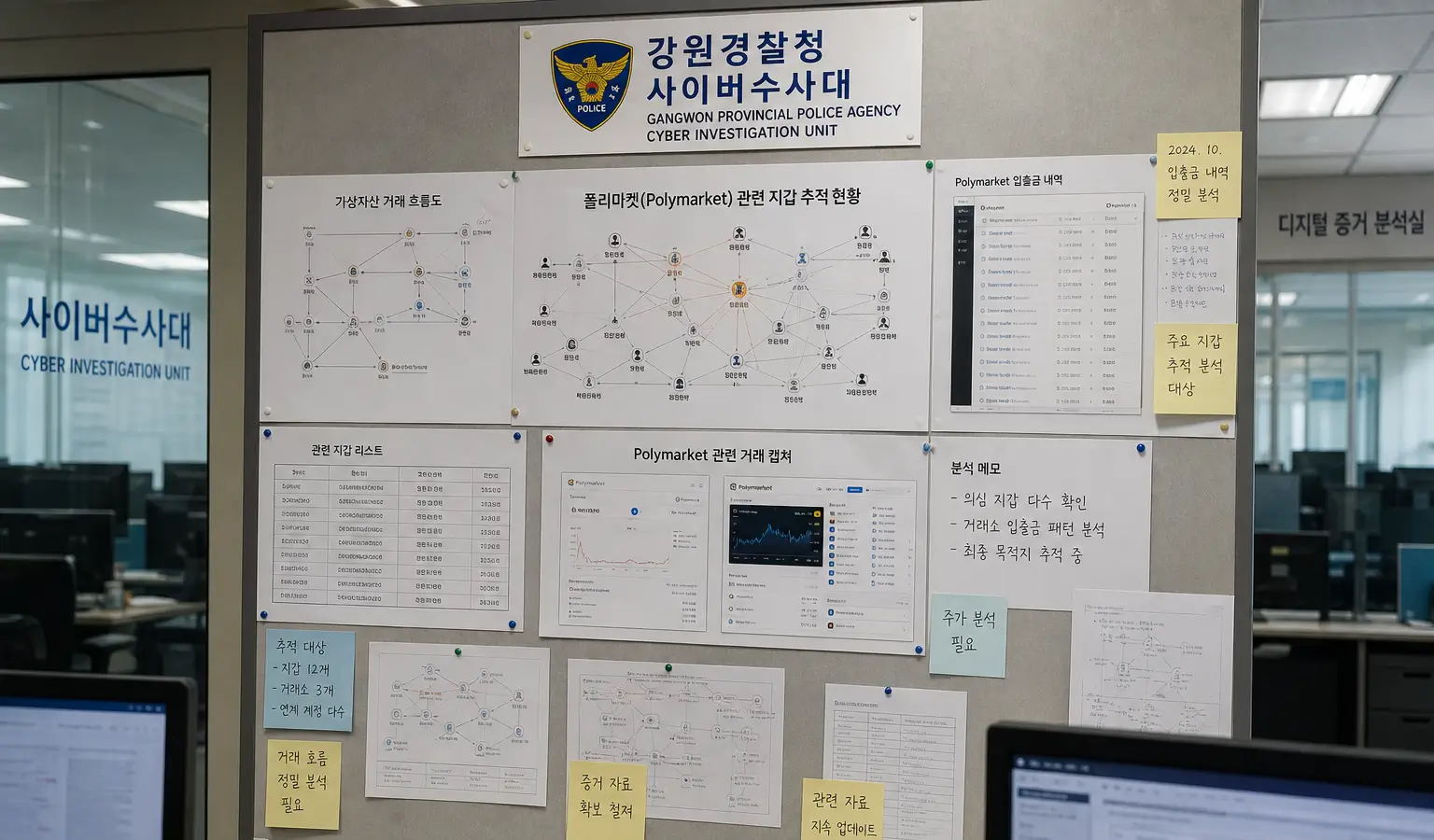
Key Takeaways
- South Korean police have referred 18 Polymarket users to prosecutors over alleged illegal gambling.
- A total of 26 users were investigated; together they placed 17.6 billion won, about $12.7 million, on Polymarket markets.
- Authorities view the transactions as gambling, while users say their trading looks more like derivatives investing.
South Korean police have referred 18 Polymarket users to prosecutors over alleged illegal gambling. The case is the latest step in a months-long investigation into bets on the platform's election markets and shows that pressure on prediction markets is continuing to build.
Investigation Into Polymarket
The Cyber Investigation Unit of the Gangwon Provincial Police Agency investigated a total of 26 users on September 15. Together, they placed 17.6 billion won, or about $12.7 million (€11 million), on Polymarket's political, economic, and social markets. One person alone is said to have placed about 5.7 billion won, nearly $3.8 million (€3.3 million).
Police say the users were tracked down using open-source intelligence based on public blockchain transactions. That allowed investigators to connect individual wallet holders to the transactions, despite the platform's anonymous setup.
According to the authorities, the transactions fall under South Korea's definition of gambling in Article 246 of the criminal code. They point to Supreme Court precedent, which says that staking money on an uncertain outcome can count as gambling, even when skill or analysis is involved.
Legal Fight Over the Contracts
The users involved argue instead that their trading looks more like derivatives investing than betting. That distinction could matter in court, because the legal classification determines how seriously the case is treated.
Polymarket is also under pressure outside this criminal case. In August, South Korea's communications regulator ordered domestic internet providers to block access to the platform, saying the winner-take-all payout encourages gambling behavior. Polymarket argued that the lack of a Korean-language version and won payments would place the platform outside local law, but that reasoning was rejected.
Why This Matters Beyond Korea
For European crypto readers, this case matters because prediction markets are facing more scrutiny around the world. Polymarket is a blockchain-based platform and is running into questions in multiple countries about gambling, financial rules, and user access. The outcome in South Korea could therefore influence how other regulators and judges look at similar contracts.