South Korea Wants to Add Crypto to Its National Asset Law
Seoul wants to tokenize state real estate and is also preparing spot crypto ETFs and won-pegged stablecoins. The reform fits into a broader modernization of asset management.
Key Takeaways
- South Korea wants to add crypto to a new National Asset Basic Act as part of an effort to modernize how it manages about 1,400 trillion won in state assets.
- The government plans to tokenize state real estate through security tokens and launch a 2027 pilot for tokenized government bonds tied to CBDC infrastructure.
- Seoul is also pushing ahead with wider crypto rules, including a Digital Asset Basic Act for stablecoins and possible spot crypto ETFs.
South Korea is looking to bring crypto into a new National Asset Basic Act, a move designed to update how the country manages roughly 1,400 trillion won in state assets. The reform suggests that digital assets in Seoul are increasingly being treated as part of long-term national wealth, not just as a speculative trade.
Old Law Makes Way
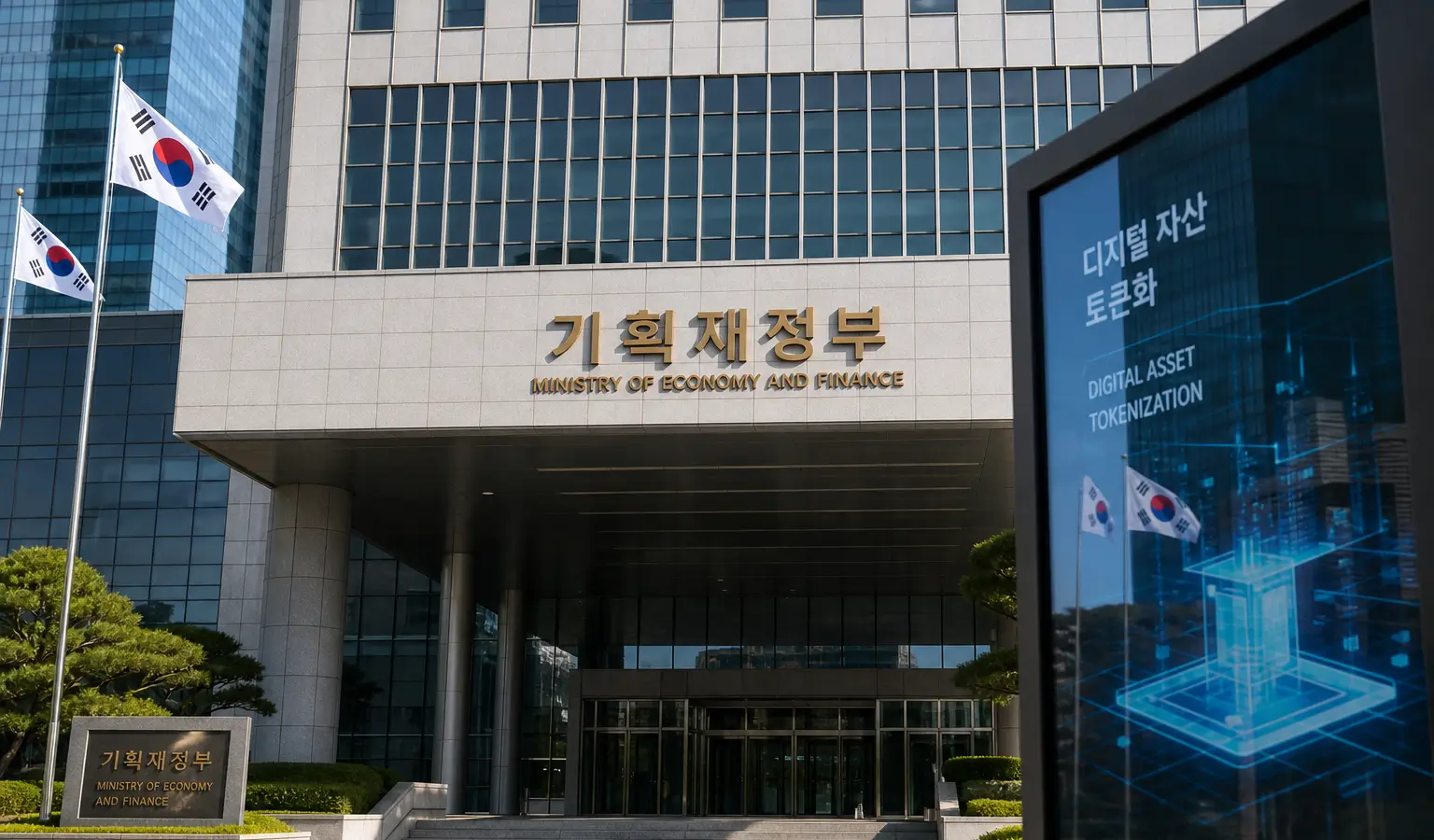
The Ministry of Economy and Finance laid out the plan on July 15 in Seoul as part of its economic strategy for the second half of 2026. The new law would replace the State Property Act from 1950, which the government says was built mainly around real estate and preservation and left little room for newer asset types.
The ministry says the state is managing a portfolio worth about 1,400 trillion won, or nearly $940 billion (€824 billion). The goal of the reform is not only to preserve those assets, but also to put more emphasis on generating value from them. That fits into South Korea’s broader push to rethink digital infrastructure and public asset management.
Tokenizing State Holdings
One of the more notable proposals is to tokenize state real estate through security tokens, allowing citizens to invest and participate in the returns. The government is also planning a 2027 pilot for tokenized government bonds connected to the Bank of Korea’s CBDC infrastructure.
Those plans build on Seoul’s earlier efforts to create a wider regulatory framework for crypto. Officials are also working on a Digital Asset Basic Act for won-pegged stablecoins and are considering changes to the Capital Markets Act that could open the door to the first spot crypto ETFs. A legal framework for cross-border stablecoin transactions is also being discussed.
Why This Matters
For European crypto readers, the main point is that a major economy is starting to treat crypto as more than a trading market. In South Korea, it is also being folded into public wealth creation and financial infrastructure. The country is already one of the most active crypto markets in the world, with a strong tilt toward altcoins and a trading culture built on high volume and quick turnover. That makes a policy shift like this more significant than a routine regulatory update.
The timing stands out even more because the market is moving away from pure speculation. In South Korea, crypto trading volumes fell 71% between August 2025 and May 2026, while the KOSPI climbed sharply over the same period. That points to some capital rotating into more traditional markets, even as the government works to build digital infrastructure into state policy.